US oil firms lock in $75 crude after Israel–Iran strike triggers price jump

&imwidth=600&imheight=450&format=webp&quality=medium "US oil firms lock in $75 crude after Israel–Iran strike triggers price jump")
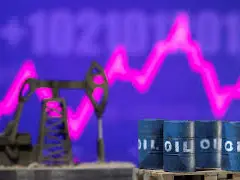
Models of oil barrels and a pump jack are displayed in the illustration. Photograph: (Reuters)
Oil prices surge as Israel–Iran conflict erupts, prompting US producers to lock in profits through record hedging trades.
As the Israel–Iran conflict reignites fears of a wider Middle East war, its aftershocks are already rippling through global energy markets.
For US oil producers, this moment has become a strategic opportunity. With crude prices surging, they are rushing to hedge against future volatility, triggering record volumes of oil price hedging trades.
Oil prices spike after Israel’s surprise strike on Iran
On June 13, oil prices recorded their sharpest single day jump since July 2022. West Texas Intermediate (WTI) crude futures surged 7 per cent to around $73 per barrel, after Israel carried out a surprise strike on Iran, reigniting geopolitical tensions in the Middle East.
The rally continued into the following week, with WTI closing Friday near $75 per barrel.
According to Reuters, this sudden uptick gave US producers a rare window to lock in prices above budget for the first time in months.
Trending Stories
)
)
)
)
)
)
)
)
)
)
)
)
)
)
)
)
)
)
)
)
)
)
)
)
)
)
)
&im=FitAndFill=(700,400))
)
)
)
)
)
)
)
)
&im=FitAndFill=(700,400))
)
)
Record hedging volumes on Aegis platform
The surge in prices led to a rush of hedging activity.
Aegis Hedging, which manages hedging for about 25–30 per cent of total US oil output, reported record volume and the largest number of trades ever executed on its platform on June 13, as per Reuters.
US oil production currently stands at around 13.56 million barrels per day, based on the latest government data.
As per Aegis, the June 13 price spike, driven more by geopolitical risk than traditional supply-demand factors created a six-month hedging opportunity window.
Hedging reportedly allows producers to lock in future oil prices and shield themselves from market volatility, a crucial move when global prices are affected by sudden conflict-driven moves rather than fundamental trends.
From four-year lows to sudden opportunity
Just weeks earlier, producers were grappling with unviable price levels. In May, crude had dropped to a four-year low of $57 per barrel, amid an output hike by OPEC+ and ongoing global trade friction.
US crude futures remained below $65 per barrel, the average profitable drilling threshold, for over two months, from April 4 to June 9, according to LSEG and the Dallas Federal Reserve’s Q1 2025 survey cited by Reuters.
That changed overnight on June 13.
“Producers recognised that this could be a fleeting issue,” said Matt Marshall, President of Aegis Hedging, as quoted by Reuters. “Instead of choosing conservative options with low-price floors, many opted to aggressively lock in high prices.”
Permian Basin players and lending pressure
For companies like Black Mountain Energy, operating in the Permian Basin, the strategy is more than opportunistic, it’s also financial.
“We watch for accretive pricing to our existing hedges and layer in new ones to reduce risk and meet our reserve-based lending covenants,” Rhett Bennett, CEO of Black Mountain Energy told Reuters.
Such covenants are tied to the value of a company’s oil and gas reserves and influence the credit available from lenders. Securing high-price hedges helps maintain favourable loan terms.
Options market echoes bullish sentiment
Not just producers, traders, too, jumped on the bandwagon. On the same day, June 13, a surge in options trading reflected market bets on further price increases, as per Reuters.
A total of 33,411 call options for $80 WTI crude expiring in August 2025 were exchanged on the Chicago Mercantile Exchange, the highest volume of these contracts this year, according to CME Group data.
Overall, trading volumes touched 681,000 contracts that day, highlighting how risk events in geopolitics are now reshaping expectations in the energy derivatives market.
What next?
The Israel–Iran conflict has reintroduced a geopolitical risk premium into oil prices. While producers capitalise on the current price surge, volatility remains a constant threat.
As tensions in the Middle East persist and the US heads into election season with President Trump doubling down on energy independence, the oil market could see more price spikes and more hedging frenzies in the weeks ahead.
(With inputs from the agencies)