

US President Donald Trump on May 23 reignited fears of a transatlantic trade war, announcing plans to impose a 50 per cent tariff on all European Union (EU) imports starting June 1, unless the bloc makes major concessions in ongoing trade talks.
The surprise move, made via Trump’s Truth Social account, sent shockwaves through global financial markets and drew sharp rebukes from EU leaders. The announcement comes as negotiations between Washington and Brussels have stalled, with the US pushing for more favourable terms for the trade deal and the EU resisting unilateral demands.
In his post on Truth Social, Trump said, “The European Union, which was formed for the primary purpose of taking advantage of the United States on trade, has been very difficult to deal with. Their powerful trade barriers, VAT taxes, ridiculous corporate penalties, non-monetary trade barriers, monetary manipulations, unfair and unjustified lawsuits against American companies, and more have led to a trade deficit with the US of more than $250,000,000 a year, a number which is totally unacceptable.”

“Our discussions with them are going nowhere! Therefore, I am recommending a straight 50 per cent tariff on the European Union, starting on June 1, 2025. There is no tariff if the product is built or manufactured in the United States,” he added.
The comments marked a dramatic shift after weeks of de-escalation and a temporary 90-day pause in reciprocal tariffs that had offered a brief reprieve for global markets.
The markets responded with immediate volatility. US and European stocks plunged, with Germany’s DAX down 2.4 per cent, France’s CAC falling 2.2 per cent, and the STOXX600 sliding 1.7 per cent. The US dollar weakened sharply, while gold prices surged as investors sought safety. US Treasury yields also fell amid fears of a potential economic slowdown.
Trending Stories
)
Outrage erupts after 3-year-old is married to 60-year-old man in Pakistan, link to her sister's murder being probed
)
UNGA 2026: Israeli PM attacks Britain, France for past colonialism
)
Yemen called Trump for US military support in fight against Houthis: Official
)
Tesla is preparing something big for Optimus: new Gen 3 models surface in app
)
The Vvaan Review: This Ekta Kapoor's Tulsi Virani-coded world can't be saved by Sidharth Malhotra and Tamannaah Bhatia
)
Bollywood mourns Mushtaq Khan: Sunny Deol, Rajpal Yadav and others pay tribute
)
Xi Jinping's 'special plane' vs Trump's Air Force One: What's the difference?
)
‘We’ve never gotten along better’: Trump praises Xi, jokes about White House ballroom at high-stakes state dinner
)
Alarming video emerges as landslide damages houses in Sikkim’s Rimbi village. Watch
)
OpenAI is building AI to fight cyber threats: What GPT-6 Cyber means for security
)
China to test supersonic jet that moves at Mach 2, double the speed of sound
)
IIT Bombay CCTV footage emerges: Sahil Wakode seen looking at phone in examination hall
)
Scientists detect first radio signals directly from faraway planet
)
Nations League: Germany draw on Klopp debut; Portugal, Norway win
)
US faces fresh cost crunch as mortgage rates hit 7%, oil tops $107 and gas prices surge
)
2,000-foot tube, laser tests and more: China builds towns to expand nuclear arsenal, satellite images show
)
'What kind of confession is this?': Pakistan PM Shehbaz Sharif’s 'terrorists would be roaming New York' remark goes viral, raises alarm online. Watch
)
A seven-day roadmap? Iran proposes plan to end war, reopen Strait of Hormuz and resume nuclear talks
)
'Fund people, not bombs': Hundreds take to New York streets as Netanyahu delivers speech at UN; dozens arrested
)
Bias or safety concerns? Bengaluru CEO says firm will not hire men from UP, Bihar, Rajasthan, MP. Here's why
)
'Making history': Xi Jinping praises Trump as US-China leaders dine at White House
)
‘Not just a local tragedy’: Nepal PM Shah warns UN of growing climate threat, says Nepal floods were 'a warning to the world'
)
Farhan, who went viral for AK47 celebration vs India in Asia Cup, hopes to lead Pakistan beyond Asian Games
)
What’s in a name? Trump’s 'Lake America' move gets a tit-for-tat response from Canada
)
'We do not wish to continue. It's America that must choose': Iran president Pezeshkian calls on US to end war
)
Air India pilot suspended after failing pre-flight alcohol test on Zurich-Delhi route
)
WION Iconic Tourism Summit: How local tourism MSMEs must upskill for AI integration
)
WION Iconic Tourism Summit 2026: Union Minister Shekhawat on 'experiential travel', peace diplomacy
)
Israeli envoy to US Yechiel Leiter’s son critically injured in West Bank ramming attack
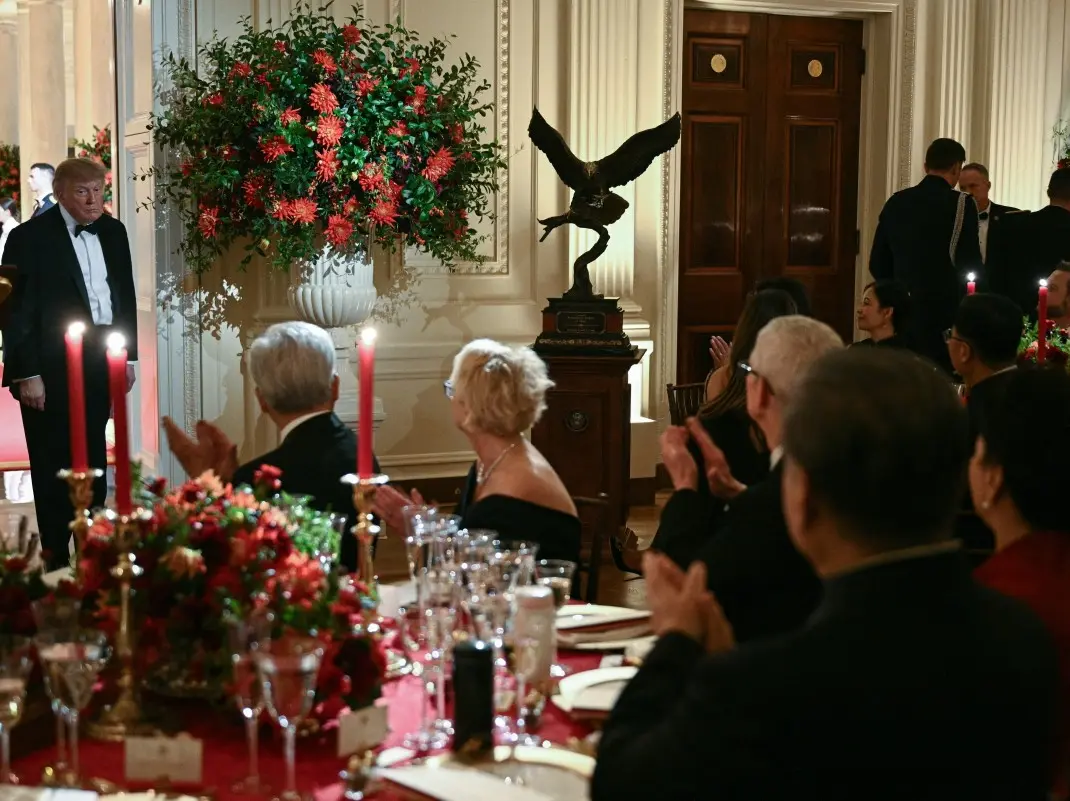)
Trump gifts Xi a bald eagle sculpture at White House dinner: Here’s what it symbolises
)
West Indies coach Sammy looking at India series as opportunity to finetune ahead of ODI World Cup 2027 qualifiers
)
Meet Adrian Abraham: 9-year-old Indian-origin guitar prodigy aiming for a Guinness World Record
&im=FitAndFill=(700,400))
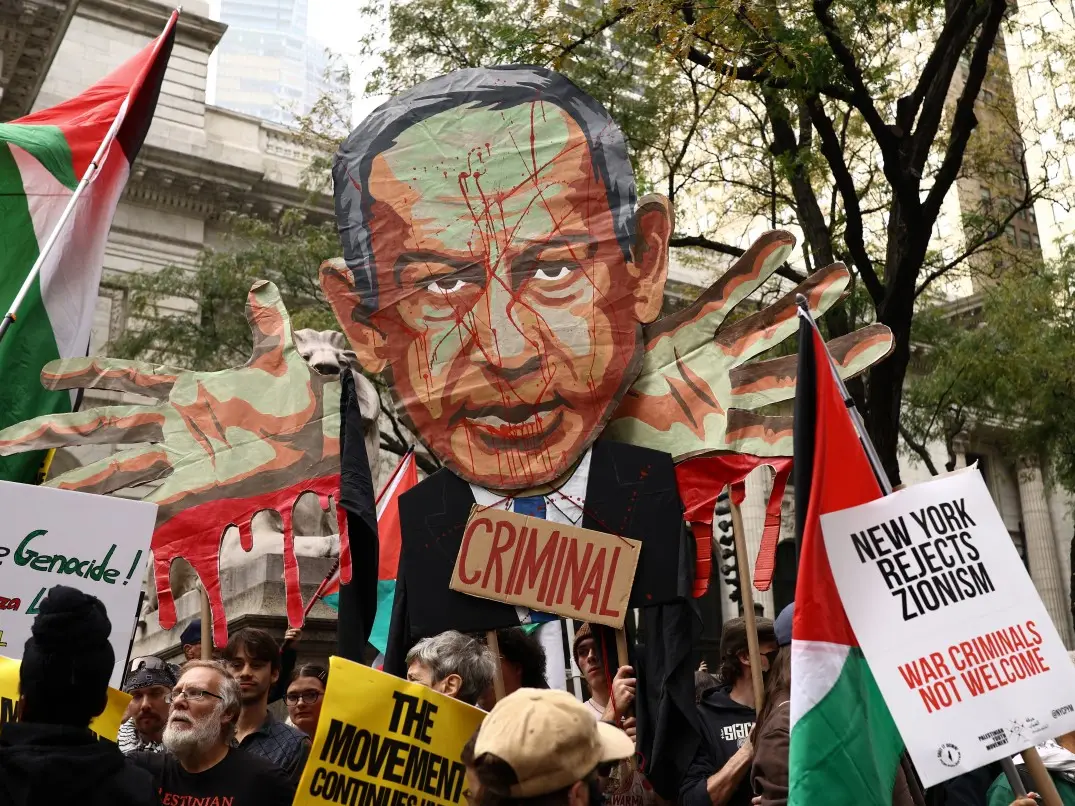
Netanyahu at UN: Mass walkout, attack on Mamdani and Iran threats | In Pics
)
CNN, Politico and MS NOW back in White House after judge blocks Trump’s media ban
)
'Blockbuster' nor'easter develops an eye similar to hurricanes as warnings are issued
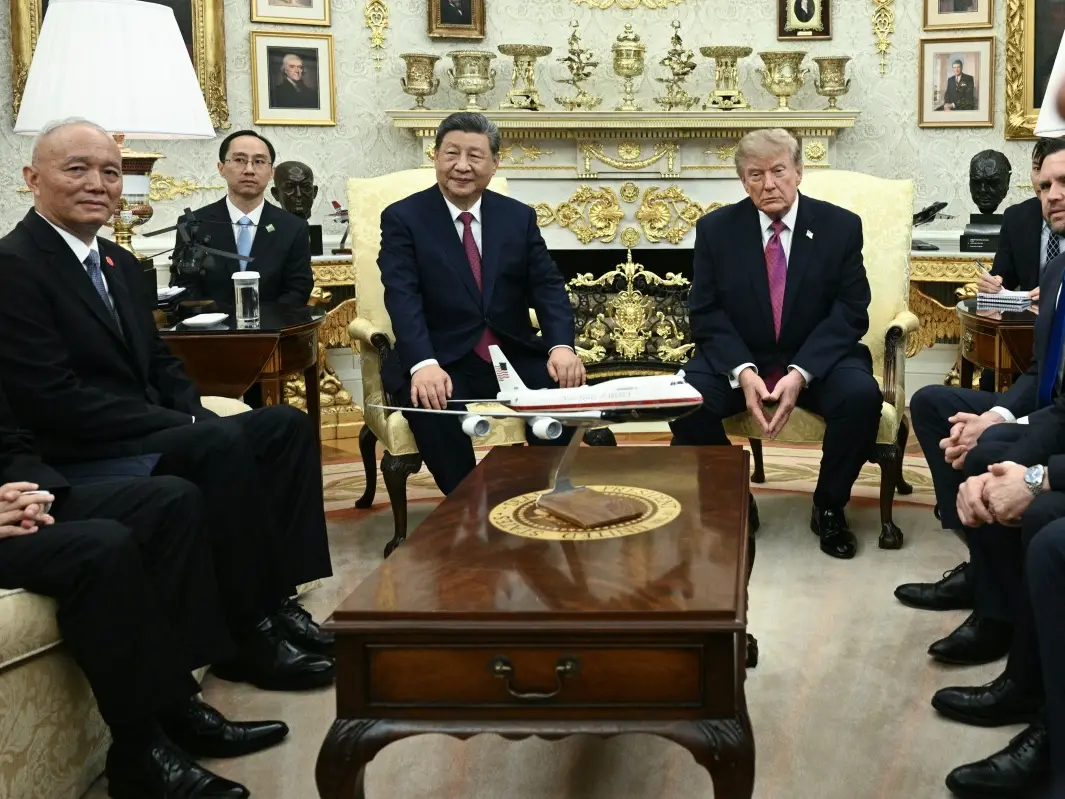)
Trump's welcome to Xi demonstrates 'attraction' to dictators: Chuck Schumer
Don't Be Shy movie review: A frothy coming-of-age tale that is too shy to experiment
)
'FIRST LOOK from inside Noah’s Ark': Researchers share video from inside mysterious mound in Turkey
)
The White House’s plan to double down on tariffs was reportedly driven by frustration over slow EU negotiations. Treasury Secretary Scott Bessent said the president is dissatisfied with the EU’s offers.
“The president believes the EU’s proposals have not matched the quality of offers we’ve seen from other key partners,” Bessent told Fox News. “I would hope this would light a fire under the EU.”
The proposed tariff also threatens to raise costs for a broad swath of consumer and industrial goods in the United States, ranging from German cars to Italian olive oil and French cosmetics. In 2024, the EU exported goods worth approximately €500 billion ($566 billion) to the US, led by Germany (€161 billion), Ireland (€72 billion), and Italy (€65 billion). Many of these goods are crucial components in American manufacturing supply chains.
Ocean freight data from logistics platforms indicate that after a dip earlier in the year, EU-to-US shipments had begun to recover. Analysts now warn that the threat of a 50 per cent tariff could cause ocean freight orders to contract again, complicating logistics and increasing costs for US-based producers.
The US ran a $236 billion goods trade deficit with the EU in 2024, according to data from the Commerce Department, with key imports including automobiles, pharmaceuticals, chemicals, and aircraft components.
American manufacturers have already raised concerns that key inputs from Europe would become significantly more expensive. This could erode competitiveness, delay production timelines, and reduce investment incentives for companies that rely on transatlantic supply chains.
Trump had previously lowered his 145 per cent tariff on Chinese goods to 30 per cent and retained a 10 per cent baseline tariff on most global imports. The 50 per cent figure now proposed for the EU significantly exceeds previous reciprocal tariffs, which had peaked at 20 per cent earlier this year.
EU pushes back
European leaders swiftly denounced the move and warned of possible retaliation. EU trade chief Maroš Šefčovič emphasised that Brussels remains committed to a deal but will defend its interests if provoked.
“EU-US trade must be guided by mutual respect, not threats,” Šefčovič posted on X. “We stand ready to defend our interests.”
French Trade Minister Laurent Saint-Martin criticised Trump’s comments as “unhelpful”, and Irish Prime Minister Micheál Martin warned the tariffs would “grievously damage one of the world’s most dynamic and significant trading relationships.”
The EU has already paused tariffs on €23 billion ($26.15 billion) worth of US goods and has prepared up to €95 billion ($1.08 trillion) in countermeasures if talks fail. These could affect sectors ranging from aviation to spirits and technology services—a crucial part of the US economy.
Julian Hinz, a researcher at the Kiel Institute for the World Economy, estimated that a 50 per cent tariff could reduce US GDP by 1.5 per cent, while Capital Economics projected Ireland, the EU’s most trade-dependent country with the US, could see a 4 per cent hit to its economy.
Strategic tensions and policy uncertainty
Beyond the economic costs, the proposed tariffs have strategic implications. The Trump administration is pushing the EU to align more closely with US policy on China, including coordinated tariffs on Chinese goods and curbs on market access. However, EU policymakers have been cautious, concerned that a confrontational stance toward China could hurt their own export-dependent economies.
The US has also expressed frustration over Europe's insistence on mutual tariff reductions and its proposed digital services taxes targeting American technology giants. Negotiations have been hindered by the EU’s need to secure consensus among its 27 member states, a process that the Trump administration views as too slow and fragmented.
Experts say the lack of a clear negotiating framework and Trump’s erratic style add further uncertainty. In prior trade disputes, such as with China and Mexico, Trump has escalated tariffs quickly and then reversed course when faced with market backlash. The unpredictability has made long-term planning difficult for companies and weakened confidence in the US as a stable trade partner.
The broader geopolitical context also looms large. With tensions rising across multiple fronts, including with China, Mexico, and now the EU, analysts warn that prolonged tariff battles could result in global supply chain disruptions and a downturn in cross-border investment.
Deadline pressure and potential economic fallout
The June 1 deadline now looms as a critical flashpoint in global trade. While trade talks are expected to continue in Paris, the positions remain far apart. The EU has already suspended tariffs on $26 billion worth of US goods and has prepared retaliatory measures on up to $108 billion in exports should negotiations break down.
Economic projections underscore the stakes. The Kiel Institute for the World Economy estimates a potential 1.5 per cent drop in US GDP if the tariff is implemented. Capital Economics projects that Ireland could see a 4 per cent hit to its output, with Germany, Italy, France, and Spain also suffering notable slowdowns.
Adding to the fragility, Moody’s recently downgraded the US credit outlook, citing concerns about rising debt and the erratic nature of trade and fiscal policy. With a $36 trillion debt burden and uncertainty surrounding the future of US tax policy, investor sentiment remains fragile.
As June 1 approaches, businesses, policymakers, and financial markets are bracing for what could become the most disruptive episode in US-EU trade relations in decades. Whether the tariff is ultimately a bargaining tactic or a firm policy shift, the fallout—economic, political, and strategic—could reshape transatlantic commerce well beyond 2025.