
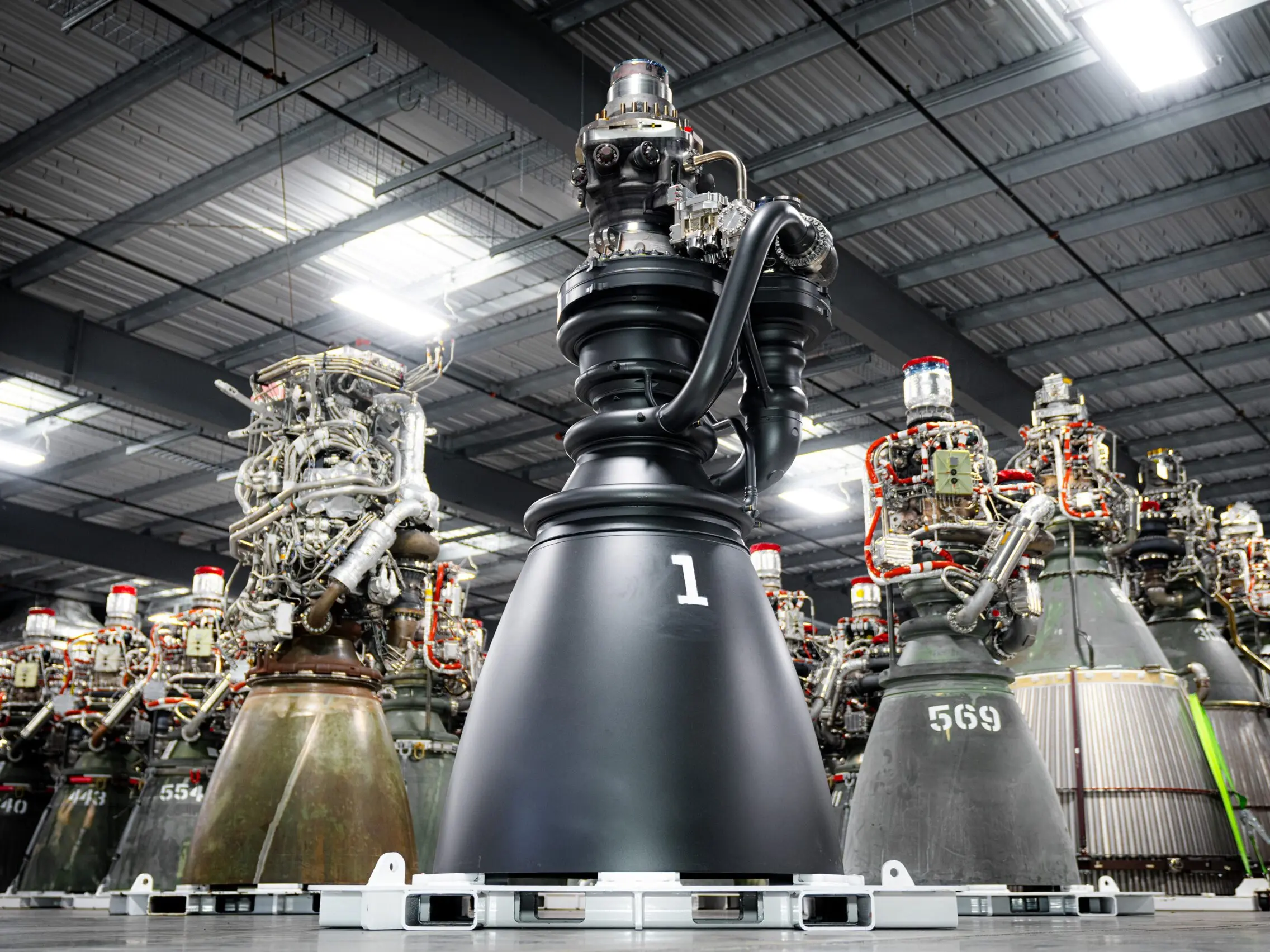
&imwidth=800&imheight=600&format=webp&quality=medium "SpaceX lost nearly $5 billion last year. So why is it worth more than Walmart?")
SpaceX's Nasdaq debut valued the company at roughly $1.8 trillion, enough to rank it above Walmart, ExxonMobil, and most of the world's largest banks by market capitalization. There's just one inconvenient detail buried in the IPO filings: SpaceX lost $4.9 billion in 2025.
Growing Fast, Losing Faster
On the surface, SpaceX's revenue growth looks impressive. The company brought in $18.7 billion in total revenue in 2025, up 33 percent from the year before, a growth rate most established companies would envy. But costs grew even faster than revenue, producing a net loss of $4.9 billion for the year. In other words, SpaceX is spending significantly more money than it makes, even as its top line expands rapidly.

Where the Money Is Going
Much of SpaceX's spending goes into capital-intensive, long-horizon bets: building and launching Starship, the massive next-generation rocket central to Musk's Mars ambitions; expanding the Starlink satellite constellation, which requires continuously manufacturing and launching new satellites to replace those that deorbit; and building out AI infrastructure and data centers, a business that is still in its early stages. These are not businesses that turn profitable overnight, they require years of sustained investment before, if ever, they generate returns proportional to the capital poured in.
What Analysts Are Saying
Trending Stories
)
Why asking questions could be more important than memorising answers
)
Did India risk its US trade deal despite softer stance at BRICS?
&im=FitAndFill=(700,400))
How 2nm technology improves iPhone performance
&im=FitAndFill=(700,400))
Shahid Kapoor to Rajkummar Rao: Actors who rule both theatres and OTT
)
BRICS Summit 2026: Trump wants to weaken BRICS, but maybe doing the opposite
&im=FitAndFill=(700,400))
Meet top 5 batters fastest to 3000 runs in T20Is
)
Did BRICS Summit 2026 prove that an 11-member bloc with India and China in it can still agree on key issues?
)
Top 5 places to visit in Goa beyond its famous beaches
)
Delhi’s balancing act: BRICS serves as a stage for West Asia diplomacy
&im=FitAndFill=(700,400))
Why European Meteor missiles use ramjet engines compared to standard US solid rockets
)
'He is popular...': Malaysian PM Anwar Ibrahim's praise for PM Modi during bilateral meeting | WATCH
)
Iran, India agree to deepen humanitarian and political ties, President Pezeshkian says
)
‘Want to reset ties with India, have engagement based on mutual interests,’ says Bangladesh minister
)
BRICS Summit 2026: PM Modi, Xi reach key consensus on ties, China to assume BRICS chairmanship in 2027
)
UK breakup on the cards? Scotland, Wales and Northern Ireland push for independence
)
Russia-Ukraine-US talks in October? Kremlin says not ruling out possibility of trilateral
)
Trump says Canada eager to reach a deal, it could come ‘fairly soon’ if Ottawa treats US farmers better
)
The Verdict | Africa is too big to remain a guest at the BRICS table
)
‘Partners, not rivals’: Xi outlines four point plan for stronger India-China ties
&im=FitAndFill=(700,400))
Why Chinese PL-15 air-to-air missiles use dual-pulse motors compared to European interceptors
)
NATO under Russian threat? Drone strikes just 2 km from Poland, narrow escape for former UK PM, CIA chief
)
Who is the smiling man beside Modi, Putin and Xi at BRICS Summit 2026?
)
BRICS Summit: New Delhi declaration adopted with full consensus, big diplomatic win for India
)
800 million years old - Scientists discover 'fingerprints' of supercontinent Gondwana in ancient rocks
)
Russian drone hits Warsaw-bound train near Polish border, Zelensky accuses Moscow of ‘deliberate’ targeting
)
War is making Russia stronger? How Ukraine is shaping Moscow’s next generation of weapons
)
9-year-old Chennai prodigy clears Cambridge IGCSE grade 10 exams
)
Indian importers urge Bangladesh to lift export ban on 'Hilsa' fish ahead of Durga Puja
)
Humans may lose control of AI: Anthropic CEO calls for slowdown, Altman, Musk back him
)
US diplomat accused of possessing child abuse images secretly flown out of UK by US Marines
)
BRICS Summit 2026: Modi-Xi moment highlights India-China thaw at BRICS
)
Why does your skin need protection from UV rays?
&im=FitAndFill=(700,400))
From Rinku Singh to Mayank Yadav, 5 players dropped from India’s squad for Afghanistan T20Is
)
PM Modi and China's Xi offered to help resolve Russia-Ukraine war: Kremlin
)
Akram, Afridi, Mushtaq tear into PCB after Pakistan’s Test series collapse in UK
This is precisely why some analysts are sounding the alarm on SpaceX's valuation. Morningstar analysts have questioned whether the $1.8 trillion price tag is justified, with some estimates suggesting a fair value closer to $800 billion to $1.1 trillion, roughly half to two-thirds of what investors paid at IPO. That is not a small discrepancy. It implies that, in Morningstar's view, SpaceX's stock could be overvalued by $700 billion to $1 trillion or more.
The Stakes Are Bigger Than One Stock
Because of the scale of this IPO, the consequences of a valuation correction would not be contained to SpaceX shareholders alone. Analysts have warned that if valuations fail to hold, it raises concerns about potential losses for pension funds, individual retirement accounts, and university endowments, many of which are believed to have taken positions in the offering given its scale and profile. A trillion-dollar miss is not just a headline; it would ripple through retirement accounts and institutional portfolios far beyond Silicon Valley.
The Bull Case Investors Are Betting On
To be fair, SpaceX's defenders have a coherent argument: the company dominates global orbital launch, Starlink is profitable and growing toward tens of millions of subscribers, and the AI infrastructure business, while small today, could become significant if SpaceX's data-center ambitions materialize. Investors who bought into the IPO are effectively betting that today's $4.9 billion loss is the cost of building businesses that will generate outsized profits years from now, the same bet early Amazon and Tesla investors made during their own loss-making years.
Whether that bet pays off, or whether SpaceX becomes a cautionary tale about IPO-era valuations getting ahead of fundamentals, will now be tracked every quarter, in public, for the first time in the company's history.
