Explained: The ads case against Patanjali

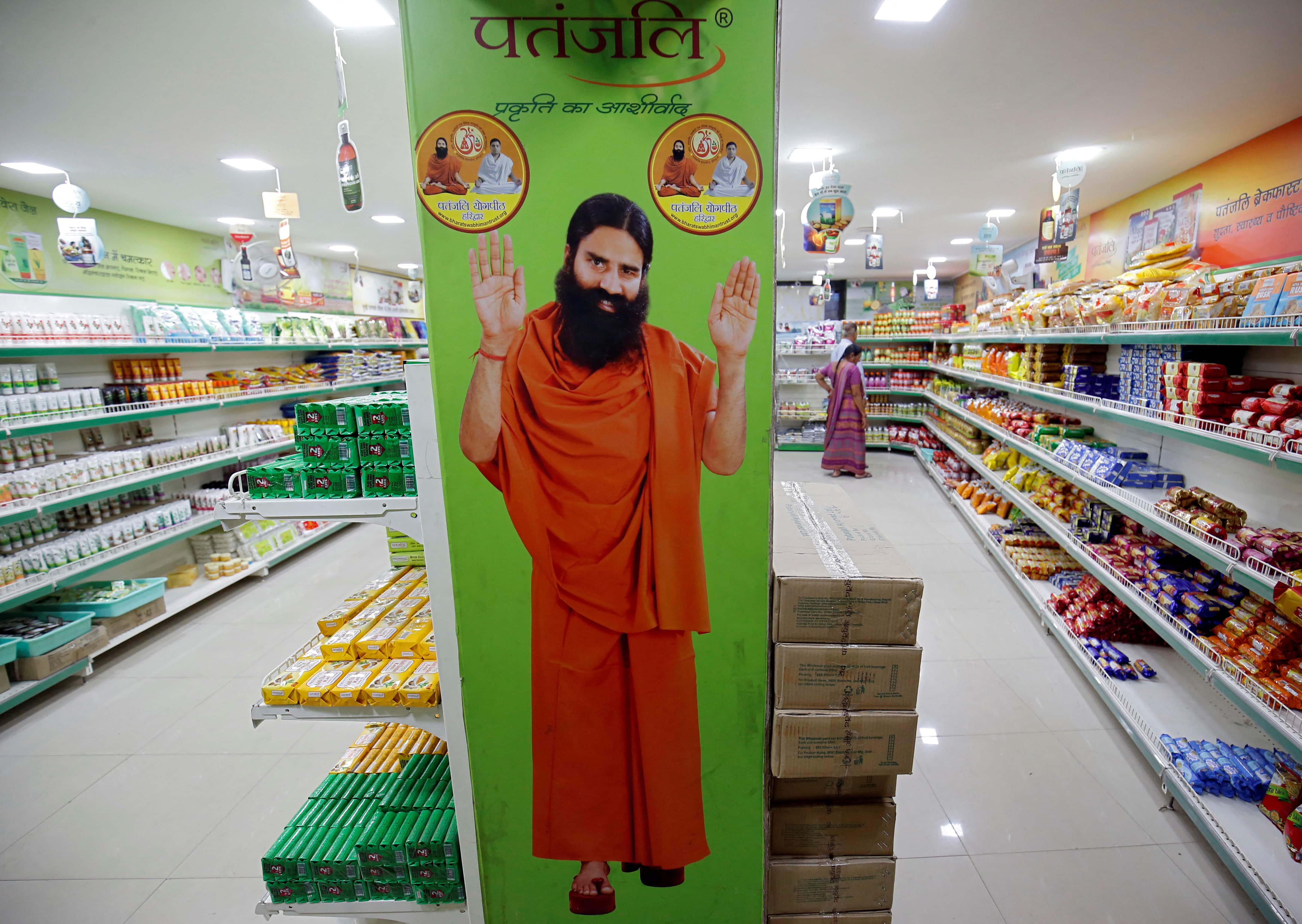
A hoarding with an image of Baba Ramdev is seen inside a Patanjali store in Ahmedabad
What happens when your brand ads boast of something that's not really true?
India's top court has an answer - "We will rip you apart."
The Supreme Court of India has tightened the noose around Patanjali Ayurved, rejecting a second apology from the company, its founder Baba Ramdev, and managing director Acharya Balkrishna.

The top Court bench including Hima Kohli and Justice A Amanullah directed the state licensing authority to take action against Patanjali and ordered the company to explain its continued defiance through detailed affidavits.
The court's ire was not just directed at Patanjali's misleading advertisements but also at the Uttarakhand government's inaction.
This is the latest in a long-running legal saga that began in August 2022.
)
No Pandya as Auqib Nabi earns maiden ODI call-up; Mayank returns for WI T20Is| check full squads
)
Chiefs tight end Travis Kelce named one of the victims in $35 million ponzi scheme
)
Trump praises India’s Opium crackdown, hails anti-drug efforts
)
Sydney Sweeney defends provocative ad choice, the internet is still not impressed
)
Former India player Diana Edulji wants Smriti Mandhana to replace Harman as skipper at the earliest
)
Trump calls Canada-EU associate membership plan ‘laughable’ and threatens 'very serious tariffs'
)
Protests erupt over migrant housing plan in Piddington
)
Shahzad Bhatti Network declared terrorist organisation under UAPA: Govt order
)
Europe wants a common playbook for security threats, seeks security beyond NATO
)
Formula One reveals the 2027 race calendar; Monaco to host sprint race for the first time
)
All Indian goods to get duty-free access to New Zealand
)
Bigg Boss 20: Mahhi Vij reveals she lost Yuva role to Kareena Kapoor; 'didn’t work out in my favour'
)
Lionel Messi for 2026 Ballon d’Or over Mbappe and Yamal, says Diego Simeone
)
US House votes 417-3 to pass Ratepayer Protection Act targeting AI data center electricity costs
)
Hong Kong unveils 11 new measures to boost birth rates, offers higher cash bonuses and housing perks
)
Former OpenAI researcher warns of growing risks from Artificial Intelligence
)
Veteran actor Anant Nag honoured with Indian cinema’s highest award
)
AUS vs SA: Steve Smith still gets 'little flashbacks' from sandpaper gate
)
Pakistan naval vessel returns to harbour with 'severe damage' after collision with Indian warship in Arabian Sea
)
Fed raises rates for first time in 3 years, Kevin Warsh defies Trump as inflation mounts
)
Katrina Kaif’s postpartum weight is not the problem; your gaze is
)
Taiwan seeks deeper India ties as direct flights restart soon and chip projects advance
)
Daayra movie review: Kareena Kapoor, Prithviraj Sukumaran shine in Meghna Gulzar’s cop-versus-cop crime thriller
)
Saudi Vs Houthis: Yemeni military rebels clash with Houthis
)
Pak batter Rizwan's petition against being questioned by cyber crime agency rejected by court
)
US trade tariff: 100% tariff targets Russian buyers amid trade tensions
)
Pakistan: Imran Khan's sons Kasim & Sulaiman claim their father is 'tortured' in jail
&im=FitAndFill=(700,400))
New OTT releases this week (September 14-20, 2026): Lust Stories 3, Waiting Hai, Irumudi- 5 new titles coming on Netflix, Prime Video and more
)
Trump gets new power to hit India, China with up to 100% tariffs as US Senate clears Russia sanctions bill
)
Prime Minister Narendra Modi's birthday: Italian PM Meloni sends birthday wishes
)
‘Imagine 50 AI fighters cornering one manned jet’: India’s mobbing doctrine eyes a new era of air warm
)
Saudi vs Houthis: Riyadh claims to have shot Houthi drone targeting Mecca
)
US Treasury rallies global financial institutions for Op Economic Outcast to isolate Iran
)
India breaks silence on US Russia sanctions bill, 100% tariff threat: ‘Committed to energy security’ for 1.4 billion
)
Pakistan boycotts chess match against Israel at Olympiad
)
Want to get married within a year? Why 18 lakh people rush to Jaipur for ‘sacred henna’
&im=FitAndFill=(700,400))
Suriya and Jyothika say ‘I do’ again after 20 years! See their dreamy wedding pics
)
Abhishek Sharma rises to No. 2 in T20Is; ENG’s Robinson 3rd after record Pakistan Tests
)
The Early Spring season 2 is happening, but fans have one request - 'don't change the actors'
What is the court miffed about?
Patanjali's advertisements claiming to cure multiple and serious ailments, including the Covid-19.
The court remarked, "What about all the faceless people who have consumed these Patanjali medicines stated to cure diseases which cannot be cured?"
The next hearing is scheduled for next week.
Background in 10 points
- The Indian Medical Association (IMA) filed a petition against Patanjali after a series of advertisements boasting that their products could cure chronic illnesses like diabetes, blood pressure, and even COVID-19.These claims directly violated the Drugs and Magic Remedies (Objectionable Advertisements) Act, 1954, which prohibits misleading advertising of medical products.
- It began after Patanjali launched a product called Coronil in February 2021, just before the second wave of the COVID-19 breakout. Union Health Minister Harsh Vardhan attended the product launch event.In its ads, the company claimed Coronil was the "first evidence-based medicine for COVID-19" and the ad poster read the product was certified and recognised by the World Health Organisation (WHO).
- However, the troubles began for Patanjali when WHO denied it had certified any natural medicine to cure coronavirus.The IMA immediately launched an attack on Patanjali, calling the WHO certification claim as a "blatant lie" and asked for an explanation from the health minister, who is a doctor too.
- Patanjali's founder, Baba Ramdev took the fight to the IMA by declaring allopathy as a killer of lakhs of people in a video that went viral.
- In response, the IMA sent a legal notice to Ramdev seeking an apology and withdrawal of those statements on allopathy. Patanjali did not stop there.In 2022, the firm's ads in leading newspapers in the country read, "Misconceptions Spread By Allopathy: Save Yourself And The Country From The Misconceptions Spread By Pharma And Medical Industry."
- In response, the IMA filed a case against the firm.
- After several hearings, the Supreme Court in November 2022 threatened Patanjali of heavy fines and warned the firm against misleading ads on curing serious ailments like diabetes & high blood pressure.Patanjali reassured the top court that it would not make off hand claims on super pills or magical medicines in its ads.The company also said, "henceforth, there shall not be any violation of any of the laws, especially relating to advertisement and branding of products."
- Did Patanjali ignore that directive?
- In January, an anonymous letter to the top court showed misleading ads from Patanjali in leading newspapers post the Supreme Court's ruling in November 2023.
- The Supreme court took note and sent contempt notices to Ramdev and the managing director in February 2024. What irked the top court more is the defiance of Patanjali, which did not file a reply to the contempt order.
Broader implications
This case exposes the vulnerability of consumers to misleading advertisements by FMCG companies in India. The easy availability of such ads, often preying on gullible individuals, poses a significant public health risk. The Supreme Court's intervention is a crucial step to protect consumers and ensure they are not swayed by false claims about medical products.
However, the bigger question this case raises is the ineffectiveness of the existing legal framework. The Drugs and Magic Remedies Act, enacted in 1954, seems to have significant loopholes. Patanjali's repeated offenses highlight the Act's inability to effectively deter misleading advertising. Additionally, the meagre penalties imposed under the Act do little to discourage companies from indulging in such practices.
The Supreme Court's ruling is a welcome intervention. However, a more robust legal framework with stricter penalties and efficient implementation by regulatory bodies is essential to prevent misleading advertisements and protect public health from exploitation.