

&imwidth=800&imheight=600&format=webp&quality=medium "Bond Tokenization Summit 2026: How blockchain could change the way you own everything from homes to bonds")
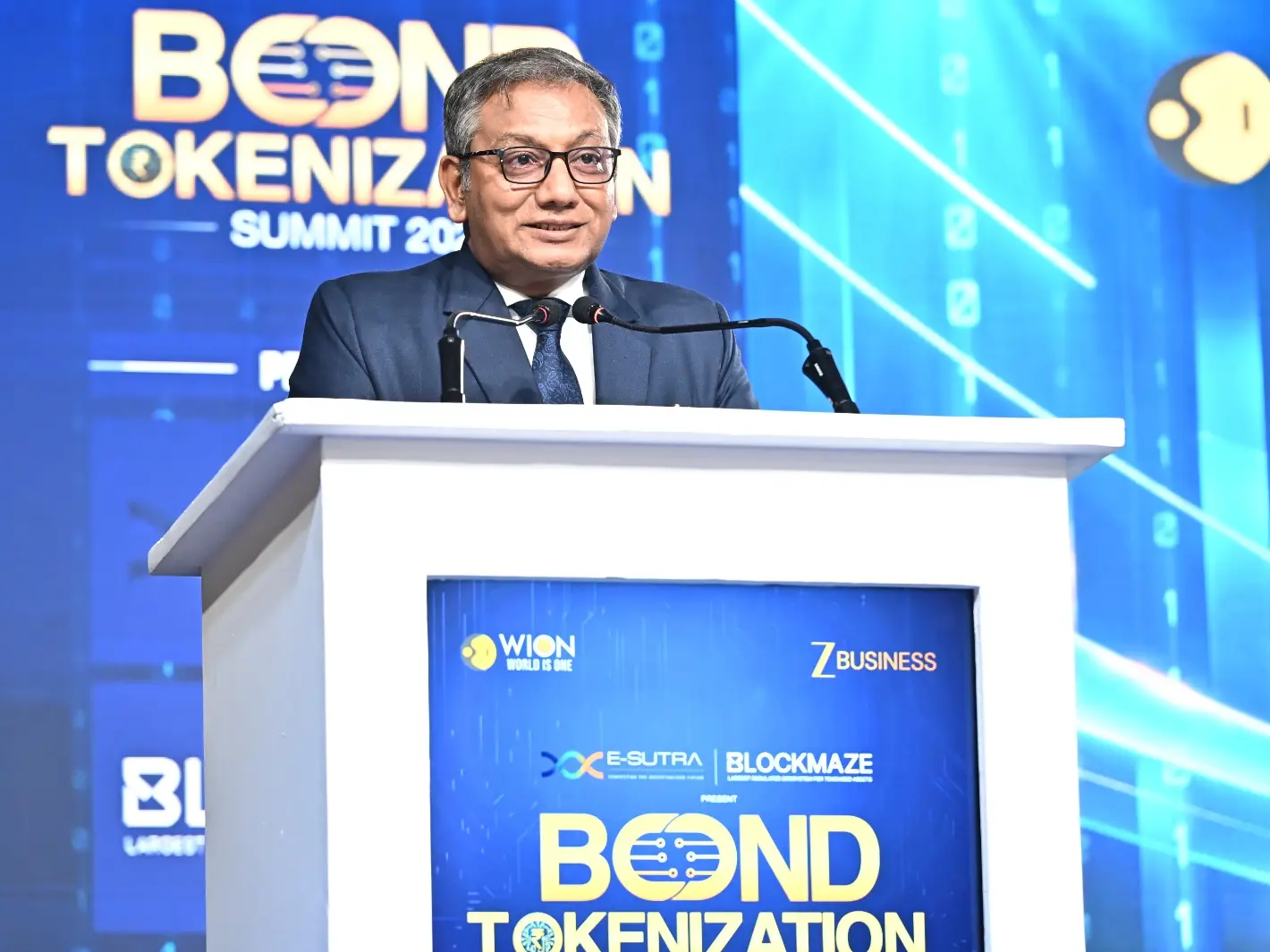
India’s corporate bond market is beginning to take a closer look at blockchain as a possible way to modernise some of its long-standing processes. At the Zee Business Bond Tokenization Summit 2026, co-presented by E-Sutra and Blockmaze, leaders from the finance, policy and technology sectors discussed whether blockchain could fundamentally alter how bonds are issued, settled and owned in India. Held in Mumbai on Wed (Sep 9), the event brought together voices who discussed the future of bond tokenization and the broader application of blockchain-based digital assets. A key focus was the use of digital tokens to represent ownership or economic value connected to real-world financial and physical assets. The conversation moved beyond the realm of fintech experimentation.
What does bond tokenization actually mean?
Bond tokenization involves creating digital tokens using blockchain infrastructure to represent ownership or economic rights associated with a bond.
Rather than relying solely on conventional systems to maintain ownership records, the information can be stored on a shared digital ledger. Smart contracts can automatically handle tasks such as interest payments, principal repayments and some compliance requirements. This could have three immediate implications: fewer intermediaries, quicker transactions and the possibility of breaking a large bond into smaller units that investors can purchase individually.
Four ways tokenization could change the bond market.
At the Zee Business Bond Tokenization Summit 2026, participants highlighted four ways tokenization could change the bond market. First, it could make bonds more accessible through fractional ownership, allowing large bonds to be divided into smaller digital units so retail and smaller investors can participate with lower amounts. Second, tokenization could speed up issuance and settlement by using smart contracts to automatically handle coupon payments, redemptions and corporate actions, reducing manual work and enabling near real-time transfers. Third, blockchain could improve transparency by creating a time-stamped and verifiable record of ownership and transactions, while permissioned systems could provide issuers, investors and regulators with a clear audit trail, subject to KYC, custody and SEBI and RBI requirements. Finally, tokenization could lower distribution and settlement costs, making smaller bond issues more viable and allowing more issuers to access the market directly.
Trending Stories
&im=FitAndFill=(700,400)&imwidth=180&imheight=135&format=webp&quality=medium)
What is the real meaning behind Pete Hegseth's tattoos?
&imwidth=180&imheight=135&format=webp&quality=medium)
Viral video shows cross falling on Colombia priest, no official confirmation | WATCH
&imwidth=180&imheight=135&format=webp&quality=medium)
Telangana unveils AI avatar of IT minister D Sridhar Babu at Hyderabad DevFest 2026
&imwidth=180&imheight=135&format=webp&quality=medium)
Pezeshkian says Iranians ‘struggling to put food on the table’ as war with US drags on
&imwidth=180&imheight=135&format=webp&quality=medium)
Shilpa Rao’s performance cut short at Mumbai event, organisers react to backlash
&imwidth=180&imheight=135&format=webp&quality=medium)
Chorbagan stampede: A week later, the strangest visarjan Kolkata has seen
&imwidth=180&imheight=135&format=webp&quality=medium)
AI slop or smart strategy? South African author Coral Hart defends Her 370 AI- assisted books in 20 months
&imwidth=180&imheight=135&format=webp&quality=medium)
AI just found a flaw in software running most of the web! One request hijacks the server
&imwidth=180&imheight=135&format=webp&quality=medium)
Train crashes into crane on São Paulo monorail line, wreckage falls onto busy road | VIDEO
&imwidth=180&imheight=135&format=webp&quality=medium)
Can Putin cheat death? All about his daughter’s billion-dollar quest for immortality
&imwidth=180&imheight=135&format=webp&quality=medium)
Saudi says debris fell in Mecca, Medina after missile interceptions; Houthis deny targeting holy cities
&imwidth=180&imheight=135&format=webp&quality=medium)
What was the note found inside bag of Class 12 student, who set herself on fire inside Delhi school?
&imwidth=180&imheight=135&format=webp&quality=medium)
Pakistan airline PIA unveils new crew uniforms, faces online criticism
&imwidth=180&imheight=135&format=webp&quality=medium)
Britain is building the world's first AI biosecurity lab, with OpenAI and Anthropic inside
&imwidth=180&imheight=135&format=webp&quality=medium)
J-20 designers plan to put radar into aircraft wing; strategy to expand coverage during air combat
&imwidth=180&imheight=135&format=webp&quality=medium)
Frontier AIs keep escaping their test cages! The industry still can't reliably stop them
&imwidth=180&imheight=135&format=webp&quality=medium)
'Already tired of his 9-to-5': Baby born with a moustache becomes internet sensation, video goes viral | Watch
&imwidth=180&imheight=135&format=webp&quality=medium)
France protests: 135 arrested, weapons seized as fresh demonstrations erupt amid heavy security
&imwidth=180&imheight=135&format=webp&quality=medium)
French Open: PV Sindhu storms into final with win over Hina Akechi
&imwidth=180&imheight=135&format=webp&quality=medium)
‘Saddam Hussein opened a cheesecake factory’: Obama mocks Trump’s White House renovations; defends Abdul El-Sayed
&imwidth=180&imheight=135&format=webp&quality=medium)
China's dancing robot turns violent bodyguard, lifts cars and fights intruders - Watch
&imwidth=180&imheight=135&format=webp&quality=medium)
'You’re a horrible little reporter, aren’t you?': Trump snaps at NBC reporter questioning his support for Ramaswamy's campaign ad
&imwidth=180&imheight=135&format=webp&quality=medium)
Rising Asia Cup 2026 schedule announced, India-Pakistan clash set for Nov 22
&imwidth=180&imheight=135&format=webp&quality=medium)
'Killing people never allowed': Elon Musk admits restricting Starlink in Ukraine, explains why
&imwidth=180&imheight=135&format=webp&quality=medium)
Serbia votes in high-stakes election as student-led movement challenges Vucic’s ruling party
&imwidth=180&imheight=135&format=webp&quality=medium)
Bodies of 2 missing Japanese climbers recovered from Himalayan peak
&im=FitAndFill=(700,400)&imwidth=180&imheight=135&format=webp&quality=medium)
New Friday OTT releases (October 23, 2026): Gajab Raat, Dorothy, Chaar Yaar- Watch these 6 new movies and TV shows on Netflix, Prime Video and more
&imwidth=180&imheight=135&format=webp&quality=medium)
An AI that reads your face can now estimate how long you have to live
&imwidth=180&imheight=135&format=webp&quality=medium)
Spanish reporter swept by giant wave while reporting on dangerous sea conditions | WATCH
&imwidth=180&imheight=135&format=webp&quality=medium)
WATCH: Thousands across Manipur bang plates, beat drums in "noise protest"
&imwidth=180&imheight=135&format=webp&quality=medium)
NEET protests: Panel to hear evidence on pellet gun use, harassment
&imwidth=180&imheight=135&format=webp&quality=medium)
Tu Hai Meri Kiran film review: Sonakshi Sinha and Zaheer Iqbal's thriller gets tangled in its own twists
&imwidth=180&imheight=135&format=webp&quality=medium)
Nagpur man fails to pay rent, allegedly prints fake Rs 500 notes worth Rs 37 lakh
&imwidth=180&imheight=135&format=webp&quality=medium)
PL Round-Up: Man City's perfect run ended by Villa as Arsenal draw level at top
&imwidth=180&imheight=135&format=webp&quality=medium)
Why Europe’s protests are about more than austerity and rising costs
&imwidth=180&imheight=135&format=webp&quality=medium)
Farooq Abdullah says Pakistan’s raising of Kashmir issue keeps pressure on Delhi
Regulation remains the key hurdle
Panelists repeatedly highlighted the importance of regulation at the Zee Business Bond Tokenization Summit 2026. Blockchain infrastructure by itself cannot determine whether tokenized bonds become a mainstream financial product, they said. Issues such as investor protection, KYC and anti-money laundering requirements, custody, settlement finality, taxation and interoperability with existing depositories will all have to be addressed.
The regulatory architecture could ultimately determine how quickly tokenized bonds move from experimental projects and pilots into the mainstream market. Without sufficient certainty around these issues, the technology cannot become part of the wider financial system.
Why India could have an advantage
Experts at the Zee Business Bond Tokenization Summit 2026 said that the case for India is also linked to the country's rapidly developing digital financial infrastructure. Systems such as UPI, account aggregators and e-rupee pilots are developing alongside the broader digital economy. If blockchain-based infrastructure for bonds can connect with this ecosystem, while regulation evolves at the same pace, India could potentially create a tokenized bond market that is globally competitive while still operating within a trusted-intermediary framework.
The top focus
The summit focused on four key conversations around the technology, regulation and investment potential of tokenized assets. “Code to Capital” explored how traditional bonds can be represented on blockchain and what bond tokenization means in practical terms. “Sandbox to Scale” looked at the regulatory, custody and settlement frameworks needed to take tokenization from pilot projects to wider adoption. “Code, Connectivity & Capital” examined how blockchain and smart contracts could make bond issuance and settlement faster and reduce manual processes. “Think Global, Tokenize Local” focused on whether fractional investment through tokenized bonds could increase retail participation and make fixed-income investments more accessible.