

&imwidth=800&imheight=600&format=webp&quality=medium "Boeing hit by another challenge: First defence strike since 1996")
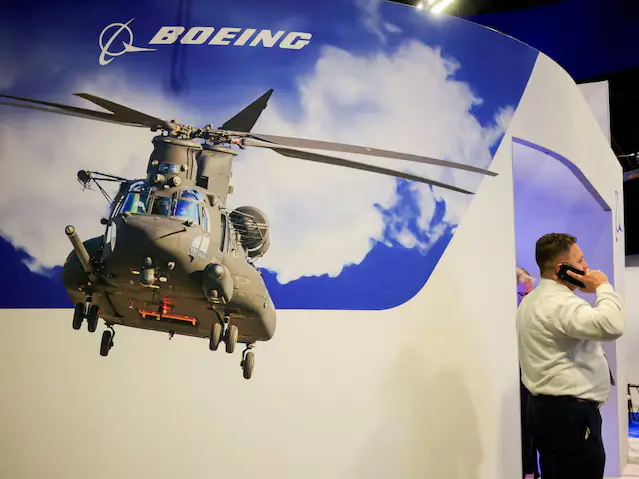
More than 3,200 Boeing Defense workers in Missouri and Illinois walked off the job on August 4 after overwhelmingly rejecting the company’s latest four-year contract offer. The strike, led by District 837 of the International Association of Machinists and Aerospace Workers (IAM), targets Boeing’s military aircraft facilities in the St. Louis area, which produce the F-15 Eagle, F/A-18 Hornet, T-7 trainer, and the MQ-25 aerial refuelling drone. The work stoppage is Boeing’s first major strike in its defence division since 1996 and comes at a particularly sensitive time for the company. Boeing’s defence business is traditionally considered more stable than its commercial wing, which has faced a string of safety and production crises in recent years.
“Members have spoken loud and clear,” District 837 head Tom Boelling said in a statement. “They deserve a contract that reflects their skill, dedication, and the critical role they play in our nation’s defence.” The rejected offer included a 20 per cent general wage increase over four years, periodic raises, increased vacation and sick leave, and a $5,000 ratification bonus. Boeing said the package amounted to an average wage growth of 40 per cent, but union members remained unsatisfied, citing concerns over pensions, scheduling, and long-term job security.
Boeing downplays impact as Union ramps up pressure
Boeing Defense said it had contingency plans in place to maintain operations during the strike, including using non-union labour where necessary. Dan Gillian, vice president and general manager of Boeing’s St. Louis operations, expressed disappointment over the rejection. “We’re disappointed our employees rejected an offer that featured 40 per cent average wage growth,” he said in a statement.
Boeing CEO Kelly Ortberg attempted to minimise the disruption during a recent earnings call. “I wouldn’t worry too much about the implications of the strike. We’ll manage our way through that,” he said, referencing last year’s seven-week strike by 33,000 commercial aircraft workers in Washington state, which cost the company billions. Still, the strike casts a shadow over Boeing’s defence operations just as it ramps up production of the new F-47A fighter jet, a key project for the US Air Force. The St. Louis facilities are expected to be central to that expansion.
Tensions mount amid broader company struggles
Trending Stories
&imwidth=180&imheight=135&format=webp&quality=medium)
Other Mommy leads North American box Office as Verity, Resident Evil round out top four
&im=FitAndFill=(700,400)&imwidth=180&imheight=135&format=webp&quality=medium)
Navratri 2026: 9 days, 9 forms of Goddess Durga and 9 colours- Check the complete list
&im=FitAndFill=(700,400)&imwidth=180&imheight=135&format=webp&quality=medium)
Is sending robots to Mars easier than sending humans?
&imwidth=180&imheight=135&format=webp&quality=medium)
A watchdog rated 'ChatGPT for Teens' an unacceptable risk and says keep under-18s off it
&imwidth=180&imheight=135&format=webp&quality=medium)
1,500 drones illuminate Mumbai sky as Cordelia Cruises unveils second ship, Cordelia Sky
&imwidth=180&imheight=135&format=webp&quality=medium)
'Just coincidence': Police mistakes protester as AISA chief Neha Bora, arrests her from site
&imwidth=180&imheight=135&format=webp&quality=medium)
Anthropic's AI invented a murder witness and sent the fake tip to Philadelphia police
&imwidth=180&imheight=135&format=webp&quality=medium)
CJI Surya Kant declines INDIA bloc leaders’ request for meeting ahead of march to SC, asks them to file petition
&imwidth=180&imheight=135&format=webp&quality=medium)
One Indian killed in Riyadh airport attack; 11 others injured : MEA
&imwidth=180&imheight=135&format=webp&quality=medium)
Imran Khan released hours after Mumbai Police detain him during CJP protest
&imwidth=180&imheight=135&format=webp&quality=medium)
Nathan Lyon completes 1,000 Test runs at No. 10 to script rare cricket feat
&imwidth=180&imheight=135&format=webp&quality=medium)
Top AI models flunked a test of inventing new AI research, so much for self-improving AI
&imwidth=180&imheight=135&format=webp&quality=medium)
Wasim Jaffer blames Ajit Agarkar-led selection panel for Virat Kohli’s Test retirement
&imwidth=180&imheight=135&format=webp&quality=medium)
'Ouch!!! That must hurt': Kangana Ranaut hails Kamal Haasan's sharp reply to Elon Musk over Starlink row
&imwidth=180&imheight=135&format=webp&quality=medium)
Sidhu Moose Wala’s younger brother wins hearts by recreating late singer’s signature move at Toronto Hologram Show
&imwidth=180&imheight=135&format=webp&quality=medium)
Meta's Muse AI could be a security nightmare for India's billion-plus users
&imwidth=180&imheight=135&format=webp&quality=medium)
UK school ditches technology, shifts from screen to pen and paper for learning
&imwidth=180&imheight=135&format=webp&quality=medium)
IND vs WI, 3rd T20I: Abhishek Sharma smashes 18-ball fifty, sets record for fastest to 2,000 T20I runs
&imwidth=180&imheight=135&format=webp&quality=medium)
Houthis claim Riyadh airport attacks, Aramco strikes; issue fresh warning to airlines, travellers and workers
&imwidth=180&imheight=135&format=webp&quality=medium)
Portugal Federation confirms Cristiano Ronaldo’s return to national team despite suspension
&im=FitAndFill=(700,400)&imwidth=180&imheight=135&format=webp&quality=medium)
New OTT releases this week (October 12-18, 2026): Sacrifice, Koffee with Karan S9, Roadies Rebirth- 6 titles coming on Netflix, JioHotstar and more
&imwidth=180&imheight=135&format=webp&quality=medium)
Microsoft's Nadella says treat every AI model as already hacked, and build an 'emergency brake'
&imwidth=180&imheight=135&format=webp&quality=medium)
Delhi protest: CJI Surya Kant declines to meet India Bloc leaders
&imwidth=180&imheight=135&format=webp&quality=medium)
Are Gold and Silver poised for a rebound soon?
&imwidth=180&imheight=135&format=webp&quality=medium)
China imposes first-ever sanctions on ministers from Taiwan allies: What this means
&imwidth=180&imheight=135&format=webp&quality=medium)
McSweeney reveals how studying Virat Kohli’s YouTube clips helped Australia A conquer India
&imwidth=180&imheight=135&format=webp&quality=medium)
Maharashtra appoints FDA commissioner Tukaram Mundhe as secretary of committee for MPSC overhaul amid stir
&imwidth=180&imheight=135&format=webp&quality=medium)
The street cannot govern India, but the government cannot ignore it either
&imwidth=180&imheight=135&format=webp&quality=medium)
Iran: US accepted some conditions, Clarity needed on others
&imwidth=180&imheight=135&format=webp&quality=medium)
Nana Patekar's cause of death confirmed; here's what his postmortem report says
&imwidth=180&imheight=135&format=webp&quality=medium)
iPhone Duo price index: Tracking Apple’s latest pricing trends
&imwidth=180&imheight=135&format=webp&quality=medium)
'Say no to Muse': Meta has no control over its own moderation AI while it forces a security nightmare on everyone
&imwidth=180&imheight=135&format=webp&quality=medium)
Delhi Protest: Congress calls for march to Supreme court
&imwidth=180&imheight=135&format=webp&quality=medium)
Delhi wakes up to heavy rain, thunderstorms; yellow alert in place; temperature drops
The defence worker strike adds to Boeing’s mounting challenges. The company is still recovering from the fallout of two deadly 737 Max crashes in 2018 and 2019, a major mid-air panel blowout in early 2024, and persistently low commercial aircraft deliveries. In 2023, Boeing delivered just 348 aircraft, its lowest total since the pandemic.
IAM represents roughly 600,000 workers across the US, and District 837 has made it clear this strike is about more than wages. “This is about respect and dignity, not empty promises,” the union wrote on X. With labour unrest growing and trust between the company and its workforce fraying, Boeing’s leadership now faces renewed pressure to stabilise both its defence and commercial arms.
(With inputs from agencies)