Global EV sales rise by 21 per cent in July, China witnesses massive jump

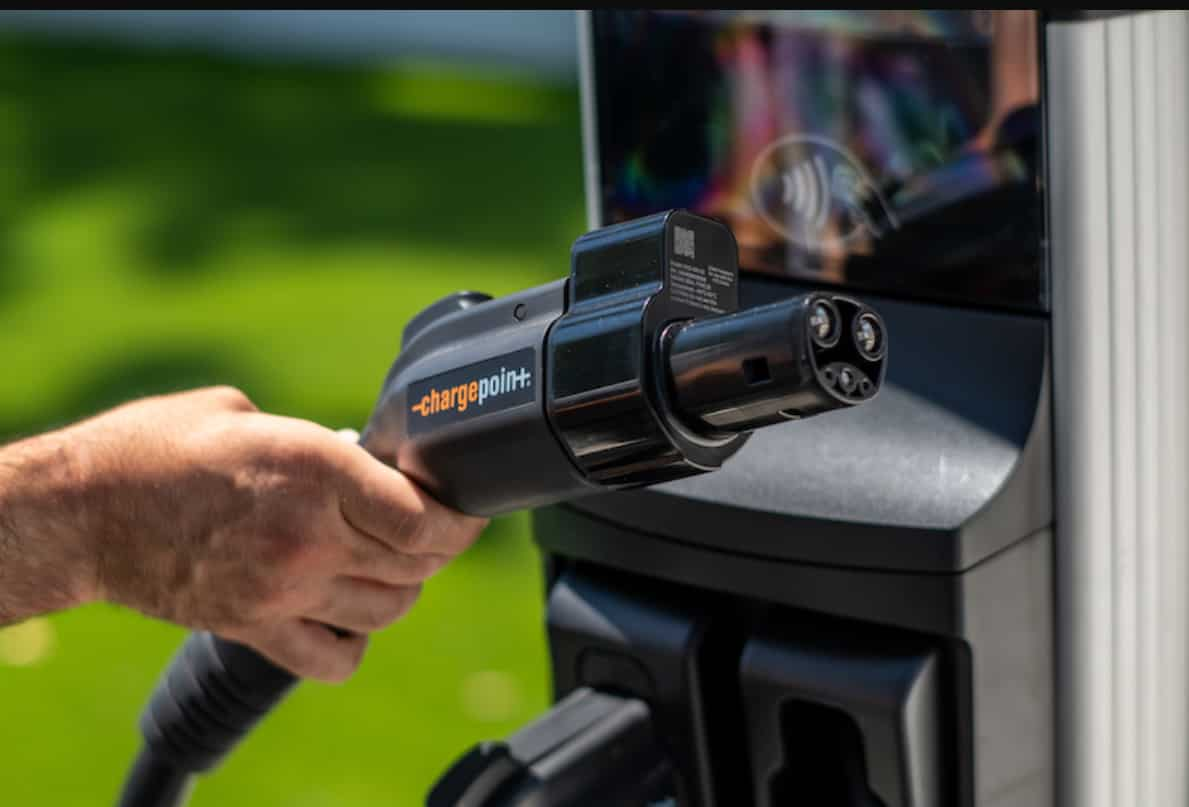
The EV market has long grappled with the issue of multiple charging connectors.
Global electric vehicle (EV) sales, encompassing both fully electric and plug-in hybrid vehicles, experienced a significant upswing in July, with a year-over-year increase of 21 per cent. This growth was primarily driven by China's robust performance, which exhibited its strongest growth of the year.
This positive trend occurred despite a decline in demand observed in the European market, according to a report released on Monday by market research firm Rho Motion.
The European Union's recent implementation of provisional tariffs on EVs imported from China is expected to have varying impacts on different manufacturers. Charles Lester, a data manager at Rho Motion, shared with Reuters that MG Motor, a subsidiary of China's SAIC Motor Corp, is likely to be the most severely affected by these new tariffs.

In contrast, the impact on other major players in the EV market is anticipated to be less pronounced. Tesla, for instance, is expected to weather the tariffs more effectively due to its ability to manufacture vehicles at its Berlin factory.
Similarly, BYD, a Chinese EV giant, is predicted to face minimal consequences from the tariffs, primarily because its presence in the European market remains relatively limited at present.
Delving into the specifics of the global EV sales figures, July saw a total of 1.35 million units sold worldwide. Of this total, China accounted for an impressive 0.88 million units, representing a substantial 31 per cent year-on-year increase in that market alone. It's worth noting that plug-in hybrid vehicles (PHEVs) have shown particularly strong growth in China, with sales in the first seven months of 2024 surging by 70 per cent compared to the previous year.
)
Forget apps: Qualcomm CEO says AI agents will change how we use smartphones
)
IND vs JPN, one-off T20I: Japan captain Kendel on pushing India to the brink - ‘It was special’
)
Infections transmitted from pregnant woman linked to autism risk
)
81st UN General Assembly: Burnham announces UK-US AI defence tie-up
)
From Gaddafi tearing up UN Charter to Trump’s ‘escalatorgate’: Most unforgettable UNGA moments
)
WION Iconic Tourism Summit and Awards 2026: Key voices to discuss India’s tourism future
)
Mikel Arteta verbally agrees to three-year extension with Arsenal after title-winning Premier League season
)
ICC plans T20I expansion and fewer ODIs in 2027–2031 FTP cycle: Report
)
Gravitas | Boosting NHS productivity could save 20,600 lives in UK annually: Report
)
Asia prepares for record El Nino, food shock
)
El Niño 2026 heats up to become strongest in 1,000 years
)
Over 4,200 books withdrawn from circulation in J&K colleges, 94% from Kashmir
)
Yemen clashes kill 154 people in two days as cornered Saudi battles Houthi offensive | Gravitas
)
Elephants hide behind trees, stage surprise attack on poachers targeting rhinos in South Africa
)
Major League Soccer referee sacked for sexist comment about female match referee
)
US and China vie for AI dominance as calls grow for regulation | Gravitas
)
Nor'easter could batter 13 US states this week. What you should know
&im=FitAndFill=(700,400))
New OTT releases this week (September 21-27, 2026): Shaque: Trust No One, Hunkkaar, Don’t Be Shy- 5 new titles coming to Netflix, Prime Video and more
)
WION Iconic Tourism Summit and Iconic Awards 2026: India's travel economy leaders gather in Delhi
)
Explainer: Why rare-earth export licences and Board of Trade are US priorities ahead of Trump-Xi summit
)
Erdogan again raises Kashmir issue at UNGA, calls for dialogue under UN Charter
&im=FitAndFill=(700,400))
National Film Awards 2026: Kartik Aaryan, Mammootty, Yami Gautam, Randeep Hooda and other key winners
)
Bomb scare in New York amid UNGA: Suspicious suitcase found near UN headquarters
)
IND vs JPN T20I: How an overturned wide became point of difference between India's win and a tie
)
'What kind of confession is this?': Pakistan PM Shehbaz Sharif’s 'terrorists would be roaming New York' remark goes viral, raises alarm online. Watch
)
Trump signs Greenland security deal with Denmark, paving way for two new US military bases
)
Four female students raped during 'Red Zone' at California university. What we know
)
China to test supersonic jet that moves at Mach 2, double the speed of sound
)
IIT Bombay professor Suryanarayana Doolla sent on leave amid Sahil Wakode death probe
)
US-China tech war: Businesses in the front line
)
WION Iconic Tourism Summit: Seychelles envoy says India partnership is important for Seychelles
)
Trump calls on nations to quit ‘rogue’ and ‘out-of-control’ International Criminal Court, rips UN
)
Trump revives India-Middle East-Europe economic corridor as India emerges central to West Asia’s future: What is it?
)
Anne Hathaway to run in supporting race for Nolan's epic
)
Cyclone Arnab: Landfall expected before midnight tomorrow as IMD issues orange alerts across six states
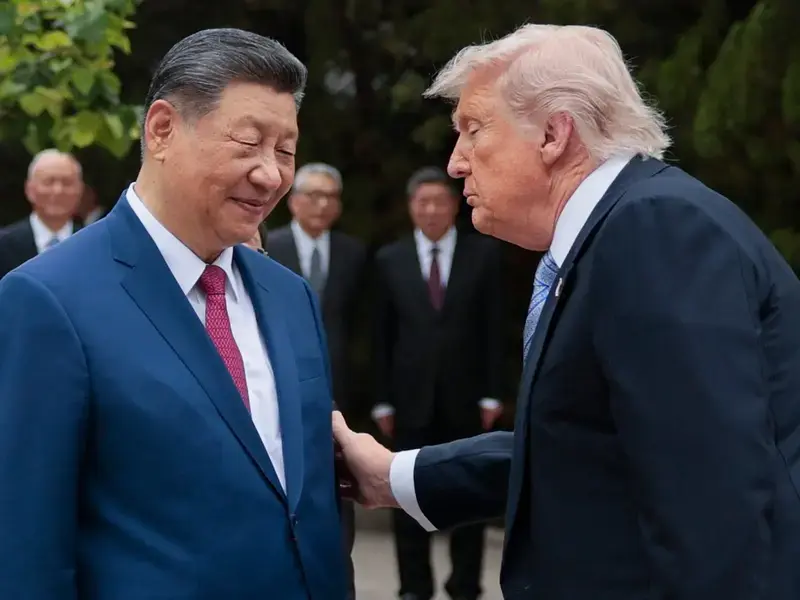)
Trump-Xi summit: From trade to Taiwan, what will the US and Chinese presidents discuss in Washington?
)
Justice eludes Air India 1985 bombing victims as Canada probe goes 'inactive' | Gravitas
BYD, which holds the title of both China's and the world's largest EV manufacturer, reported significant growth in its global sales for both battery electric vehicles (BEVs) and PHEVs. In the same seven-month period, BYD's BEV sales increased by 13 per cent, while its PHEV sales saw a remarkable 44 per cent boost.
The European market, however, presented a different picture. July witnessed a 7.8% decrease in monthly EV sales, bringing the year-to-date figures in line with those of 2023. Germany, which stands as the EU's largest EV market, experienced a more pronounced decline, with sales dropping by 12 per cent in the seven months leading up to July.
In North America, the United States and Canada collectively saw a modest increase in EV sales, with figures rising by 7.1 per cent in July.
Lester highlighted BYD's continued success in the PHEV segment, noting that the company's record-breaking sales of plug-in hybrids played a crucial role in its overall performance. He emphasized that BYD's large volume of PHEV sales significantly contributed to its strong market position.
Another emerging trend in the EV market is the growing popularity of range extender vehicles. These are essentially battery-powered hybrid cars that utilise an onboard generator for recharging, and Lester pointed out that they are selling in substantial numbers.
The European Union's decision to impose provisional tariffs on Chinese-made electric cars in July has resulted in varying duty rates for different manufacturers. BYD faces a 17.4 per cent tariff, while Geely and SAIC are subject to 19.9 per cent and 37.6 per cent duties, respectively, according to EU statements.
This comprehensive overview of the global EV market highlights the complex interplay of regional trends, regulatory measures, and manufacturer strategies shaping the industry's growth and dynamics.