Zero emissions, pure water: Inside India’s first hydrogen train flagged off by PM Modi

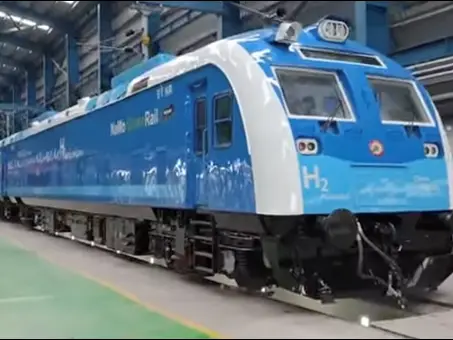&imwidth=600&imheight=450&format=webp&quality=medium "Zero emissions, pure water: Inside India’s first hydrogen train flagged off by PM Modi")
Zero emissions, pure water: Inside India’s first hydrogen train flagged off by PM Modi Photograph: (Credit: PIB)
PM Modi has inaugurated India's first indigenous hydrogen-powered train on the Jind-Sonipat route. Learn how this 3,200 HP green fuel cell technology replaces diesel to generate clean electricity onboard with zero carbon emissions.
In a historic leap toward sustainable transportation, Prime Minister Narendra Modi flagged off India’s first-ever hydrogen-powered passenger train, named the NaMo Green Rail, from Jind, Haryana. Operating on the Jind–Sonipat route, this pioneering train marks India's entry into a select elite global group exploring hydrogen fuel cell technology for clean rail transit.
Speaking at the ceremony, PM Modi said, "... Not only is this Indian hydrogen train emission-free, but it is also a highly successful example of the 'Make in India' initiative... In the near future, further infrastructure related to hydrogen trains will be developed here. New factories will be set up to cater to the needs of the hydrogen train network. In other words, this train is bound to create numerous new employment opportunities for the youth of Haryana."
How is a hydrogen train different from a diesel-electricity powered train?
Both types are essentially electric trains, but they differ entirely in how they generate that electricity. In a diesel-electric train, theengine burns fuel to spin a large alternator, which generates the electricity used to power the traction motors. This process releases carbon dioxide, nitrogen oxides, and particulate matter.
While hydrogen fuel cell trainsuse onboard hydrogen fuel cells instead of burning anything. Hydrogen from onboard tanks combines with oxygen from the outside air in a chemical reaction that generates electricity. Pure water vapour and heat are the only byproducts of this process.
Trending Stories
&imwidth=280&imheight=210&format=webp&quality=medium)
&imwidth=280&imheight=210&format=webp&quality=medium)
&imwidth=280&imheight=210&format=webp&quality=medium)
&imwidth=280&imheight=210&format=webp&quality=medium)
&imwidth=280&imheight=210&format=webp&quality=medium)
&imwidth=280&imheight=210&format=webp&quality=medium)
&imwidth=280&imheight=210&format=webp&quality=medium)
&imwidth=280&imheight=210&format=webp&quality=medium)
&imwidth=280&imheight=210&format=webp&quality=medium)
&imwidth=280&imheight=210&format=webp&quality=medium)
&imwidth=280&imheight=210&format=webp&quality=medium)
&imwidth=280&imheight=210&format=webp&quality=medium)
&imwidth=280&imheight=210&format=webp&quality=medium)
&imwidth=280&imheight=210&format=webp&quality=medium)
&imwidth=280&imheight=210&format=webp&quality=medium)
&imwidth=280&imheight=210&format=webp&quality=medium)
&imwidth=280&imheight=210&format=webp&quality=medium)
&imwidth=280&imheight=210&format=webp&quality=medium)
&imwidth=280&imheight=210&format=webp&quality=medium)
&imwidth=280&imheight=210&format=webp&quality=medium)
&imwidth=280&imheight=210&format=webp&quality=medium)
&imwidth=280&imheight=210&format=webp&quality=medium)
&imwidth=280&imheight=210&format=webp&quality=medium)
&imwidth=280&imheight=210&format=webp&quality=medium)
&imwidth=280&imheight=210&format=webp&quality=medium)
&imwidth=280&imheight=210&format=webp&quality=medium)
&imwidth=280&imheight=210&format=webp&quality=medium)
&imwidth=280&imheight=210&format=webp&quality=medium)
&im=FitAndFill=(700,400)&imwidth=280&imheight=210&format=webp&quality=medium)
&imwidth=280&imheight=210&format=webp&quality=medium)
&imwidth=280&imheight=210&format=webp&quality=medium)
How much pollution can a hydrogen train reduce compared to diesel trains?
At the point of operation, a hydrogen train reduces 100% of direct tailpipe emissions because it emits nothing but water vapour. However, the total lifecycle pollution reduction depends heavily on how the hydrogen is manufactured.
- Green Hydrogen: If the hydrogen is produced via electrolysis powered by renewable energy (like wind or solar), the lifecycle carbon footprint is zero.
- Grey/Blue Hydrogen: If the hydrogen is produced using traditional natural gas reforming, lifecycle greenhouse gas emissions are still roughly 45% lower than operating a standard diesel locomotive.
What is the top speed of a hydrogen train, and is it as powerful as a diesel locomotive?
Commercial passenger models, such as Alstom's Coradia iLint, generally operate at top speeds of 140 km/h. Currently, hydrogen fuel cell systems are highly efficient for lighter regional passenger fleets but are less powerful than heavy-duty diesel locomotives. Because hydrogen requires a massive amount of physical storage volume, matching the immense tractive power required for heavy freight trains over long distances remains a significant engineering hurdle.
How far can a hydrogen train travel on a single tank of hydrogen?
Standard regional hydrogen passenger trains generally feature an operational range of 600 to 1,000 kilometers on a single fill. In 2022, a modified Alstom Coradia iLint set a world record by traveling 1,175 kilometers on a single tank of hydrogen during a promotional run. Smaller or retrofitted passenger configurations, such as pilot trains designed for shorter regional lines, often operate with ranges closer to 250 kilometers per cycle.
How long does it take to refuel a hydrogen train compared to charging an electric train?
Refueling a hydrogen train takes roughly 15 to 20 minutes extending up to 60 minutes for large-capacity fleet. This allows it to quickly return to service, mimicking traditional diesel logistics.
Pure battery-electric trains used on non-electrified tracks require anywhere from several hours for a full depot charge to 20–30 minutes using fast-charging stations, which can disrupt standard route schedules. But the conventional electric trains running continuously on overhead catenary wires do not require refueling downtime at all.
Which countries already operate or deploy hydrogen trains?
- Germany: The global pioneer, having launched the world's first fully commercial, regular passenger service using a fleet of hydrogen trains in Lower Saxony.
- China: Has developed and successfully deployed multiple fuel cell variants, including urban digital transits and regional locomotives.
- India: Has actively entered the space by retrofitting older rolling stock into hydrogen fuel-cell setups, deploying pilot passenger runs on dedicated regional test tracks like the Jind–Sonipat corridor.
- Japan & United States: Both nations currently run active, localised pilot routes, testing small passenger fleets for regional transit authorities.
Key Features of the Hydrogen-Powered Train on the Jind-Sonipat Section
- 10-carhydrogen fuel cell-based trainset.
- Powered by a1200 kWhydrogen fuel cell propulsion system.
- Approved to operate at a maximum speed of75 km/hwith a design speed of110 km/h.
- Capacity of around2,600passengers.
- Developed from thedesign stagethroughprototype manufacturing.
- It will connect Jind Junction, Gohana Junction, and Sonipat while serving intermediate stations.
- Proposed halts include Jind City, Pandu Pindara Junction, Lalit Khera Halt, Bhambhewa, Isapur Kheri Halt, Butane Halt, Khandrai Halt, Rabrah Halt, Lath Halt, Mohana, Barwasni Halt and Sonipat New.

