‘Unacceptable, irrelevant, election interference’: JD Vance’s Munich speech slammed by Europe, praised by Russia

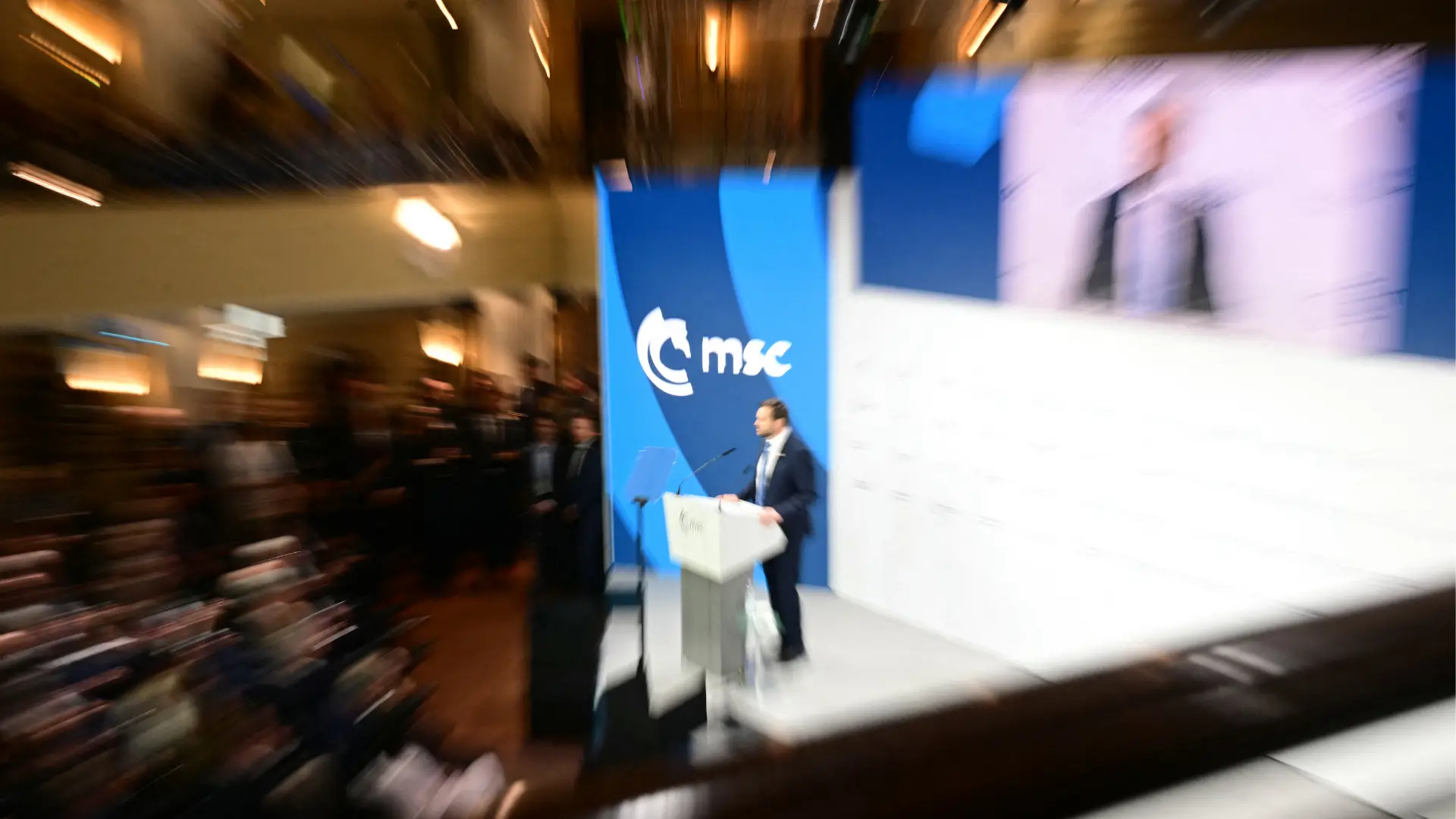
World: In his speech, Vance accused European governments of disregarding public concerns about immigration and stifling free speech, sparking backlash from European officials.
German Defence Minister Boris Pistorius strongly criticised US Vice President JD Vance following his speech at the Munich Security Conference on Friday (Feb 14).
In his speech, Vance accused European governments of disregarding public concerns about immigration and stifling free speech, sparking backlash from European officials.

'Not acceptable'
The EU’s foreign policy chief Kaja Kallas, reacting to US vice president JD Vance’s speech, said it felt like Washington was “trying to pick a fight” with Europe.
Kallas told reporters, "Listening to that speech, they try to pick a fight with us and we don’t want to pick a fight with our friends."
&imwidth=180&imheight=135&format=webp&quality=medium)
'Hell of a beautiful a**': Trump compliments Nicki Minaj as rapper joins him in Michigan rally
&imwidth=180&imheight=135&format=webp&quality=medium)
'Hire the robot, fire the human': Bill Gates's words hint at a bleak future
&imwidth=180&imheight=135&format=webp&quality=medium)
Telangana unveils AI avatar of IT minister D Sridhar Babu at Hyderabad DevFest 2026
&imwidth=180&imheight=135&format=webp&quality=medium)
Who is Eyal Zamir, Israeli army chief, who reportedly clashed with Netanyahu over Iran?
&imwidth=180&imheight=135&format=webp&quality=medium)
Fire breaks out at Delhi’s North Block, thick black smoke seen | VIDEO
&imwidth=180&imheight=135&format=webp&quality=medium)
Grammy-winning singer Chris Brown to be sentenced in London after pleading guilty to nightclub brawl
&im=FitAndFill=(700,400)&imwidth=180&imheight=135&format=webp&quality=medium)
Armoured vehicles vs main battle tanks: What is the real difference?
&imwidth=180&imheight=135&format=webp&quality=medium)
IND vs NZ: Tilak Varma sets world record with most T20I catches in a year
&imwidth=180&imheight=135&format=webp&quality=medium)
Harry Kane favourite to win 2026 Ballon d’Or ahead of Lamine Yamal and Kylian Mbappé
&imwidth=180&imheight=135&format=webp&quality=medium)
FIR filed against opposition MPs for ‘trespassing’ amid Jamia Millia students’ protest
&imwidth=180&imheight=135&format=webp&quality=medium)
WATCH | Virat Kohli returns to training ahead of New Zealand ODI series
&imwidth=180&imheight=135&format=webp&quality=medium)
Can Putin cheat death? All about his daughter’s billion-dollar quest for immortality
&imwidth=180&imheight=135&format=webp&quality=medium)
Daler Mehndi controversy: Mika Singh’s team confirms Subodh Uniyal’s apology
&im=FitAndFill=(700,400)&imwidth=180&imheight=135&format=webp&quality=medium)
How do army night-vision systems see in almost complete darkness?
&imwidth=180&imheight=135&format=webp&quality=medium)
Netanyahu warns Israelis of ‘existential threat’ from Iran, posts AI image of nuclear strike
&imwidth=180&imheight=135&format=webp&quality=medium)
Brazil re-elects factory worker Lula for fourth term; Indian PM Modi congratulates 'dear friend'
&imwidth=180&imheight=135&format=webp&quality=medium)
Pakistan airline PIA unveils new crew uniforms, faces online criticism
&imwidth=180&imheight=135&format=webp&quality=medium)
‘That is a miss’: Ravi Ashwin questions Sooryavanshi’s demotion to No. 3 in 2nd T20I vs NZ
&im=FitAndFill=(700,400)&imwidth=180&imheight=135&format=webp&quality=medium)
Why does this fighter jet have a golden window that looks like alien technology?
&im=FitAndFill=(700,400)&imwidth=180&imheight=135&format=webp&quality=medium)
New OTT releases this week (October 26-November 1, 2026): Baththa, Akka, The One About Matthew Perry- 7 titles coming on Netflix, Prime Video and more
&imwidth=180&imheight=135&format=webp&quality=medium)
Elon Musk’s Grok releases first AI-generated Odyssey episode, months after promising ‘historically accurate’ full-length film
&imwidth=180&imheight=135&format=webp&quality=medium)
'Already tired of his 9-to-5': Baby born with a moustache becomes internet sensation, video goes viral | Watch
&imwidth=180&imheight=135&format=webp&quality=medium)
Serbia’s student-led movement defeats Vucic’s party after 14 years in power: Why it matters
&imwidth=180&imheight=135&format=webp&quality=medium)
'I promised Gautam & Kotak Sir that...': Tilak Varma opens up on match-winning mindset against NZ
&imwidth=180&imheight=135&format=webp&quality=medium)
Maldives opposition leader demands transparency on Muizzu Govt's Pakistan defence, security deals
&im=FitAndFill=(700,400)&imwidth=180&imheight=135&format=webp&quality=medium)
Why do some fighter jets have two engines while others use one?
&imwidth=180&imheight=135&format=webp&quality=medium)
Formula 1: Mercedes' Kimi Antonelli one race and ninth spot finish away from title after US Grand Prix win
&imwidth=180&imheight=135&format=webp&quality=medium)
Delhi's new entry rules for vehicles begin November 1. Here's all you need to know about the ban
&imwidth=180&imheight=135&format=webp&quality=medium)
'Clear overkill': Putin rejects claims Russia is behind mass protests in Europe
&imwidth=180&imheight=135&format=webp&quality=medium)
'I've done my work sincerely': AR Rahman on facing backlash over Ramayana soundtrack
&imwidth=180&imheight=135&format=webp&quality=medium)
Clayface tops North American box office, Elizabeth Holmes documentary follows close behind
&imwidth=180&imheight=135&format=webp&quality=medium)
Nagpur man fails to pay rent, allegedly prints fake Rs 500 notes worth Rs 37 lakh
&imwidth=180&imheight=135&format=webp&quality=medium)
Israel elections 2026: How the country is gearing up for a crucial vote
&imwidth=180&imheight=135&format=webp&quality=medium)
Donald Trump targets Bill Maher in lengthy post after White House dinner, says ‘Don’t call anymore’
&imwidth=180&imheight=135&format=webp&quality=medium)
'He is a red flag': Ex-India strength and conditioning coach on Rohit's fitness regime
Speaking from the main stage at the conference on Friday, Pistorius condemned Vance’s speech. “Democracy was called into question by the US Vice President forthe whole of Europe earlier,” he said.
Vance's comparison of certain European conditions to those in authoritarian states was particularly unacceptable, according to Pistorius. “He speaks of the annihilation of democracy. And if I have understood him correctly, he is comparing conditions in parts of Europe with those in authoritarian regions... that is not acceptable,” he was quoted as saying by AFP.
Swedish Foreign Minister Maria Malmer Stenergard also responded to Vance’s criticism, which was seen as a reference to the conviction of Salman Majek in Sweden. Majek had taken part in multiple Qur’an burnings in Stockholm and was found guilty of incitement against an ethnic group.
“As a Swedish politician, I do not review [decisions by] independent courts, and I think politicians in other countries should also refrain from doing so,” Stenergard stated.
Former Swedish Prime Minister and Foreign Minister Carl Bildt also weighed in, offering a harsh assessment of Vance’s speech. “The #MSC2025 speech by [US] VP Vance was significantly worse than expected. At best it was totally irrelevant to European or global security concerns. At worst it was blatant interference in the [German] election campaign in favour of far-right AfD,” Bildt wrote.
Also read: ‘We will create NATO in Ukraine’: Zelensky on NATO ambitions, Trump’s personal number, and more
Vance’s speech received a much warmer reception in Russia. A correspondent from Rossiya 1, one of the country's most-watched television channels, praised his address. “It was very nice to hear Vance’s very strong speech,” the correspondent said.
Another Journalist Asya Yemelyanova also reacted positively, describing Vance’s speech as “a public caning.” She added, “I can't call it anything else. It was also nice to watch the faces of those listening to him,”
What did JD Vance say in his Munich address?
In his address, Vance urged Europe to promote freedom and tackle what he described as “the threat that I worry most, the threat from within.” He warned against what he saw as a retreat from fundamental values due to free speech restrictions, online content moderation, and political barriers against radical parties.
Vance also accused European leaders of being fearful of their own voters, particularly on immigration. He argued that such an approach could weaken democracy by discouraging public participation in political processes.
He dismissed concerns about Elon Musk’s alleged interference in European elections, saying, “If American democracy can survive 10 years of Greta Thunberg’s scolding, you guys can survive a few months of Elon Musk.”
Additionally, he called for an end to political “firewalls,” referring specifically to Germany’s strategy of excluding far-right parties such as the Alternative für Deutschland (AfD). His comments came just nine days before Germany’s federal election next Sunday.
(With inputs from agencies)
