The B-52 deploys a 200-pound parachute after every landing to stop 83 tons of bomber

&imwidth=600&imheight=450&format=webp&quality=medium "The B-52 deploys a 200-pound parachute after every landing to stop 83 tons of bomber")
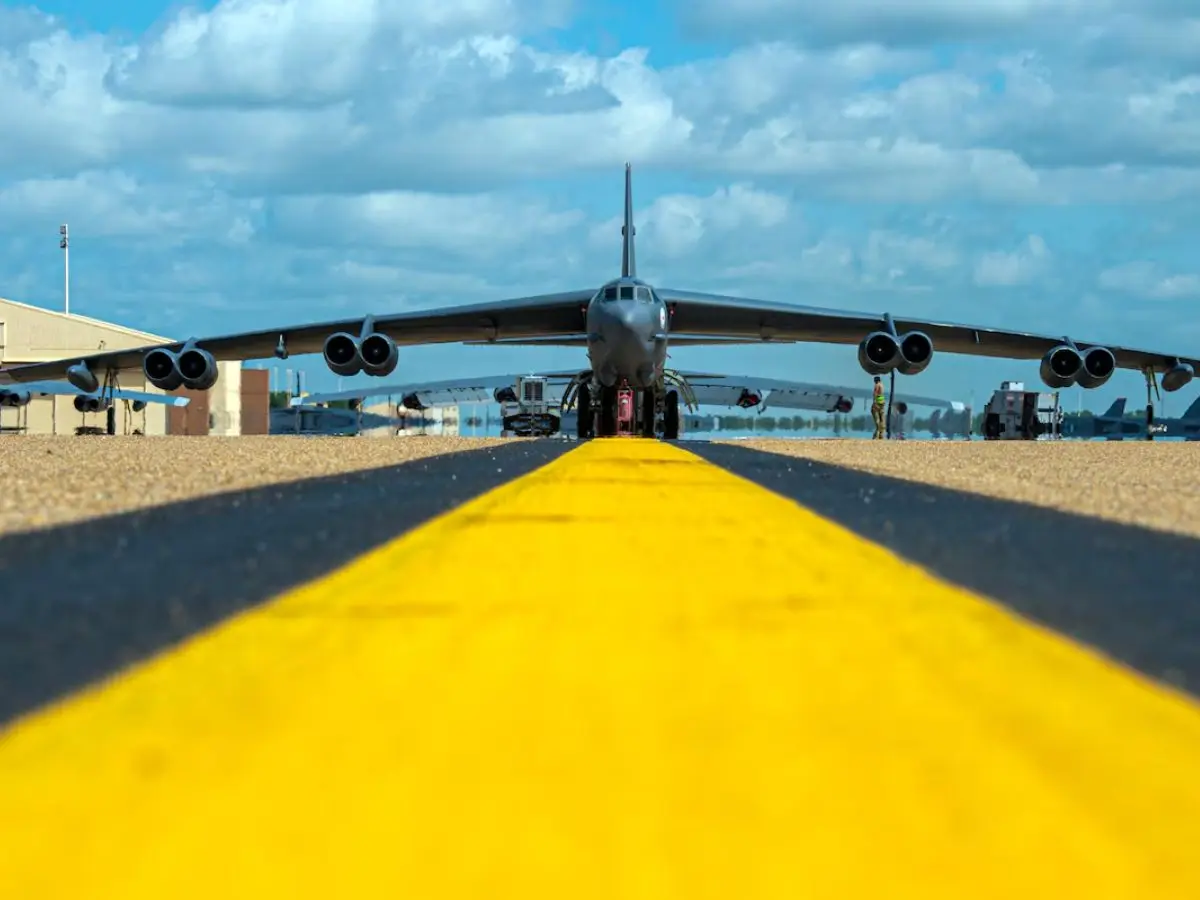
The B-52 deploys a 200-pound parachute after every landing to stop 83 tons of bomber Photograph: (boeing.com)
Every time a B-52 Stratofortress lands, a 200-pound drag chute roughly 27 metres long and 13 metres wide explodes from the rear of the aircraft to help slow down 83 tons of bomber.
The B-52 Stratofortress weighs approximately 83 tons at a typical landing weight. It touches down at around 170 knots, roughly 315 kilometres per hour. Bringing that much mass from that speed to a full stop on a finite length of runway requires more than just wheel brakes. It requires a parachute and not a small one.
How The Chute Deploys
The moment the B-52's main landing gear touches the runway, the crew initiates the drag chute sequence. A small white pilot chute is released first from a compartment at the rear of the fuselage. This pilot chute catches the airstream and pulls the main drag chute, a massive orange canopy approximately 27 metres long with a diameter of around 13 metres, out of its housing and into the slipstream behind the aircraft. The main chute inflates almost instantly, creating enormous aerodynamic drag that decelerates the bomber significantly before the wheel brakes are even fully applied.
The Numbers Behind The Chute
The drag chute weighs approximately 200 pounds and is packed into a compartment at the base of the B-52's tail section. When deployed, it reduces the aircraft's landing roll from approximately 4,900 feet to around 4,100 feet, a reduction of roughly 800 feet, or about 16 per cent. That difference can be critical on shorter runways, in wet conditions, or when the aircraft is landing at higher-than-normal speeds. The chute absorbs a substantial portion of the aircraft's kinetic energy during the landing roll, significantly reducing the heat and wear on the B-52's wheel brakes and tyres, components that are expensive to replace and critical to flight safety.
When It Is Mandatory
Trending Stories
&imwidth=280&imheight=210&format=webp&quality=medium)
&imwidth=280&imheight=210&format=webp&quality=medium)
&imwidth=280&imheight=210&format=webp&quality=medium)
&imwidth=280&imheight=210&format=webp&quality=medium)
&imwidth=280&imheight=210&format=webp&quality=medium)
&imwidth=280&imheight=210&format=webp&quality=medium)
&imwidth=280&imheight=210&format=webp&quality=medium)
&imwidth=280&imheight=210&format=webp&quality=medium)
&imwidth=280&imheight=210&format=webp&quality=medium)
&imwidth=280&imheight=210&format=webp&quality=medium)
&imwidth=280&imheight=210&format=webp&quality=medium)
&imwidth=280&imheight=210&format=webp&quality=medium)
&imwidth=280&imheight=210&format=webp&quality=medium)
&imwidth=280&imheight=210&format=webp&quality=medium)
&imwidth=280&imheight=210&format=webp&quality=medium)
&imwidth=280&imheight=210&format=webp&quality=medium)
&imwidth=280&imheight=210&format=webp&quality=medium)
&imwidth=280&imheight=210&format=webp&quality=medium)
&imwidth=280&imheight=210&format=webp&quality=medium)
&im=FitAndFill=(700,400)&imwidth=280&imheight=210&format=webp&quality=medium)
&imwidth=280&imheight=210&format=webp&quality=medium)
&imwidth=280&imheight=210&format=webp&quality=medium)
&imwidth=280&imheight=210&format=webp&quality=medium)
&imwidth=280&imheight=210&format=webp&quality=medium)
&imwidth=280&imheight=210&format=webp&quality=medium)
&imwidth=280&imheight=210&format=webp&quality=medium)
&imwidth=280&imheight=210&format=webp&quality=medium)
&imwidth=280&imheight=210&format=webp&quality=medium)
&imwidth=280&imheight=210&format=webp&quality=medium)
&imwidth=280&imheight=210&format=webp&quality=medium)
&im=FitAndFill=(700,400)&imwidth=280&imheight=210&format=webp&quality=medium)
&imwidth=280&imheight=210&format=webp&quality=medium)
&imwidth=280&imheight=210&format=webp&quality=medium)
&imwidth=280&imheight=210&format=webp&quality=medium)
The drag chute is not optional equipment that crews use at their discretion. US Air Force procedures require the chute to be deployed on every landing when the runway is wet or icy, when crosswinds exceed 30 knots, and when the available runway length is less than one mile. In practice, many B-52 crews deploy the chute on virtually every landing as a matter of standard procedure, the reduction in brake wear alone makes it worthwhile even on long, dry runways in calm conditions.
A Feature Born Of Necessity
The B-52's drag chute is not a design luxury, it is a necessity driven by the aircraft's sheer size and weight. When the B-52 was designed in the early 1950s, the aircraft's engineers knew that conventional wheel brakes alone would struggle to decelerate an 83-ton bomber from landing speed within the runway lengths available at most Air Force bases. The drag chute was the solution: a reliable, reusable braking system that supplements the wheel brakes and has been deployed on tens of thousands of B-52 landings over more than six decades. After each landing, the chute is detached from the aircraft on the runway, collected by ground crew, repacked, and reinstalled for the next flight. It is one of the most visually dramatic features of any landing in military aviation, a massive orange canopy billowing behind one of the largest bombers ever built.
