From drones to KAAN fighters: Turkey outlines 229% surge in defence spending amid regional shifts

&imwidth=600&imheight=450&format=webp&quality=medium "From drones to KAAN fighters: Turkey outlines 229% surge in defence spending amid regional shifts")
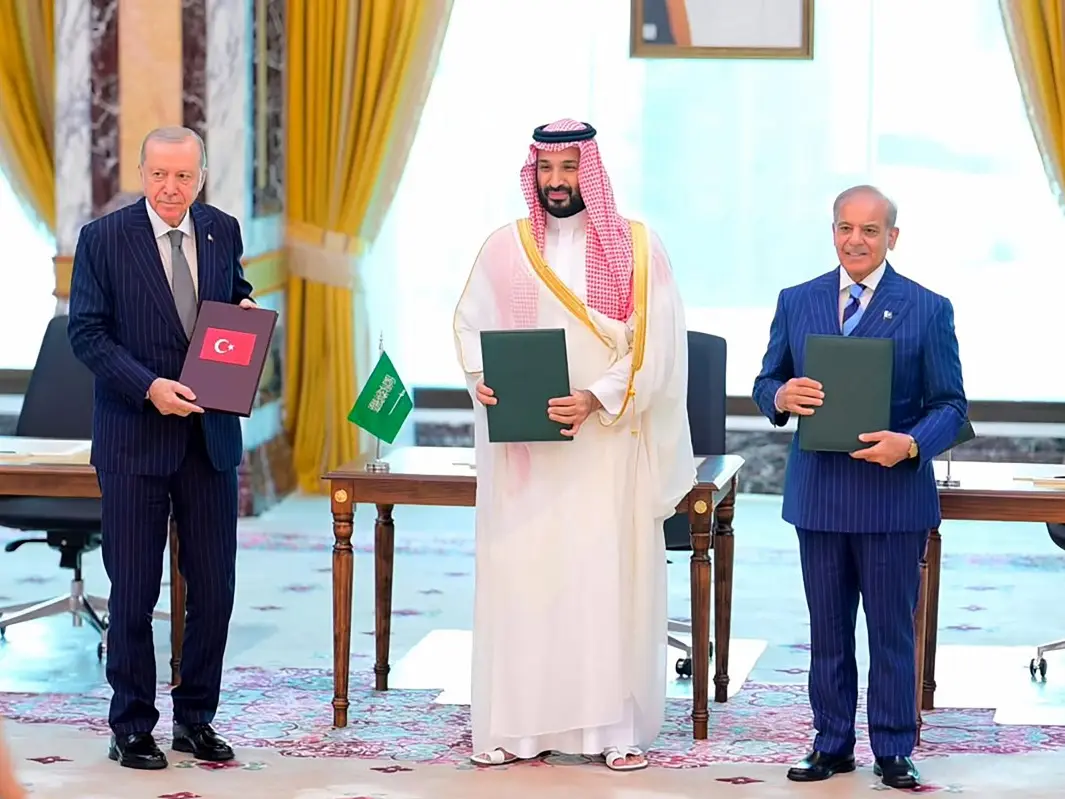
Saudi Crown Prince MBS, Turkish Prez Erdogan & Pak PM Sharif posing after signing the Mecca Joint Defence Agreement Photograph: (Credit: AFP)
Turkey announces plans to raise its defence spending by 229% over the next three years to boost domestic technology, strategic autonomy, and regional presence.
Turkey plans to more than triple its defence spending, boosting resources by 229% over the next three years to strengthen self-reliance and expand its influence across Europe and West Asia. Announcing the plan, Vice-President Cevdet Yilmaz emphasised that the funding aims to advance domestic technology, fulfill national defence needs, and build high-added-value platforms, noting that security is essential for economic development and democracy.
This strategic shift seemingly follows years of Turkish frustration with unreliable Western allies and a desire for greater strategic autonomy. Rather than purchasing hardware from NATO partners, Turkey is directing the budget increase into its domestic industrial base, focusing on drone warfare, air defence, and electronic warfare.
Surrounding Conflicts and Regional Role
Ankara’s policy is shaped by multi-front regional security threats. Rising shipping attacks from the Russia-Ukraine war directly affect Turkey’s control of the Bosphorus and Dardanelles straits. As NATO’s southern flank, Turkey also acts as a deterrent against Russian sabotage near members like Bulgaria and Romania.
Trending Stories
&imwidth=280&imheight=210&format=webp&quality=medium)
&imwidth=280&imheight=210&format=webp&quality=medium)
&imwidth=280&imheight=210&format=webp&quality=medium)
&imwidth=280&imheight=210&format=webp&quality=medium)
&imwidth=280&imheight=210&format=webp&quality=medium)
&imwidth=280&imheight=210&format=webp&quality=medium)
&imwidth=280&imheight=210&format=webp&quality=medium)
&imwidth=280&imheight=210&format=webp&quality=medium)
&imwidth=280&imheight=210&format=webp&quality=medium)
&imwidth=280&imheight=210&format=webp&quality=medium)
&imwidth=280&imheight=210&format=webp&quality=medium)
&imwidth=280&imheight=210&format=webp&quality=medium)
&imwidth=280&imheight=210&format=webp&quality=medium)
&imwidth=280&imheight=210&format=webp&quality=medium)
&imwidth=280&imheight=210&format=webp&quality=medium)
&im=FitAndFill=(700,400)&imwidth=280&imheight=210&format=webp&quality=medium)
&imwidth=280&imheight=210&format=webp&quality=medium)
&imwidth=280&imheight=210&format=webp&quality=medium)
&imwidth=280&imheight=210&format=webp&quality=medium)
&imwidth=280&imheight=210&format=webp&quality=medium)
&imwidth=280&imheight=210&format=webp&quality=medium)
&imwidth=280&imheight=210&format=webp&quality=medium)
&imwidth=280&imheight=210&format=webp&quality=medium)
&imwidth=280&imheight=210&format=webp&quality=medium)
&imwidth=280&imheight=210&format=webp&quality=medium)
&imwidth=280&imheight=210&format=webp&quality=medium)
&imwidth=280&imheight=210&format=webp&quality=medium)
&imwidth=280&imheight=210&format=webp&quality=medium)
&imwidth=280&imheight=210&format=webp&quality=medium)
&imwidth=280&imheight=210&format=webp&quality=medium)
&imwidth=280&imheight=210&format=webp&quality=medium)
&imwidth=280&imheight=210&format=webp&quality=medium)
&imwidth=280&imheight=210&format=webp&quality=medium)
&imwidth=280&imheight=210&format=webp&quality=medium)
&imwidth=280&imheight=210&format=webp&quality=medium)
Coming to West Asia and Mediterranean, the unpredictability surrounding the US-Iran-Israel conflict, Houthi threats, and Israel’s actions in Syria, including a recent strike on a Syrian airbase near the Turkish border have heightened tensions. Tensions have also flared with Greece, which recently signed a $3.48 billion deal to buy Israeli air defence systems.
The decreasing US commitments in West Asia has pushed middle powers to self-rely. Turkey must also maintain its widespread foreign military presence, including bases in Libya, Qatar, Somalia, and Syria.
Turkey is transitioning from a military consumer to a major defence exporter:
Mecca Joint Defence Agreement
This was signed earlier on August 7, alongside Saudi Arabia and Pakistan; this mutual defence pact stipulates that an attack on one nation is treated as an attack on all three. It unites Turkish military technology, Saudi capital, and Pakistani military capability.
Kaan Stealth Fighter
Following a diplomatic thaw, the US agreed to supply engines for Turkey’s fifth-generation Kaan fighter jet. Saudi Arabia and Pakistan are prospective buyers.
Drones and Hardware
Turkey continues to expand domestic production of tanks, submarines, and specialised platforms such as the Bayraktar drones and Akinci UCAVs, which are actively exported and deployed in regional conflicts.

