

&imwidth=800&imheight=600&format=webp&quality=medium "EXPLAINED: Why Xi Jinping visited North Korea after 7 years and what China actually wants?")
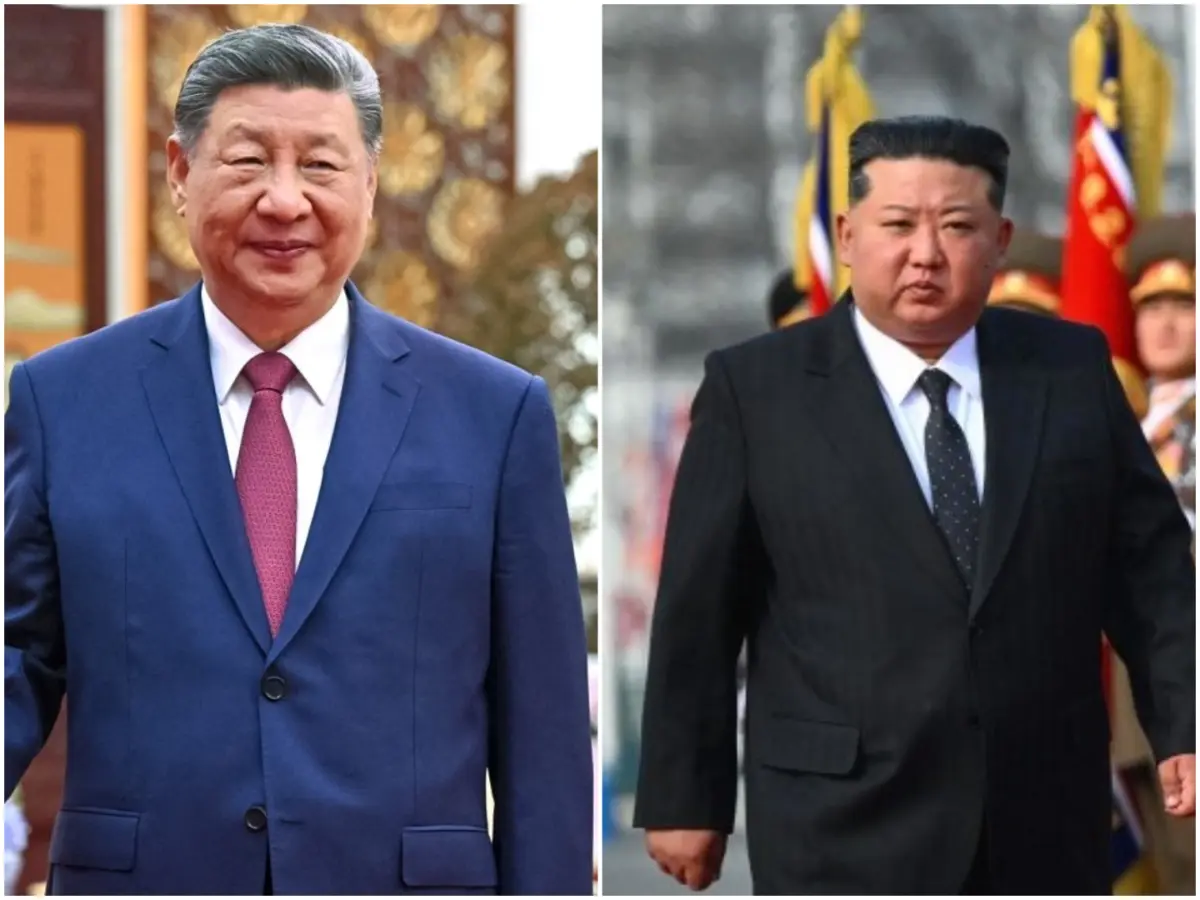
Chinese President Xi Jinping paid his first visit to North Korea in seven years on Monday (June 8). He received a colourful carpet welcome from North Korean leader Kim Jong Un and his wife Ri Sol Ju, where he was given a guard of honour and crowds waved Chinese and North Korean flags together. While addressing, Xi Jinping has lauded relations between China and North Korea, stating that they stand at a "new historical starting point" and added the pair are "shouldering new missions of the times", according to a state media report.
Why is Xi Jinping in North Korea?
North Korea is the only neighbour that can neither be controlled nor afforded to lose by China. Both sides frequently labelled their relationship as one "forged in blood", referring to the Korean War. In recent years, relations between the two nations have become more complicated in recent years, with growing mistrust affecting their traditionally close ties.
As Chinese President Xi Jinping visits Pyongyang, Beijing appears focused on protecting its strategic interests rather than simply strengthening friendship. China wants stability along its border and influence over North Korea, but it also wants to avoid being caught up in tensions linked to Pyongyang's nuclear programme.
China is reportedly concerned about North Korea's increasingly close relationship with Russia. Since Russia invaded Ukraine, Pyongyang and Moscow have expanded military cooperation, including signing a mutual defence pact during President Vladimir Putin's visit to North Korea in 2024. The shift has raised concerns in Beijing, which fears losing influence over its neighbour. Xi's visit is therefore seen as an effort to maintain China's role in regional affairs and ensure North Korea remains within its sphere of influence.
According to a BBC report, around 2,300 North Korean soldiers have lost their lives fighting for Russia against Ukraine. Additionally, Pyongyang is also accused of supplying arms and weapons to Russia in exchange for oil and aid, a move that has socked Washington and its allies, and quietly rattled China. "China wants to ensure that its interests vis-à-vis North Korea are protected at a time of rapid convergence between Moscow and Pyongyang," adds Ankit Panda, a nuclear policy specialist at the Carnegie Endowment for International Peace.
Trending Stories
China's defence treaty with North Korea
China's only formal defence treaty is with North Korea, making Beijing wary of Russia gaining greater influence in Pyongyang. A stronger and less dependent Kim Jong Un could reduce China's leverage. In response, Beijing has sought to rebuild ties. During their first formal summit in six years, Xi Jinping invited Kim to a military parade and described China and North Korea as "good neighbours, good friends and good comrades bound by a shared destiny", while calling for closer strategic coordination. Notably, North Korea's nuclear programme was not mentioned publicly.
China is closely monitoring the growing partnership between Pyongyang and Moscow, and analysts stated that Beijing's reaction is far from straightforward. Lee Seong-hyon, a visiting scholar at the Harvard University Asia Centre, stated that Beijing has "mixed feelings" about the partnership between the two nations. On one hand, closer ties between North Korea and Russia help distract the US and complicate its foreign policy efforts, indirectly benefiting China.
However, China is also concerned that deeper military cooperation between Russia and North Korea could encourage stronger security cooperation among the United States, Japan and South Korea. Such a development would increase pressure on Beijing in the region. This is one reason why China has avoided openly supporting North Korea's nuclear programme. At the same time, Beijing is careful not to push Pyongyang away.
What is China's biggest fear for North Korea?
In 2022, China and Russia blocked a US-led United Nations resolution seeking additional sanctions on North Korea over its missile tests. Experts believe China fears that taking a tougher position could drive North Korea even closer to Russian President Vladimir Putin. Meanwhile, North Korea remains heavily dependent on China economically. Chinese exports to North Korea reached about $2.3 billion last year, their highest level in six years, while direct train services between Beijing and Pyongyang resumed after a long suspension.
Relations between the two countries have not always been smooth. Kim Jong Un's rapid expansion of North Korea's nuclear and missile programmes alarmed Beijing, while the execution of his uncle Jang Song Thaek, who was seen as a pro-China figure, further strained ties. At one point, North Korean state media even referred to China as a "turncoat and our enemy."
Despite past tensions, both sides recognise their strategic importance to each other. China sees North Korea as a buffer against US military influence, while Pyongyang relies on Beijing for economic and diplomatic support. Although mutual trust remains limited, both countries continue to engage because their interests remain closely linked.

