
&imwidth=800&imheight=600&format=webp&quality=medium "AMD unveils its Nvidia killer: MI450 superchip gets OpenAI's 6-gigawatt backing")
Lisa Su just made the most aggressive move of AMD's history. At the Advancing AI 2026 conference in San Francisco, she unveiled the hardware AMD believes can break Nvidia's stranglehold on artificial intelligence — and she brought receipts: OpenAI, Meta, Microsoft, and Oracle have all signed up.
The MI450: AMD's AI Superchip
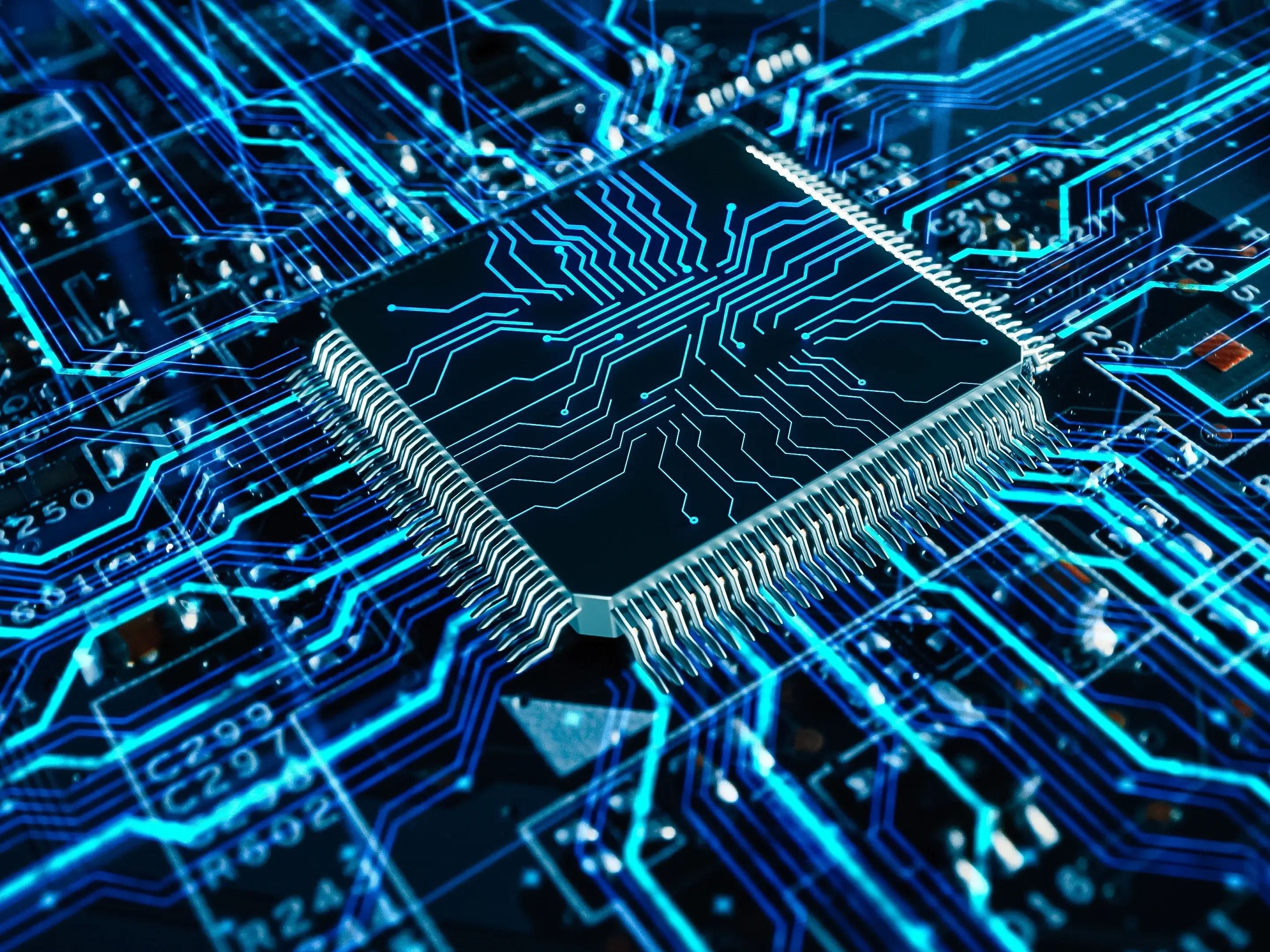
The centrepiece of the event was the Instinct MI450, AMD's next-generation AI accelerator. The chip packs 432 gigabytes of HBM4 memory — high-bandwidth memory that is the critical bottleneck in training large AI models. AMD claims the MI450 delivers roughly 10 times the training performance of the MI300X, the company's current flagship.

Whether that multiplier holds in real-world workloads remains to be seen — vendor performance claims at launch events routinely overstate gains compared to independent benchmarks. But even discounted, the MI450 represents a generational leap that puts AMD in direct competition with Nvidia's Blackwell architecture for the first time at the frontier scale.
EPYC Venice: The First 2nm Server CPU
Alongside the GPU, AMD unveiled EPYC Venice — the first x86 server processor in volume production on TSMC's 2-nanometre process node. The move to 2nm gives Venice a significant power-efficiency advantage over current server CPUs, which matters enormously in data centres where electricity consumption is becoming the binding constraint on scale.
Trending Stories
)
Did India risk its US trade deal despite softer stance at BRICS?
)
Pakistan puts Pak Rs 70 lakh bounty on UN terrorist Masood Azhar; move draws skepticism in Delhi
)
‘US ensuring global energy supplies’: Trump demands reimbursement for securing Strait of Hormuz
)
'Huge destructive power': North Korea calls its latest missile launches 'live-fire drill' even as US dismisses 'immediate threat'
)
‘Let’s go’: Newly declassified videos show dramatic rescue of US Air Force officers downed in Iran
)
Historic first: ‘Ganga aarti’ performed on River Thames in London
&im=FitAndFill=(700,400))
Why European Meteor missiles use ramjet engines compared to standard US solid rockets
)
Iran, India agree to deepen humanitarian and political ties, President Pezeshkian says
)
‘Want to reset ties with India, have engagement based on mutual interests,’ says Bangladesh minister
)
Turkish Airlines plane flies through a storm three times, triggering severe turbulence
&im=FitAndFill=(700,400))
Why Chinese PL-15 air-to-air missiles use dual-pulse motors compared to European interceptors
)
BRICS set of guidelines for disaster management
)
800 million years old - Scientists discover 'fingerprints' of supercontinent Gondwana in ancient rocks
)
Russia proposes to build 360 kmph Ivolga FG trains in India: What happened on sidelines of BRICS
)
China discovers vast gold and silver 'mine' in the Pacific with unheard-of deposits
)
Who really benefits from the BRICS bank? Inside the New Development Bank's $43 billion portfolio
)
Plane carrying prominent figure crashes at Libya’s Misrata airport: Report
&im=FitAndFill=(700,400))
New OTT releases this week (September 14-20, 2026): Lust Stories 3, Waiting Hai, Irumudi- 5 new titles coming on Netflix, Prime Video and more
)
Liam Neeson sparks romance rumours after holding hands with Stella Stocker at TIFF 2026
)
Sent home midway from UK tour, Pakistan's Salman Agha hits 300* in domestic return
)
Nigerian Navy seizes 10,000 litres of suspected illegal fuel in Rivers State crackdown
)
Saudi Arabia discovers 110 million tonnes of Uranium-rich ore in Madinah region
)
Indian importers urge Bangladesh to lift export ban on 'Hilsa' fish ahead of Durga Puja
)
Ecstasy tablets are rage in 'drug haven' Libya | Gravitas
)
'Now Trump is copying us': Shivakumar links US $5,000 plan to Congress guarantees
)
Video of Pakistani lawmaker struggling to read English tribute to Jinnah goes viral - WATCH
)
Trump downplays China's alleged 'help' to Iran in strike on Jordan base | Gravitas
)
Meghan Markle shares first glimpse of family life with Prince Harry and children in UK
)
Baba Vanga's first prophecy for 2027 is out, and straight out of science fiction
)
Photographs, LeT labels vanish from two 2008 Mumbai attack entries in Pakistan’s most wanted list
)
US court blocks Trump administration move ending automatic H-4 EAD extensions for seven spouses
)
UK man admits drugging, raping wife for 20 years in shocking abuse case
)
Extreme warming in Indian Ocean added 695 billion tons of ice to Antarctica ice sheet
)
Scotland, Wales & Northern Ireland push for exit from UK | Race To Power
)
China thinned Himalayan troop presence in 2025, India defence report says; terms border situation 'stable'
Venice is designed to pair with the MI450 in AMD's Helios rack system, a fully integrated AI training platform that AMD is positioning as a turnkey alternative to Nvidia's DGX infrastructure. The rack delivers 31 terabytes of HBM4 memory across its GPU complement.
The Customer Commitments
Hardware specifications are one thing. Customer commitments are another, and here AMD delivered its strongest evidence yet that the industry is ready to diversify beyond Nvidia.
OpenAI has committed to 6 gigawatts of AMD GPU capacity under a multi-generation agreement signed in October 2025, with the first gigawatt of MI450 deployments beginning in the second half of 2026. Meta signed a matching 6-gigawatt deal in February 2026, centred on custom MI450 GPUs paired with Venice CPUs. Microsoft and Oracle have also committed to significant AMD deployments, absorbing what AMD says is the near-term supply.
Six gigawatts is an extraordinary number. For reference, a typical nuclear power plant generates about one gigawatt. OpenAI alone has committed to the AI computing equivalent of six nuclear plants' worth of AMD hardware.
The Nvidia Challenge
AMD's pitch is straightforward: comparable performance at competitive pricing, with an open software ecosystem built on ROCm 7 that avoids the lock-in of Nvidia's proprietary CUDA platform. The problem has always been software maturity — Nvidia's CUDA ecosystem has a decade-long head start, and most AI researchers and engineers have built their workflows around it.
AMD is betting that the sheer scale of demand — and the desire of companies like OpenAI and Meta to avoid single-supplier dependency — will overcome the switching costs. The gigawatt-scale commitments suggest that bet is working, at least at the hyperscaler level.
What Comes Next
Su also previewed the MI500, scheduled for 2027, which AMD claims will deliver 1,000 times the training performance of the MI300X. That claim is aspirational and should be treated accordingly — but the roadmap signals that AMD views AI hardware as its defining business for the rest of the decade.
The AI chip market has been Nvidia's monopoly for the past three years. AMD's Advancing AI event did not end that monopoly. But 12 gigawatts of committed capacity from OpenAI and Meta, the first 2nm server CPU, and a GPU with 432GB of HBM4 represent the most credible challenge Nvidia has faced since the AI boom began.
