Afghan Health Minister Noor Jalal Jalali praises India’s ‘long-standing’ healthcare support

&imwidth=600&imheight=450&format=webp&quality=medium "Afghan Health Minister Noor Jalal Jalali praises India’s ‘long-standing’ healthcare support")
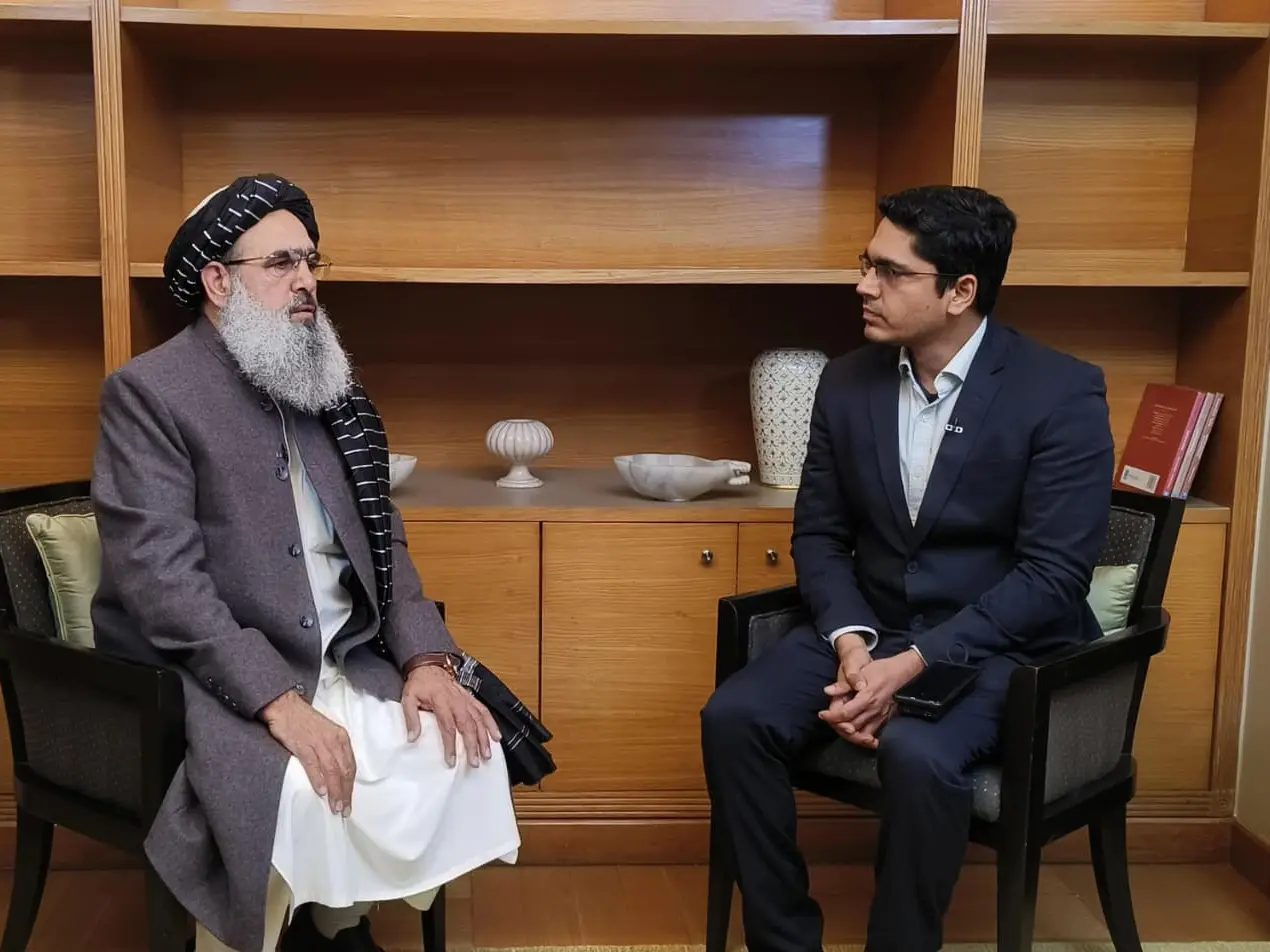
Afghanistan’s Minister of Public Health, Mawlawi Noor Jalal Jalali, speaking exclusively to WION
India has established a thalassaemia centre and a modern diagnostic centre at Kabul’s Indira Gandhi Institute of Child Health. It will also construct a 30-bed hospital in Kabul’s Bagrami district, including an oncology centre, a trauma centre, and five maternity health clinics.
Afghanistan’s Minister of Public Health, Mawlawi Noor Jalal Jalali, has praised India’s long standing support for Afghan healthcare, highlighting medical visas as a “vital humanitarian channel” during a visit to New Delhi. Speaking exclusively to WION’s Sidhant Sibal, Jalali noted, “Afghans have been regularly traveling to India for medical treatment for a long time.”
India has established a thalassaemia centre and a modern diagnostic centre and replaced the heating system at Kabul’s Indira Gandhi Institute of Child Health. It will also construct a 30-bed hospital in Kabul’s Bagrami district, including an oncology centre, a trauma centre, and five maternity health clinics.
Jalali welcomed India’s contributions to Afghan health infrastructure, describing the Indira Gandhi Institute of Child Health in Kabul as “one of the major paediatric hospitals in Afghanistan.” He said Afghanistan had “previously requested [the] honourable Indian Chargé d'affaires... regarding strengthening the infrastructure,” and received promises of a CT scan machine and further support.
Around 75 prosthetic limbs (Jaipur foot) have been fitted for Afghan nationals, with India continuing to provide medical assistance and treatment. During Afghan Foreign Minister Amir Khan Muttaqi’s visit, India gifted 20 ambulances to Afghanistan. Full interview:
India Ties
Sidhant Sibal: How do you see India ties
Mawlawi Noor Jalal Jalali: I would like to convey my regards to viewers and listeners of WION. I've travelled to India for health issues and discussions. Afghanistan values its long standing and constructive relationship with India. Our engagement with India has traditionally been people centric, particularly in health, education and humanitarian assistance. We see India as an important regional partner and our current interaction reflects a mutual interest in pragmatic cooperation based on respect, humanitarian consideration and shared responsibility.
Trending Stories
&imwidth=280&imheight=210&format=webp&quality=medium)
&imwidth=280&imheight=210&format=webp&quality=medium)
&imwidth=280&imheight=210&format=webp&quality=medium)
&imwidth=280&imheight=210&format=webp&quality=medium)
&imwidth=280&imheight=210&format=webp&quality=medium)
&imwidth=280&imheight=210&format=webp&quality=medium)
&imwidth=280&imheight=210&format=webp&quality=medium)
&imwidth=280&imheight=210&format=webp&quality=medium)
&imwidth=280&imheight=210&format=webp&quality=medium)
&imwidth=280&imheight=210&format=webp&quality=medium)
&imwidth=280&imheight=210&format=webp&quality=medium)
&imwidth=280&imheight=210&format=webp&quality=medium)
&imwidth=280&imheight=210&format=webp&quality=medium)
&imwidth=280&imheight=210&format=webp&quality=medium)
&imwidth=280&imheight=210&format=webp&quality=medium)
&imwidth=280&imheight=210&format=webp&quality=medium)
&imwidth=280&imheight=210&format=webp&quality=medium)
&imwidth=280&imheight=210&format=webp&quality=medium)
&imwidth=280&imheight=210&format=webp&quality=medium)
&imwidth=280&imheight=210&format=webp&quality=medium)
&imwidth=280&imheight=210&format=webp&quality=medium)
&imwidth=280&imheight=210&format=webp&quality=medium)
&imwidth=280&imheight=210&format=webp&quality=medium)
&imwidth=280&imheight=210&format=webp&quality=medium)
&imwidth=280&imheight=210&format=webp&quality=medium)
&imwidth=280&imheight=210&format=webp&quality=medium)
&imwidth=280&imheight=210&format=webp&quality=medium)
&im=FitAndFill=(700,400)&imwidth=280&imheight=210&format=webp&quality=medium)
&imwidth=280&imheight=210&format=webp&quality=medium)
&imwidth=280&imheight=210&format=webp&quality=medium)
&imwidth=280&imheight=210&format=webp&quality=medium)
&imwidth=280&imheight=210&format=webp&quality=medium)
&imwidth=280&imheight=210&format=webp&quality=medium)
Meeting with Indian Health Minister
Sidhant Sibal: Following your recent visit to India and meetings with Union Health Minister JP Nadda, what specific new areas of cooperation in healthcare infrastructure and medical supplies have been agreed upon between Afghanistan and India?
Mawlawi Noor Jalal Jalali: First of all, I would like to state that this was my first visit to India since the establishment of the Islamic Emirates of Afghanistan, I was the first health minister to travel to India. The discussions with His Excellency, the Minister of Health and Family Welfare, were focused on strengthening cooperation and health infrastructure, medical equipment support, regulatory coordination and capacity building.Both sides explored collaboration in hospital development,medical supply, pharmaceutical regulation and training of health professionals in India. Additionally, I've received promises on supply of oncological and cancer treatment medicines, which will be supplied on the immediate basis.
Medical visas
Sidhant Sibal: India continues to facilitate medical visas for Afghan patients in Indian hospitals. What are your views on expanding this program, and how many Afghan patients have benefited from it in 2025?
Mawlawi Noor Jalal Jalali: Afghans have beenregularly traveling to India for medical treatment for a long time. Medical visas have been a vital humanitarian channel. We have recently seen many visas issued for Afghan nationals seeking medical treatment in India. While exact figures vary, thousands ofAfghan patients have benefited from this channel in recent years.
India's support to Afghan healthcare infra
Sidhant Sibal: Projects like the Indira Gandhi Institute of Child Health in Kabul, thalassemia centers, and diagnostic facilities have been supported by India. What further infrastructure projects would Afghanistan prioritize in collaboration with India?
Mawlawi Noor Jalal Jalali: Indira Gandhi hospital is one of the major pediatric hospitals in Afghanistan. We have previously requested honorable Indian Chargé d'affaires to Afghanistan regarding strengthening the infrastructure. We have received a promiseof CT scan machine and infrastructure strengthening support to Indira Gandhi pediatric hospital. When it comes to overall infrastructure cooperation with India, Afghanistan would prioritize tertiary health projects, including specialized hospital diagnostic centers, cancer treatment facilities and mother and child health care services with India.
Capacity building
Sidhant Sibal: Capacity-building initiatives, such as training Afghan doctors and organizing medical camps like the Jaipur Foot Camp, have been discussed. What plans are in place to send Indian medical teams to Afghanistan or train more Afghan health professionals in India?
Mawlawi Noor Jalal Jalali: Afghanistan has been suffering in war and instability for 45 years. We have previously received medical support from India. The capacity building remains a top priority for Afghanistan, including training of conductors in India and travel of the Indian doctor delegation to Afghanistan to establish medical support camps and joint working groups.
Ayurveda
Sidhant Sibal: India and Afghanistan have explored cooperation in traditional medicine systems like Ayurveda and Unani. How do you envision integrating these with Afghanistan's health system?
Mawlawi Noor Jalal Jalali: India has been engaged in multiple projects in Afghanistan. Some of these projects were incomplete projects from the past that India vowed to complete. When it comes to our cooperation with India in traditional medicine and Ayurveda, the cooperation with India can support research, regulation, safe integration of traditional medicine into our modern healthcare system. The meeting with India's counterpart, the Minister of Ayush, was very fruitful. We have received a lot of commitments from them. Some of them were establishing a Traditional Medicine Institute and Research Center in Afghanistan, also providing us technical support and the Indian curriculum to be replicated in our curriculum under the Minister of Public Health.
Diversification
Sidhant Sibal: Afghanistan has historically relied on multiple routes for medical imports. With recent disruptions in supplies from Pakistan, how has India stepped in to ensure uninterrupted access to essential pharmaceuticals?
Mawlawi Noor Jalal Jalali: As you might be aware, Afghanistan is a landlocked country. Our market was controlled by six or seven countries, where Pakistan had a major market share. Due to the recent deterioration of our relationship, we were struggling with pharmaceutical supply to our market. India has helped to ensure continuity of essential supplies, alternatives routes, and solutions, and it has helped us to reduce dependency on a single corridor. During our visit to India, we have managed to meet several pharmaceutical production companies to work with them, filling the gap of pharmaceuticals and the Afghanistan market.
Pakistan
Sidhant Sibal: How is Afghanistan delinking itself from Pakistan on health care.
Mawlawi Noor Jalal Jalali: Afghanistan has been through lots of hardship. However, we still do have good infrastructure in Afghanistan, we do have good doctors. But when it comes to the capacity building of our doctors and the supply of pharmaceuticals and equipment, we are trying to diversify our partnership with several countries. As we speak, my deputy minister for Food and Drug has traveled to another country. I have traveled here to India. So we are relying on India and other partners to fill in the gap that's there in our market.
Fake Drug Issue
Sidhant Sibal: Fake or low-quality pharmaceutical products entering Afghanistan, how big it is a worry
Mawlawi Noor Jalal Jalali: It is a serious concern, indeed, trying to strengthen regulation, inspection and laboratory testing to tackle this problem. Additionally, my deputy minister has had a trip to India previously, where we have spoken about mutual cooperation and tackling the fake and low quality medicine supply to our market. Since I've taken over the stewardship of the Ministry of Public Health, we have given this issue serious attention, and we have established a comprehensive structure within our food and drug authority to tackle this problem.
Women's health care
Sidhant Sibal: What is your take on women's access to health services? Reports say restrictions are present on women health care workers?
Mawlawi Noor Jalal Jalali: When it comes towomen's reach to the health services, I want to state that the Afghan nation is made of both women and men. Women also fall sick and they need health service. InAfghanistan's health sector, we have recruited a huge number of female health workers, starting right from midwives to specialist doctors. We are working on expanding the health coverage or outreach to both women and children in remote areas of Afghanistan. We are also trying to adjust health services according to our necessity, Afghan culture and Islamic principles
India-Afghanistan ties
Sidhant Sibal: Lets hope, India, Afghanistan have strong ties in future, and firm it up
Mawlawi Noor Jalal Jalali: Myvisit to India, as I mentioned earlier, was the first visit of the Health Minister of the Islamic Emirate of Afghanistan. I'm here to resolve the problems of my nation, and our relationship with India has resulted in outcomes beyond our expectations. I'm looking forward to expanding this partnership, because the relationship between India and Afghanistan is deep-rooted and people-centric, and it's based on humanitarian factors. I'm looking forward to expanding on this cooperation when it comes to pharmaceutical supplies to capacity building, and hospital infrastructure.
