Scientists decode rare metal that allows China's radar satellite to spy over Asia Pacific

&imwidth=600&imheight=450&format=webp&quality=medium "Scientists decode rare metal that allows China's radar satellite to spy over Asia Pacific")
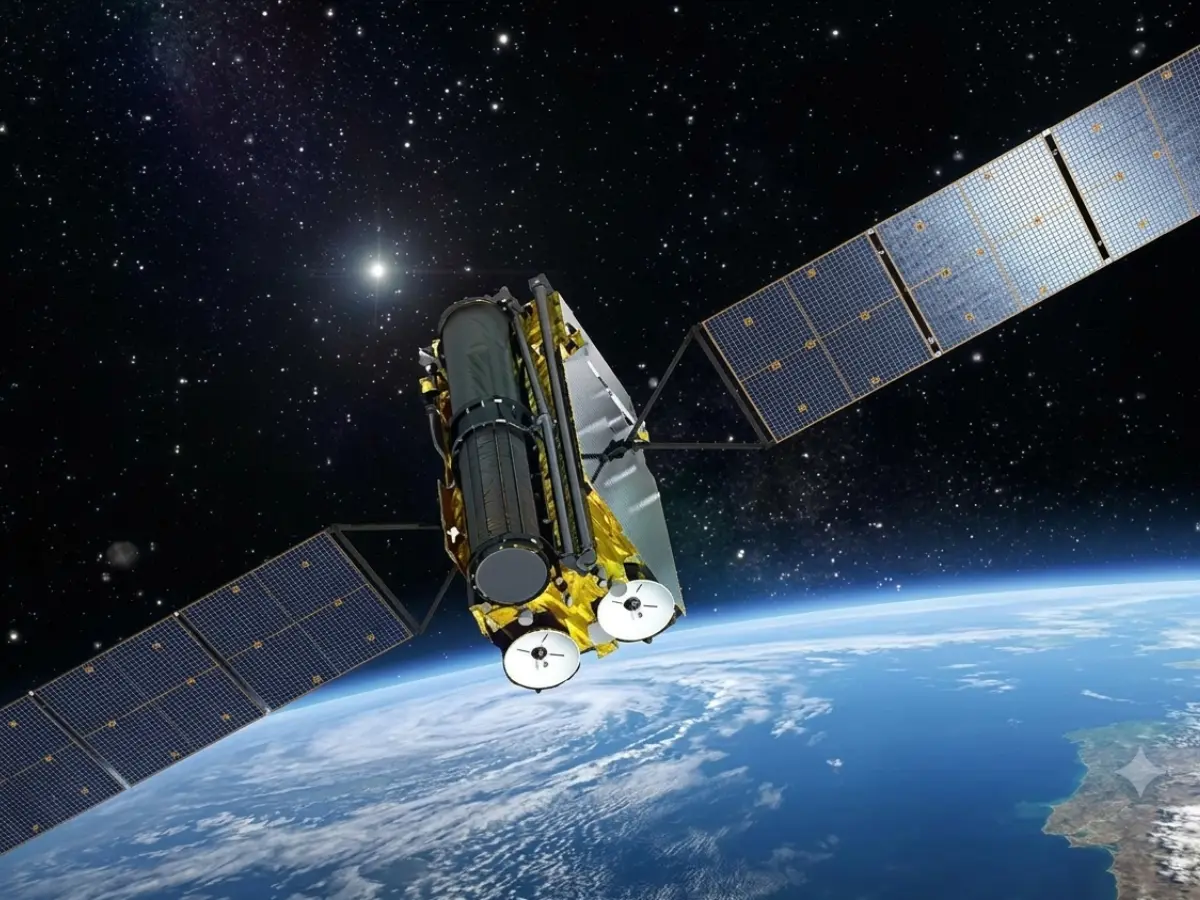
Chinese satellite Ludi Tance 4-01 can watch over the entire Asia Pacific all the time. Photograph: (China Academy of Space Technology)
China's Ludi Tance 4-01 radar satellite is unique since it can operate at a height of 36,000 kilometres when other radar satellites only work at 600 kilometres. The secret is a material extracted during aluminium production, and China has 95% of it.
Scientists have finally figured out the secret behind China's radar satellite that can monitor nearly a third of Earth’s surface all the time. When Ludi Tance 4-01 was launched three years ago, no one knew what lent it this magical ability, something the United States has been unable to replicate. Now a study has found that the secret to this radar satellite is a high-performance semiconductor material that China has almost full control over. Researchers at the Xian Institute of Space Radio Technology published the paper in the Journal of Microwaves.
This material is gallium nitride, which allows it to operate at a high altitude. Sitting 36,000 kilometres above Earth's surface, it can remain fixed over the same geographic position because of this substance that powers its semiconductors. The reason no other country has gallium nitride is that Beijing has a monopoly over its supply, and it is not letting out any of it. The country has restricted gallium exports since the satellite launched in 2023.
What makes Ludi Tance 4-01 unique?
The unique feature of this satellite is that it is the world’s first and only synthetic aperture radar (SAR) satellite in geosynchronous orbit. Operating at such an altitude allows it to monitor a wider area continuously. Radar satellites usually operate at an altitude of 600 kilometres in low Earth orbit since the farther you are from Earth, the weaker the radar signal strength gets. In geosynchronous orbit, satellites are at a distance of 35,786 kilometres from us. From here, Ludi Tance 4-01 can watch the Asia-Pacific region continuously.
However, maintaining imaging capabilities similar to satellites in low-Earth orbit, it would require a lot more power. To solve this problem, the satellite uses gallium nitride technology. It "powers solid-state amplifiers, which send electromagnetic waves to its synthetic-aperture radar," the authors wrote in the paper.
Trending Stories
&imwidth=280&imheight=210&format=webp&quality=medium)
&imwidth=280&imheight=210&format=webp&quality=medium)
&imwidth=280&imheight=210&format=webp&quality=medium)
&imwidth=280&imheight=210&format=webp&quality=medium)
&imwidth=280&imheight=210&format=webp&quality=medium)
&imwidth=280&imheight=210&format=webp&quality=medium)
&imwidth=280&imheight=210&format=webp&quality=medium)
&imwidth=280&imheight=210&format=webp&quality=medium)
&imwidth=280&imheight=210&format=webp&quality=medium)
&imwidth=280&imheight=210&format=webp&quality=medium)
&imwidth=280&imheight=210&format=webp&quality=medium)
&imwidth=280&imheight=210&format=webp&quality=medium)
&imwidth=280&imheight=210&format=webp&quality=medium)
&imwidth=280&imheight=210&format=webp&quality=medium)
&imwidth=280&imheight=210&format=webp&quality=medium)
&imwidth=280&imheight=210&format=webp&quality=medium)
&imwidth=280&imheight=210&format=webp&quality=medium)
&imwidth=280&imheight=210&format=webp&quality=medium)
&imwidth=280&imheight=210&format=webp&quality=medium)
&imwidth=280&imheight=210&format=webp&quality=medium)
&im=FitAndFill=(700,400)&imwidth=280&imheight=210&format=webp&quality=medium)
&imwidth=280&imheight=210&format=webp&quality=medium)
&imwidth=280&imheight=210&format=webp&quality=medium)
&imwidth=280&imheight=210&format=webp&quality=medium)
&imwidth=280&imheight=210&format=webp&quality=medium)
&imwidth=280&imheight=210&format=webp&quality=medium)
&imwidth=280&imheight=210&format=webp&quality=medium)
&imwidth=280&imheight=210&format=webp&quality=medium)
&imwidth=280&imheight=210&format=webp&quality=medium)
The distance also means it needs stronger microwave transmission power to generate radar images compared to low-Earth orbit. Each amplifier on the satellite generates 800 watts of power, which together comes to 18,000 watts. The device reached a power-added efficiency of 50.3%, the study states.
Gallium is extracted during the industrial production of aluminium. Since China is the world’s largest producer of aluminium, it produces more than 95% of the world’s gallium supply as well. The satellite's surveillance capabilities have stressed the US, even though China claims it is used for civilian purposes, such as meteorology and agricultural research.

