What is Entropy? Deepinder Goyal introduces a new health metric that updates every second

&imwidth=600&imheight=450&format=webp&quality=medium "What is Entropy? Deepinder Goyal introduces a new health metric that updates every second")
Temple's latest claim could change how people track metabolism
Deepinder Goyal says Temple has developed a new biomarker called Entropy that measures the body's real-time metabolic cost. The metric updates every second and is designed to track energy expenditure, though questions remain about scientific validation and peer-reviewed research.
A new health metric is attracting attention after Zomato co-founder Deepinder Goyal claimed it can measure the body's energy expenditure in real time. Goyal announced that Temple, a health technology venture, has developed a biomarker called "Entropy". According to the company, the metric reflects the body's metabolic state and updates every second, offering a continuous picture of how much energy the body is using at any given moment.
The announcement has generated interest because Temple claims Entropy may provide insights that go beyond traditional health indicators such as heart rate.
What exactly is Entropy?
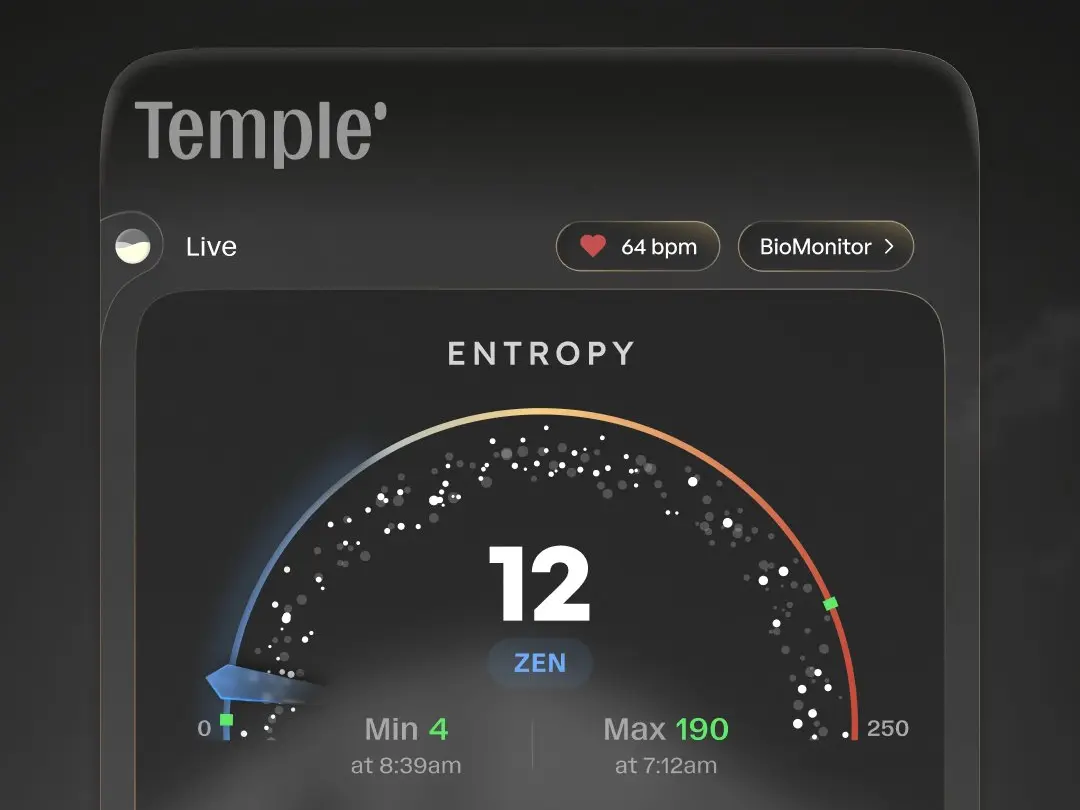
According to Temple, Entropy is a live score displayed on the platform's home screen. The score ranges from 1 to 250. Lower values are said to represent deeper states of rest, while higher values indicate periods of intense physical activity and energy expenditure.
Goyal described Entropy as "the real-time cost of being alive".
The company says the biomarker can only be measured from the temple region of the head, which inspired both the product's name and approach.
Trending Stories
)
)
)
)
)
)
)
)
)
)
)
)
)
)
)
)
)
)
)
)
)
)
)
)
)
)
)
&im=FitAndFill=(700,400))
)
)
)
)
)
)
)
)
&im=FitAndFill=(700,400))
)
)
Temple claims the score changes continuously as the body's metabolic state shifts throughout the day.
What affects the Entropy score?
According to the company, a wide range of daily activities can influence Entropy. These include sleep, stress, exercise, meals, caffeine consumption, cold exposure, meditation and strength training. Temple says the goal is to provide users with a real-time understanding of how different behaviours affect energy expenditure rather than relying on occasional health measurements. The company believes this could help people better understand the impact of lifestyle choices on overall health and performance.
How does Entropy compare with heart rate?
One of Temple's most notable claims involves the relationship between Entropy and metabolism. According to data shared by Goyal, the company compared Entropy readings and heart-rate measurements against a metabolic cart, a laboratory device commonly used to measure energy expenditure. Temple says Entropy achieved a correlation coefficient of r=0.93 across more than 100 cardio sessions. Heart-rate measurements, by comparison, recorded a correlation coefficient of r=0.55. The company argues that these results suggest Entropy may track metabolic activity more closely than heart rate alone. However, Temple has not yet published peer-reviewed research or detailed technical documentation explaining exactly how the biomarker is calculated.
Entropy Maxima and Entropy Minima explained
Alongside the main score, Temple has introduced two additional metrics. Entropy Maxima refers to the highest level of output an individual can achieve during intense physical activity. Entropy Minima represents the lowest metabolic state reached during periods of rest. According to the company, long-term health improvements could involve increasing maximum output while reducing resting metabolic cost.
Questions remain about validation
While the announcement has generated excitement among fitness and health enthusiasts, some observers have raised questions. Users responding to Goyal's announcement have asked for more information about testing methods, sample sizes and scientific validation. Temple is currently accepting applications for early access but has not announced pricing, hardware requirements or a commercial launch date. The company has also not released peer-reviewed studies supporting its findings.
Why people are paying attention
Health tracking technology has expanded rapidly over the past decade, with consumers increasingly monitoring heart rate, sleep quality, stress levels and physical activity. Temple's Entropy biomarker is attempting to enter that space with a different proposition: measuring the body's energy cost in real time. Whether the metric gains wider acceptance will likely depend on future scientific validation and independent testing. For now, the announcement has sparked curiosity about whether metabolism could become the next major category in consumer health tracking.
