Google unveils Gemini Robotics 2: New AI brain lets humanoid robots walk, think and complete complex tasks

&imwidth=600&imheight=450&format=webp&quality=medium "Google unveils Gemini Robotics 2: New AI brain lets humanoid robots walk, think and complete complex tasks")
Google DeepMind launches Gemini Robotics 2 to power the next generation of humanoids
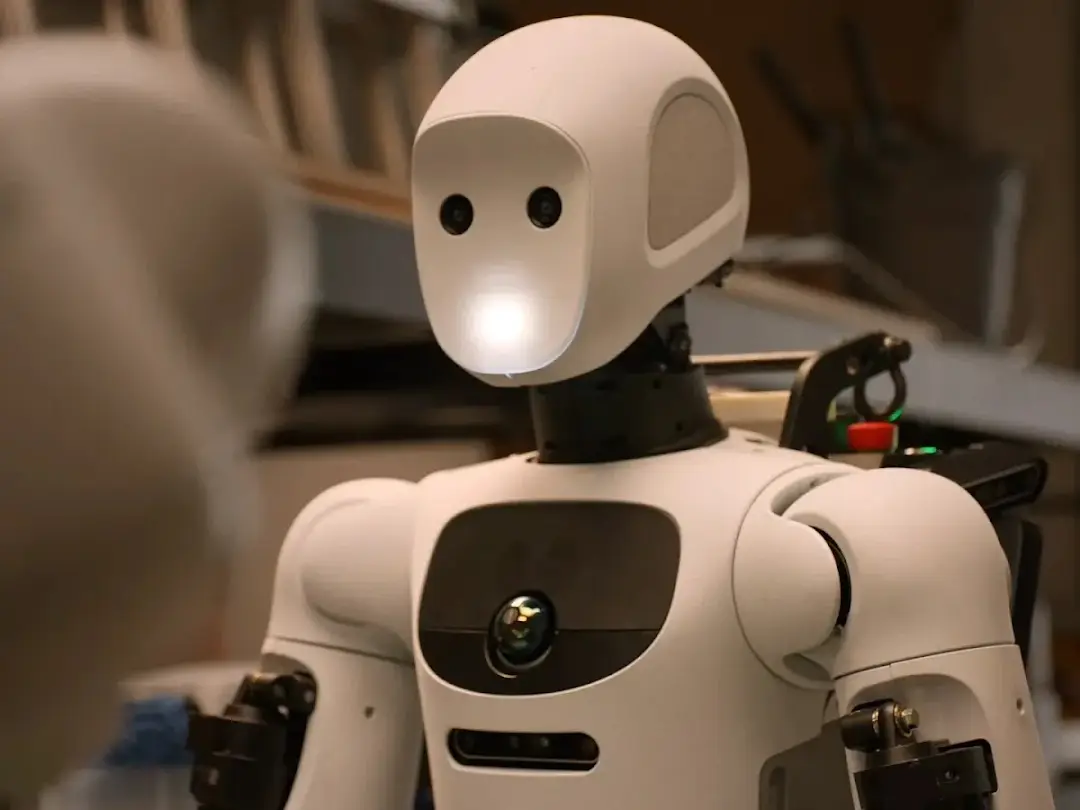
Google DeepMind has launched Gemini Robotics 2, an AI model designed to give humanoid robots advanced reasoning, full-body movement and task-planning abilities. The company also introduced Gemini Robotics ER 2 and On-Device 2, expanding its vision for smarter, safer robots that can work both online and offline.
Google is taking another major step towards building more capable humanoid robots. The company has unveiled Gemini Robotics 2, a new artificial intelligence model that acts as a high-level brain for robots. Instead of simply following pre-programmed instructions, robots powered by the new system can understand spoken commands, reason about their surroundings and perform complex physical tasks while adapting to changing environments. The launch highlights Google's growing ambition to bring Gemini beyond smartphones and computers into the physical world, where AI-powered robots could eventually work in warehouses, factories, hospitals and even homes.
A smarter brain for humanoid robots
Traditional robots are excellent at repeating the same task but often fail when something unexpected happens. Google says Gemini Robotics 2 is designed to solve that problem by giving robots the ability to understand context, plan actions and adjust their behaviour in real time. Rather than programming every movement individually, developers can teach robots to reason through tasks much like humans do.
One of the biggest upgrades is full-body control. Unlike the previous generation, which mainly controlled a robot's upper body, Gemini Robotics 2 allows humanoids to walk, crouch, balance, bend and use both hands simultaneously. Google also says the model improves dexterity, enabling five-finger robotic hands to perform delicate actions such as tying knots, sealing zip-lock bags and handling small objects, while also supporting industrial grippers for warehouse work.
Gemini Robotics ER 2 plans the work
Alongside the main model, Google introduced Gemini Robotics ER 2, which functions like a project manager for robots. Instead of controlling motors directly, ER 2 understands spoken instructions, breaks large jobs into smaller steps, monitors progress and replans tasks if something changes. Google says this enables robots to complete long workflows involving hundreds of decisions and even coordinate with other robots. The company also launched Gemini Robotics On-Device 2, allowing robots to run AI locally without relying on cloud connectivity. Developers can reportedly customise the model for new robotic platforms in just a few hours using fewer than 200 training examples.
Safety remains a priority
Trending Stories
)
)
)
)
)
)
)
)
)
)
&im=FitAndFill=(700,400))
)
)
)
&im=FitAndFill=(700,400))
)
&im=FitAndFill=(700,400))
)
)
)
)
)
)
&im=FitAndFill=(700,400))
)
)
)
)
)
)
)
)
)
)
)
)
)
)
)
)
Google says safety has been built into every layer of the platform. The company introduced a new benchmark called ASIMOV-Agentic to evaluate whether robots can refuse unsafe instructions, recognise when human intervention is required and avoid dangerous situations. Robots can also detect nearby people, pause automatically and resume work only when it is safe. As competition in humanoid robotics accelerates with companies including Tesla, Figure AI, Agility Robotics and Unitree all developing increasingly capable machines Google is betting that the future will depend not just on better hardware, but on smarter AI that allows robots to think, adapt and collaborate in the real world.
