Afghanistan Cricket Board chairman Mirwais Ashraf credits players’ hard work & partnership with India for rise of Afghan Cricket

&imwidth=600&imheight=450&format=webp&quality=medium "Afghanistan Cricket Board chairman Mirwais Ashraf credits players’ hard work & partnership with India for rise of Afghan Cricket")
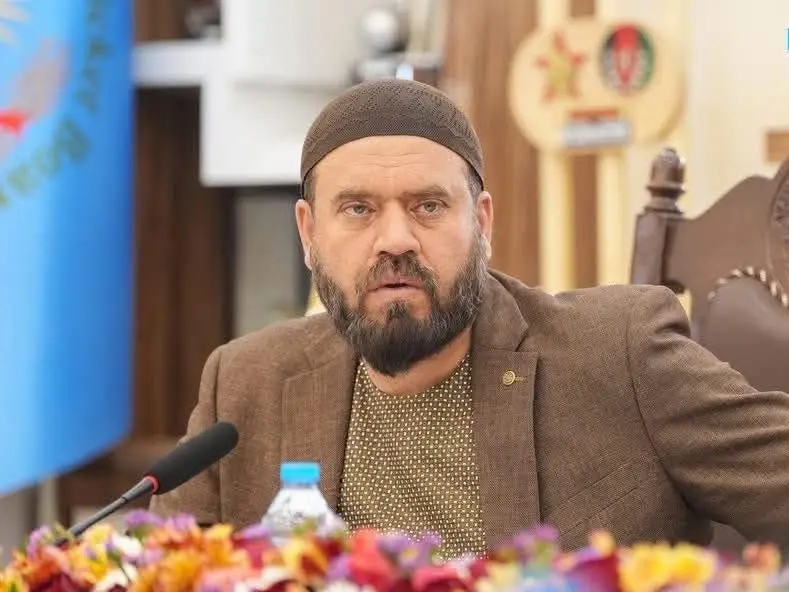
Afghanistan Cricket Board chairman Mirwais Ashraf Photograph: (WION)
ACB Chairman Mirwais Ashraf praised India’s vital support in funding and venues while highlighting natural talent, structured domestic pathways, and board strategy behind Afghanistan's rise.
India remains Afghanistan cricket’s most important partner, Afghanistan Cricket Board chairman Mirwais Ashraf has said, praising New Delhi’s role in funding, venues, and bilateral cricket. In an exclusive interview with WION's Sidhant Sibal, Ashraf singled out the 2023 Asian Cricket Council meeting in Bahrain, held under Jay Shah’s presidency, when Afghanistan’s share of ACC distributions rose from about 6 percent to 15 percent, matching other Asian Full Members. “This was an important development… and provided additional financial support for the growth of the game,” he said.
He also thanked the BCCI for giving Afghanistan access to three Indian grounds—Dehradun, Greater Noida, and Lucknow—to stage international fixtures when home options were limited. India, he noted, was the first country to host Afghanistan’s maiden Test after it achieved Full Member status. Infrastructure is the unfinished chapter. India began four projects in Afghanistan: grounds in Paktika, Logar, and Balkh, and a guest house at Kandahar. “The ACB hopes that India will resume its support for the remaining projects,” Ashraf said, adding that the board would raise the issue with Indian officials.
He pointed out that Afghanistan's cricket rise is no longer a surprise but the product of talent, planning, and a widening domestic pathway. “Natural talent, unity, and hard work” sit alongside board strategy, he said. Full interview:
Sidhant Sibal: How do you see the standing of Afghan cricket currently in the global cricketing world?
Mirwais Ashraf: Afghanistan cricket has achieved several major milestones across ICC, ACC, and bilateral competitions in recent years. At the ICC Men’s Cricket World Cup 2023, Afghanistan produced their best-ever ODI World Cup campaign, defeating England, Pakistan, Sri Lanka, and the Netherlands and finishing sixth overall in the tournament. Afghanistan then reached the semi-finals of the ICC Men’s T20 World Cup 2024 for the first time in their history. During that remarkable campaign, they recorded memorable victories over teams including New Zealand, Australia, Bangladesh, and Uganda. Their strong performance at the 2023 ODI World Cup also earned them qualification for their maiden ICC Champions Trophy in 2025. Afghanistan continued to make history at that tournament by defeating England, registering their first-ever Champions Trophy victory.
Trending Stories
)
)
)
)
)
)
)
)
)
&im=FitAndFill=(700,400))
)
)
)
)
)
)
)
)
&im=FitAndFill=(700,400))
)
)
)
)
)
)
)
)
)
&im=FitAndFill=(700,400))
)
&im=FitAndFill=(700,400))
)
)
Success has not been limited to the senior national team. Afghan Abdalyan (Afghanistan A) won the ACC Men’s T20 Emerging Teams Asia Cup 2024, defeating Sri Lanka A in the final to claim their first title in the competition. At the youth level, the Afghanistan U19 national team reached the semi-finals of the ICC U19 Men’s Cricket World Cup 2026, further demonstrating the strength and depth of Afghanistan’s developing cricket structure. These outstanding performances across the senior, A-team, and U19 levels reflect Afghanistan’s continued rise and growing presence in international cricket.
Afghanistan’s progress has also been evident outside ICC and ACC tournaments. In bilateral cricket, the national team has produced impressive performances and recorded significant series and match victories against established international sides such as Bangladesh, Pakistan, and South Africa. Together, these achievements demonstrate Afghanistan cricket’s growing competitiveness, depth, and ability to perform consistently against leading teams on the international stage.
Sidhant Sibal: Afghanistan cricket has achieved notable successes in recent ICC events, including strong showings in the 2024 T20 World Cup. What do you see as the key factors behind this progress, and how is the Board sustaining that momentum?
Mirwais Ashraf: Several key factors have contributed to Afghanistan’s major achievements at the ICC Men’s Cricket World Cup 2023, ICC Men’s T20 World Cup 2024, and ICC Champions Trophy 2025. One of the most important factors behind Afghanistan’s remarkable progress in international cricket is the country’s natural cricketing talent, combined with the dedication, unity, discipline, and hard work of the players.
At the same time, the Afghanistan Cricket Board’s (ACB) strategic planning and preparation played a significant role in the national team’s outstanding performances at the 2024 ICC Men’s T20 World Cup. As part of its preparations, the ACB organized the Shpageeza Cricket League ahead of the World Cup, providing national team players with valuable competitive match exposure before the tournament. In addition, the team traveled to the West Indies well in advance of the competition to participate in conditioning and preparation camps. This early arrival helped the players adapt to the local weather, pitches, and playing conditions, which proved highly beneficial during the tournament.
The appointment of former West Indies star Dwayne “DJ” Bravo as the team’s mentor was another important step. His extensive international experience, particularly in T20 cricket and Caribbean conditions, provided additional technical and strategic support to the players and coaching staff. Together, these measures formed part of a well-planned preparation strategy that contributed significantly to Afghanistan’s impressive World Cup campaign.
More broadly, the combination of natural talent, a stronger domestic cricket structure, regular competitive exposure, improved player welfare, greater international experience, the participation of national team players in domestic competitions, specialized high-performance programs, and continued investment in qualified technical and coaching staff has helped create a stronger and more sustainable cricketing system in Afghanistan.
Sidhant Sibal: Infrastructure and grassroots development remain critical for a cricket-playing nation like Afghanistan. What are the Board’s current priorities for expanding facilities, academies, and pathways across the provinces?
Mirwais Ashraf: The Afghanistan Cricket Board (ACB) has continued to make significant investments in cricket infrastructure across the country. At present, the ACB has around 15 cricket grounds and approximately 20 cricket academies nationwide. Eight of these grounds have already been equipped with facilities approaching international standards, including academies, pavilions, grandstands, and other essential infrastructure. The ACB is also working to further upgrade these venues to meet higher international standards. Planned and ongoing improvements include the construction of additional grandstands, installation of spectator seating, floodlights for day-night matches, guest houses, gyms, and other facilities required for high-level domestic and international cricket.
One of the ACB’s most ambitious infrastructure projects is the recently launched Kabul International Cricket Complex, which is being developed on approximately 86 Jerib (172,000 square meters) of land. The complex is planned to include a main international cricket ground, two additional ovals, indoor and outdoor academies featuring different types of wickets, spectator stands with a capacity of around 50,000, dedicated media and broadcast production facilities, a guest house, fitness gym, game zone, swimming pool, rehabilitation center, parking areas, and several other facilities required for a modern international cricket venue.
With an estimated investment of approximately USD 45 million, the Kabul International Cricket Complex represents a major long-term project for Afghanistan cricket. The ACB is contributing its own resources to the development while also seeking support from donors and development partners to help complete the project and establish a world-class cricket facility. We have already shared our proposals with a number of countries and donor organizations, and we remain hopeful that they will contribute to these initiatives in support of cricket development in Afghanistan. Their support would play an important role in creating more opportunities for young players, nurturing the country’s natural cricketing talent, and strengthening the long-term development of the game.
Infrastructure development has also expanded significantly at the provincial level. In 2025 alone, the ACB constructed four new cricket grounds in Logar, Laghman, Baghlan, and Balkh provinces, in addition to establishing 11 cricket academies across different parts of the country. We have paid particular attention to regions where cricket opportunities and facilities have traditionally been limited, especially in the northern parts of the country.
We are confident that our academy project in Badakhshan that was completed in 2024—one of Afghanistan’s remote provinces—together with the development of cricket grounds in Balkh and Baghlan, recently completed, will play a significant role in expanding access to professional cricket opportunities for young people in these regions. These projects are expected to help identify and nurture local talent, improve access to proper training facilities, and create a stronger pathway for young cricketers to develop their skills and pursue opportunities within Afghanistan’s cricketing system.
Alongside infrastructure development, the ACB has also expanded its high-performance structure. In addition to the main High-Performance Center (HPC) at the Afghanistan Cricket Board, the ACB has recently established Regional High-Performance Centers (RHPCs). These regional centers are designed to provide structured training, coaching, talent identification, and player development opportunities closer to where players live. The establishment of RHPCs is expected to significantly strengthen Afghanistan’s talent pathway by allowing promising players from different regions to receive high-quality coaching and performance support without relying solely on the central HPC in Kabul. This will help broaden the national talent pool, improve the transition from grassroots and domestic cricket to higher levels, and ensure that talented players from across the country have a clearer pathway toward professional and international cricket.
Sidhant Sibal: Domestic competitions and the Afghanistan Premier League (or similar structures) are vital for talent identification. What is the vision for strengthening the domestic calendar and professional opportunities for Afghan cricketers?
Mirwais Ashraf: Afghanistan’s domestic cricket structure has played a central role in identifying, developing, and preparing players who now represent the country at the international level. One of the major competitions is the Afghanistan Premier League (APL), preparations for the second edition of which are currently underway. As part of this process, three teams were sold during a special ceremony held in Dubai on August 25. The event also featured the unveiling of the APL’s striking new trophy, which received widespread praise for its distinctive design and visual appeal. The player registration process has also commenced, while the players’ draft ceremony is expected to be held in the near future.
Another major competition is the Shpageeza Cricket League, one of Afghanistan’s leading domestic tournaments. Its most recent, 11th edition was held in Khost province and featured high-standard production and broadcast coverage. The competition brings together many of Afghanistan’s most prominent national team players and popular cricket stars, while also providing an important platform for emerging players to showcase their abilities, gain valuable competitive exposure, and progress toward professional and international cricket. It is also noteworthy that Afghan Abdalyan was largely formed from the standout performers of the 2024 Shpageeza Cricket League. The team went on to compete in the Emerging Asia Cup that same year and achieved historic success by winning the championship title.
This achievement demonstrated the important role of domestic competitions in identifying talented players and preparing them for higher levels of international cricket. Age-group cricket has been equally important in developing the next generation of Afghan cricketers. Many players who currently represent the Afghanistan National Team and Afghan Abdalyan have progressed through these domestic, age-group, and high-performance pathways. Together, these competitions form an important part of the ACB’s player-development system and help ensure a continuous supply of talent for Afghanistan cricket.
The Afghanistan Cricket Board has developed a clear domestic cricket pathway that starts with around 500 registered clubs and 8,000 players nationwide. Top performers progress through Grade Two and Grade One provincial competitions, then move into regional and major domestic tournaments such as three-day cricket, First-Class cricket, List A, the National T20 Cup, and the Shpageeza Cricket League.
This step-by-step structure creates a direct pathway from grassroots cricket to Afghan Abdalyan and ultimately the senior national team. Another important element of Afghanistan’s domestic cricket development has been the live broadcast of major competitions. Leading events, including First-Class, List A, the National T20 Cup, and the Shpageeza Cricket League, are broadcast live, giving young and emerging cricketers valuable exposure on a professional platform. The combination of a structured pathway from club cricket to provincial, regional, A-team, and national-team levels, together with high-quality competitions and live broadcasting, has created a strong platform for talent development. It has enabled Afghanistan to continuously identify promising players, provide them with meaningful competitive experience, and prepare them for the demands of international cricket.
Sidhant Sibal: How has the Afghanistan Cricket Board benefited from India's support in developing cricket infrastructure and training facilities over the years?
Mirwais Ashraf: India has extended valuable support to the Afghanistan Cricket Board on a number of occasions, and we remain appreciative of that cooperation. One significant example came during the Asian Cricket Council meeting held in Bahrain in 2023, when the ACB raised the issue of Afghanistan’s share of the ACC’s financial distribution. At the time, Afghanistan was receiving approximately 6 percent, despite being a Full Member. Following discussions at the meeting, under the presidency of Mr. Jay Shah, Afghanistan’s share was increased to 15 percent, bringing it in line with the other Full Member cricket boards in Asia. This was an important development for Afghanistan cricket and provided additional financial support for the growth of the game.
We are sincerely grateful to India and the Board of Control for Cricket in India (BCCI) for their valuable support in providing Afghanistan with access to three cricket venues in India—Dehradun, Greater Noida, and Lucknow—where we host our international events. These venues played an important role in ensuring the continuity of our cricketing programs.
India had also initiated four cricket infrastructure projects in four provinces of Afghanistan, including cricket grounds in Paktika, Logar, and Balkh, as well as a guest house at the Kandahar Cricket Ground. Following the change of government in Afghanistan, three of these projects remained incomplete, while the guest house project at the Kandahar venue was completed. The Afghanistan Cricket Board hopes that India will resume its support for the remaining projects and facilitate their completion. The ACB intends to raise this matter during its upcoming meeting with Indian officials and discuss possible ways forward for completing these important infrastructure projects.
Sidhant Sibal: Are there plans for more bilateral series between India and Afghanistan beyond multilateral tournaments?
Mirwais Ashraf: In bilateral cricket, we remain deeply appreciative of the support and cooperation of the Board of Control for Cricket in India (BCCI). After Afghanistan gained Full Member status, India became the first country to host Afghanistan in its historic maiden Test match, marking an important milestone in the development of Afghan cricket.
In recent years, Afghanistan and India have increasingly engaged in bilateral cricket. India hosted Afghanistan for a highly competitive and entertaining T20I series that produced quality cricket, close contests, and memorable moments for fans of both nations. This year, the two sides have been involved across all three formats. India hosted Afghanistan for a Test and ODI series, and Afghanistan is now set to host India for a T20I series. This growing bilateral engagement reflects the strength of the cricketing relationship between the two countries.
Bilateral cricket, particularly in the shorter formats, not only provides exciting contests for cricket fans around the world but also creates valuable opportunities for Afghan players to compete against top-quality opposition, gain experience in high-pressure situations, and further develop their skills in modern international cricket. We hope this cooperation will continue and expand in the years ahead. We also encourage all Full Member cricket boards to strengthen bilateral engagement with Afghanistan, with the focus remaining on cricket and sporting cooperation. Regular bilateral cricket can contribute significantly to player development, competitive growth, and stronger friendly relations between cricketing nations.
Sidhant Sibal: What steps is the ACB taking to strengthen long-term cricket ties with India amid regional geopolitical challenges? We saw how Pakistani strikes killed Afghan cricketers.
Mirwais Ashraf: Cricket is a gentleman’s game and has always carried a message of friendship, peace, mutual respect, and entertainment across the world. Afghanistan strongly believes in building positive and healthy relationships with other countries, not only through sport but also in wider areas such as economic, social, and diplomatic cooperation.
As part of this approach, Afghanistan recently invited and hosted the Uzbekistan national cricket team and played a T20 match against them. The Afghanistan Cricket Board has also signed a Memorandum of Understanding with Uzbekistan to provide technical support, assist in the development of their coaching staff, and contribute to the training and development of their players.
Our cooperation is not limited to Uzbekistan. The ACB has similar agreements and development partnerships with a number of emerging cricket nations. These initiatives reflect Afghanistan’s goodwill, its commitment to strengthening international cricket relationships, and its willingness to contribute to the development of the game beyond its own borders. We hope to see the same spirit of cooperation from other cricketing nations, particularly our neighboring countries. Strong sporting relationships can create mutual understanding, strengthen friendships between nations, and contribute to the continued growth and development of cricket across the region and beyond.
