2026 World Cup Winners: Why Spain are football’s most decorated team since 2000

&imwidth=600&imheight=450&format=webp&quality=medium "2026 World Cup Winners: Why Spain are football’s most decorated team since 2000")
2026 World Cup Winners Why Spain are football’s most decorated team since 2000 Photograph: (AFP)
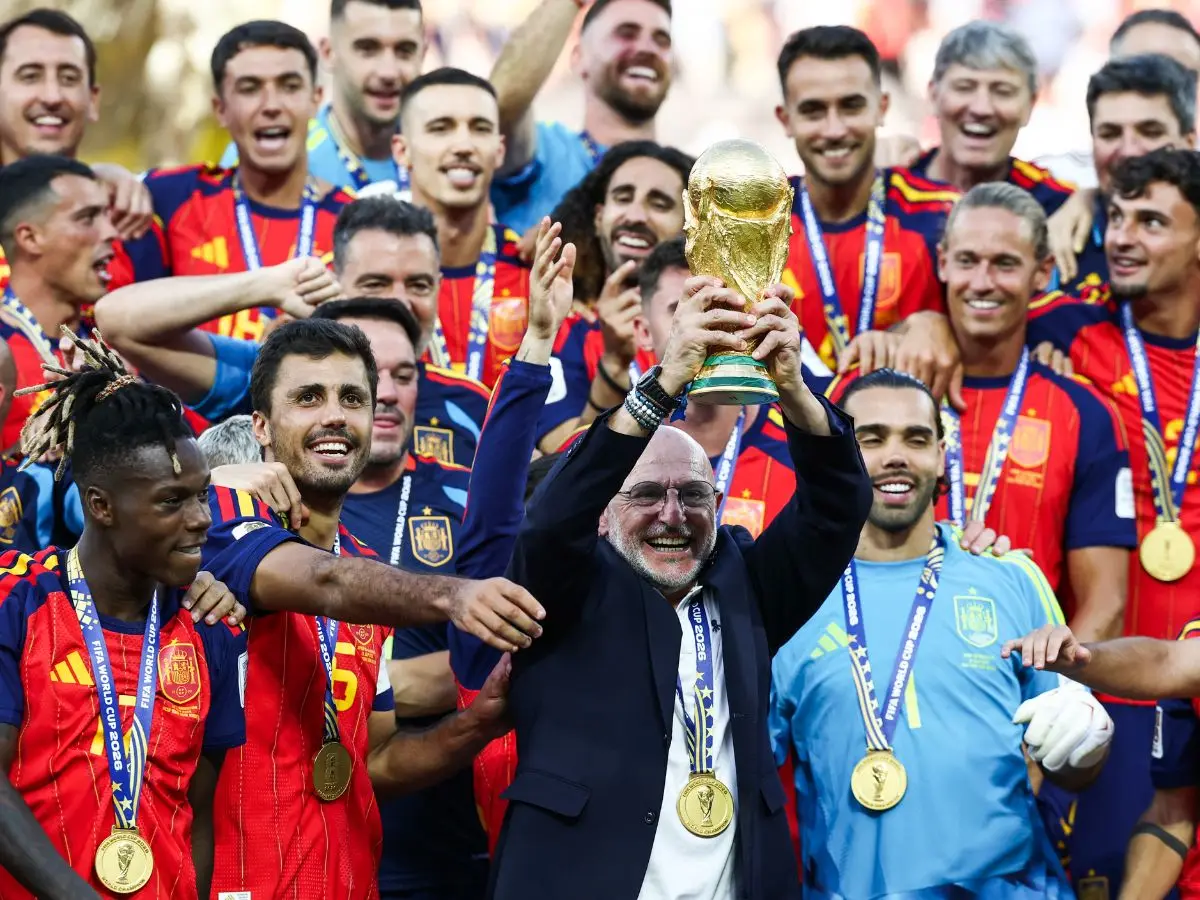
Following their 2026 FIFA World Cup triumph over Argentina, Spain has cemented its position as international football's most decorated national team of the 21st century.
Spain beat Argentina to win the FIFA World Cup 2026 in North America. They not only became the world champions with that but also the most successful, highly decorated national team since the start of the millennium. Spain now has two FIFA World Cup titles, as many as France and Uruguay, adding a UEFA Nations League title (2023), an Olympic gold (2024) and the Euros in the same year, winning all three major tournaments since 2022. Not to forget, they won the 2008 Euros, the 2010 World Cup in South Africa and again the Euros two years later in 2012.
While Spain’s golden generation delivered during that time, the current one is doing it now, slowly etching its way into the history books. Several teams have tasted success since the start of 2000, with Argentina winning several Copa Americas and the World Cup in 2022; however, nothing seems to match Spain's array of milestones in the last 25 years – making them the most formidable force in world football.
Not only Spain's men’s team but also its women’s team have been a force for a long time, having won the World Cup in 2023 and the UEFA Nations League in 2024 and 2025. It is the first time in history that a country’s men’s and women’s teams are crowned world champions at the same time. Over the past five years, Spain’s women’s teams across all major divisions have won 11 titles, while the men’s teams have clinched five across categories, including Under-23 and Under-19.
"It is dominance," Spanish football expert Guillem Balague said in a chat with BBC Sport. "It's like the perfect storm. Culturally, we do things a certain way. Everybody believes in it. The important thing is that we don't stop.
“It's another Everest because the men won the World Cup in 2010, two years after winning the Euros. Now we've done it again.”
Trending Stories
&imwidth=280&imheight=210&format=webp&quality=medium)
&imwidth=280&imheight=210&format=webp&quality=medium)
&imwidth=280&imheight=210&format=webp&quality=medium)
&imwidth=280&imheight=210&format=webp&quality=medium)
&imwidth=280&imheight=210&format=webp&quality=medium)
&imwidth=280&imheight=210&format=webp&quality=medium)
&imwidth=280&imheight=210&format=webp&quality=medium)
&imwidth=280&imheight=210&format=webp&quality=medium)
&imwidth=280&imheight=210&format=webp&quality=medium)
&imwidth=280&imheight=210&format=webp&quality=medium)
&imwidth=280&imheight=210&format=webp&quality=medium)
&imwidth=280&imheight=210&format=webp&quality=medium)
&imwidth=280&imheight=210&format=webp&quality=medium)
&imwidth=280&imheight=210&format=webp&quality=medium)
&imwidth=280&imheight=210&format=webp&quality=medium)
&imwidth=280&imheight=210&format=webp&quality=medium)
&imwidth=280&imheight=210&format=webp&quality=medium)
&imwidth=280&imheight=210&format=webp&quality=medium)
&imwidth=280&imheight=210&format=webp&quality=medium)
&im=FitAndFill=(700,400)&imwidth=280&imheight=210&format=webp&quality=medium)
&imwidth=280&imheight=210&format=webp&quality=medium)
&imwidth=280&imheight=210&format=webp&quality=medium)
&imwidth=280&imheight=210&format=webp&quality=medium)
&imwidth=280&imheight=210&format=webp&quality=medium)
&imwidth=280&imheight=210&format=webp&quality=medium)
&imwidth=280&imheight=210&format=webp&quality=medium)
&imwidth=280&imheight=210&format=webp&quality=medium)
&imwidth=280&imheight=210&format=webp&quality=medium)
‘All hail head coach De La Fuente’
De La Fuente took over as head coach in late 2022, having not managed any major club or country, keeping the Spanish fans sceptical at first. Replacing the experienced Luis Enrique required some credentials, and the RFEF decided to pick the former La Roja player for the role.
"They went with this guy [De La Fuente] who understood the style and the system," added Balague. "It was a very risky decision - I don't think anyone thought he would be so successful."
However, having coached most players from the academies, De La Fuente knew about the system and how to maximise it.
"De la Fuente knew most of these players from the academies, and they are growing as a team," former Spain midfielder Juan Mata said to the UK-based publication. “This is not only a team for the present, but also a team for the future.”
‘Winning is a habit’
Spain’s 2026 squad has tasted what most teams have never – the World Cup final victory. However, with teenagers Lamine Yamal and Pau Cubarsi at the helm, alongside midfielders like Pedri, Dani Olmo and Gavi, Spain’s future looks bright.
As they play co-hosts to the next edition in 2030, Spain will become the first nation to defend a World Cup title on home soil, aiming to repeat Brazil’s feat of becoming back-to-back champions.
