10 players and Cristiano Ronaldo: Portugal’s biggest strength could also be their biggest problem

&imwidth=600&imheight=450&format=webp&quality=medium "10 players and Cristiano Ronaldo: Portugal’s biggest strength could also be their biggest problem")
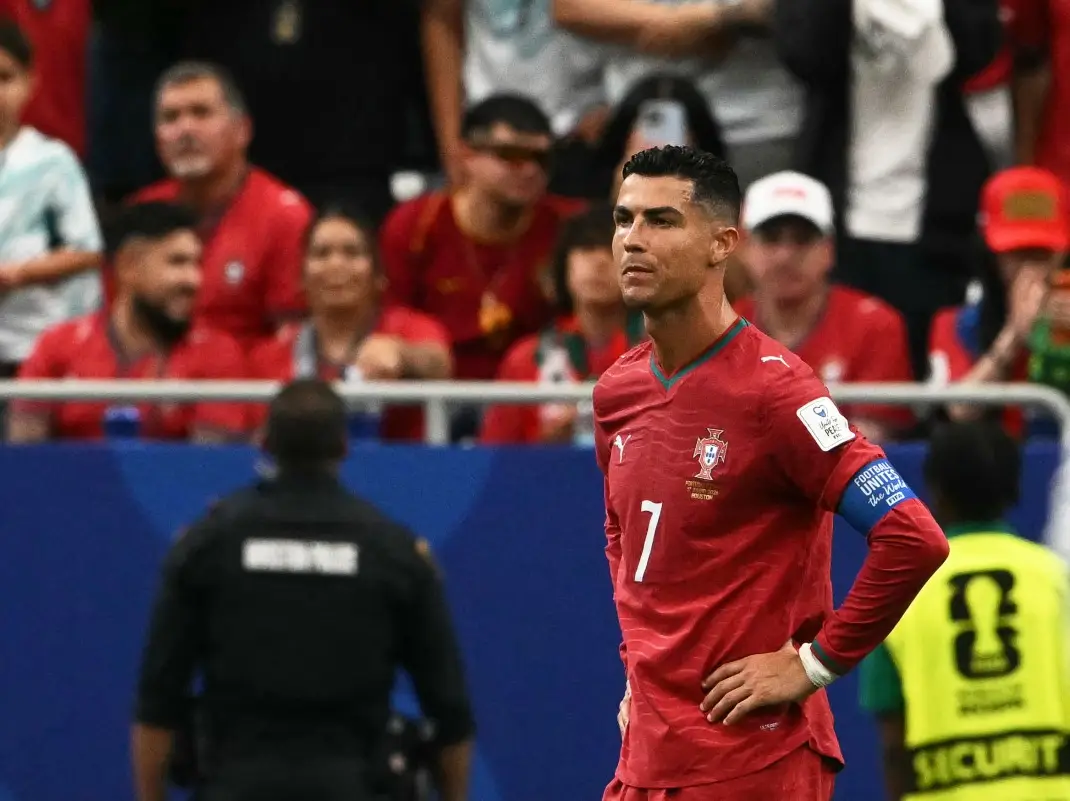
Cristiano Ronaldo during the game against DR Congo Photograph: (AFP)
Cristiano Ronaldo's quiet display against DR Congo has sparked fresh questions over his role in Portugal's FIFA World Cup 2026 campaign. Is the legend helping the team, or holding it back?
For nearly two decades, Cristiano Ronaldo has been Portugal's answer to every question. Need a goal? Ronaldo. Need inspiration? Ronaldo. Need a moment? Ronaldo. But after Portugal's frustrating 1-1 draw against DR Congo in their FIFA World Cup 2026 opener, a different question is being asked: what happens when the answer becomes the problem? Portugal arrived in the United States with arguably the strongest squad in their history. Bruno Fernandes is among the world's elite creators. Bernardo Silva remains one of football's smartest midfielders. Rafael Leao, Pedro Neto, Joao Felix and Goncalo Ramos offer pace, movement and unpredictability. On paper, this is a side capable of challenging for the World Cup.
Yet against DR Congo, Portugal looked strangely one-dimensional. They dominated possession, took an early lead through Joao Neves, but managed just one shot on target for the rest of the match. Ronaldo, playing in his record-equalling sixth World Cup at 41 years old, was largely anonymous and missed his opportunities as Portugal surrendered control of the game. The criticism was immediate.
Former players and pundits questioned whether Portugal are still trying to accommodate a player who is no longer capable of carrying a team on the biggest stage. Thierry Henry highlighted moments where Ronaldo's movement appeared geared towards finding his own chance rather than creating space for teammates, while others argued Portugal become too focused on feeding their captain whenever he is on the pitch.
The debate is not new. Portugal have spent years balancing gratitude and ambition. Ronaldo is the country's greatest footballer. He transformed Portugal from an underachieving nation into European champions and Nations League winners. No Portuguese player has done more for the national team. But international football has a cruel habit of demanding difficult decisions. France eventually moved on from Michel Platini. Brazil moved on from Ronaldo Nazario. Argentina finally built a system around Lionel Messi that served the team first and the superstar second.
Portugal, however, still seem trapped in a cycle where every attack eventually seeks Ronaldo. That may have made sense in 2016.
It makes far less sense in 2026. The concern is not merely Ronaldo's age. It is the tactical cost of building around him. Modern football demands relentless pressing, constant movement and fluid attacking rotations. Portugal possess the players to execute that style. Yet the presence of Ronaldo often turns their attack into something more predictable. The ball is crossed earlier. The build-up slows. Teammates look for him instead of the best option.
Trending Stories
)
)
)
)
)
&im=FitAndFill=(700,400))
)
)
)
)
)
)
)
)
)
)
)
&im=FitAndFill=(700,400))
)
)
)
)
)
)
)
)
)
)
&im=FitAndFill=(700,400))
)
)
)
)
)
Cristiano Ronaldo during the game against DR Congo Photograph: (AFP)
There is a reason the ‘Portugal are better without Ronaldo’ argument refuses to disappear. Even before the World Cup started, analysts questioned whether Portugal's strongest version might actually feature Goncalo Ramos up front, with Fernandes, Silva and Leao given greater freedom around him. The irony is that Ronaldo may still have a role to play.
Just not the one he currently occupies. At 41, he remains an elite finisher and a devastating penalty-box presence. As a substitute chasing a goal in the final 20 minutes, few players in world football would be more dangerous. But asking him to lead the line for 90 minutes against younger, faster and more athletic opponents feels increasingly difficult to justify. Portugal's coach Roberto Martinez continues to back his captain, insisting that removing the world's leading international scorer ‘makes no sense’ when goals are needed. Yet World Cups are often won by managers willing to make uncomfortable decisions.
The fear for Portugal is that sentiment could once again outweigh strategy. Because the evidence from Houston was impossible to ignore. When Ronaldo disappeared, Portugal disappeared with him. This World Cup was supposed to be the culmination of Portugal's golden generation. Instead, after one game, it risks becoming another chapter in football's longest-running dilemma.
Can Portugal win because of Ronaldo? Or must they finally learn to win without him? The answer could define not only Ronaldo's final World Cup, but Portugal's chances of lifting the trophy he has chased his entire career.

