NASA’s Lucy spacecraft, on a 12-year journey, to encounter its first asteroid on Nov 1


NAsa mission
NASA's Lucy spacecraft is about to visit its first asteroid, Dinkinesh on November 1. The asteroid is located in the main asteroid belt between Mars and Jupiter.
Lucy will pass within 430 kilometres of the small asteroid, Dinkinesh. The asteroid is less than 1 kilometre wide, small enough that it is barely visible from Earth, and will be seen for the first time, thanks to this flyby.

The tracking system that keeps the asteroid in the cameras' field of view will be tested during the journey. This system is crucial because of the small size of the asteroidsand the spacecraft's rapid speed as it passes by.
Why asteroid Dinkinesh?
Dinkinesh is located in the main asteroid belt, halfway between Mars and Jupiter's orbits andit is the ideal rock for Lucy to visit while travelling to the Trojansin order to ensure that all of her scientific equipment will be operational for the nine other asteroids it will observe during the primary portion of its mission.
&imwidth=180&imheight=135&format=webp&quality=medium)
No Kings' Instagram suspended during early-voting campaign
&imwidth=180&imheight=135&format=webp&quality=medium)
Brendan Taylor overtakes Andy Flower to become Zimbabwe’s leading ODI run-scorer
&imwidth=180&imheight=135&format=webp&quality=medium)
'Those who have destroyed must pay': Macron says France feels 'anger and shame' over protest violence
&im=FitAndFill=(700,400)&imwidth=180&imheight=135&format=webp&quality=medium)
5 reasons why the Tesla Roadster’s rocket thrusters are so difficult to engineer
&imwidth=180&imheight=135&format=webp&quality=medium)
Lawrence Bishnoi gang claims responsibility for firing at Tiger Shroff over ties to Salman Khan
&imwidth=180&imheight=135&format=webp&quality=medium)
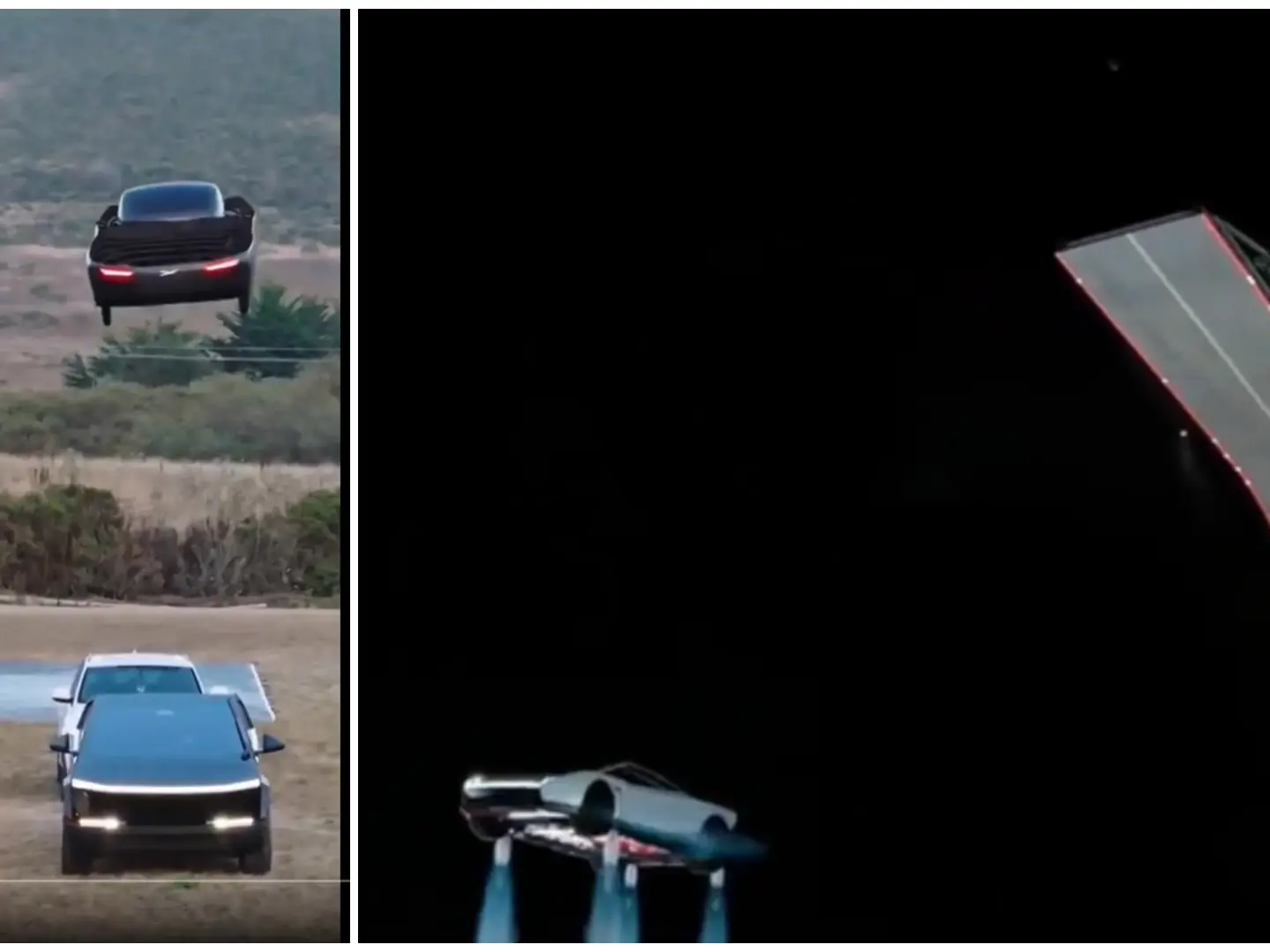
Flying car race: Alef Aeronautics welcomes Tesla Roadster '11 years' later, but are the two models the same?
&imwidth=180&imheight=135&format=webp&quality=medium)
US midterms 2026: Trump’s 33% approval rating spells trouble for Republicans as Democrats pull ahead
&imwidth=180&imheight=135&format=webp&quality=medium)
WATCH | Flames engulf St Petersburg oil sites as Ukraine launches 1,000 drones at Russia
&imwidth=180&imheight=135&format=webp&quality=medium)
JD Vance admits H-1B rhetoric was ‘imperfect’ after immigrant challenges him
&im=FitAndFill=(700,400)&imwidth=180&imheight=135&format=webp&quality=medium)
US midterm elections 2026: Why Atlanta matters in Georgia’s political battle – All you need to know
&imwidth=180&imheight=135&format=webp&quality=medium)
Lizard people? Ex-US Army sniper claims soldier killed by 'reptilian beings' in battle near Area 51
&imwidth=180&imheight=135&format=webp&quality=medium)
‘I don’t know how my family escaped': Congressman Raja Krishnamoorthi chokes while revealing he was inside US temple during foiled attack
&imwidth=180&imheight=135&format=webp&quality=medium)
Nobel laureate Machado, who dedicated prize to Trump, confirmed as Venezuela opposition leader
&imwidth=180&imheight=135&format=webp&quality=medium)
After Kennedy Center and reflecting pool disputes, Trump turns to Washington golf course plan amid legal battle
&im=FitAndFill=(700,400)&imwidth=180&imheight=135&format=webp&quality=medium)
5 things that make Tesla's new Roadster different from every other electric car
&imwidth=180&imheight=135&format=webp&quality=medium)
Iranian woman, 23, handed death sentence for ‘blasphemy’ in social media post; appeals for help
&imwidth=180&imheight=135&format=webp&quality=medium)
Bessent accuses Europe of refusing secondary tariffs on India, China
&imwidth=180&imheight=135&format=webp&quality=medium)
Tiger Shroff firing case: AICWA raises alarm over safety of Bollywood celebrities
&imwidth=180&imheight=135&format=webp&quality=medium)
China responds to Trump's Press Secretary Katie Zacharia after toilet remark: 'Visit China more often'
&imwidth=180&imheight=135&format=webp&quality=medium)
UAE agrees with Saudi Arabia to rejoin Yemen fight as Houthi strikes rattle Riyadh
&imwidth=180&imheight=135&format=webp&quality=medium)
Iran says Hormuz reopening plan remains on table as Trump predicts quick war end
&imwidth=180&imheight=135&format=webp&quality=medium)
PCB omits Atherton, Hussain from tri-series commentary panel over Imran Khan interview row
&imwidth=180&imheight=135&format=webp&quality=medium)
WATCH | iPhones, luxury perfumes floating in Hormuz? Iranian fishermen make bizarre discovery
&imwidth=180&imheight=135&format=webp&quality=medium)
Tiger Shroff attacked by three gunmen in Mumbai, actor safe, two injured
&imwidth=180&imheight=135&format=webp&quality=medium)
Taylor Swift performs at star-studded Academy Museum Gala 2026 in stunning Dior ensemble
&imwidth=180&imheight=135&format=webp&quality=medium)
Anirudh Ravichander-Kavya Maran wedding: Telangana CM reveals Chennai reception date
&im=FitAndFill=(700,400)&imwidth=180&imheight=135&format=webp&quality=medium)
Tesla Roadster engineering: The hidden hardware behind its flying demonstration
&imwidth=180&imheight=135&format=webp&quality=medium)
Saudi Arabia executes Two Bangladesh nationals over immoral act
&im=FitAndFill=(700,400)&imwidth=180&imheight=135&format=webp&quality=medium)
PICS | France reels after violent protests leave trail of destruction, 1,800 arrested
&imwidth=180&imheight=135&format=webp&quality=medium)
US to review Russia sanctions waiver within 60 days as Rubio cites India’s ‘substantial’ Russian energy imports
&imwidth=180&imheight=135&format=webp&quality=medium)
'We feel like Mr India': Gujarat’s undercover SHE team guard garba nights at Navratri
&imwidth=180&imheight=135&format=webp&quality=medium)
Cattle-feed bran in biscuits, detergent in milk: FSSAI acts against 3 companies
&im=FitAndFill=(700,400)&imwidth=180&imheight=135&format=webp&quality=medium)
5 technologies that could make the Tesla Roadster one of the most unusual cars ever built
&imwidth=180&imheight=135&format=webp&quality=medium)
'It's a joy to see the makers bring it on such a grand scale': SS Rajamouli on Ramayana
&imwidth=180&imheight=135&format=webp&quality=medium)
US regulator hits OpenAI and Anthropic with sweeping demands after their AIs went rogue
Trojans are asteroidswhich followJupiter’s orbit around the sun and are believed to be the remnants of our solar system's formation.
Lucymission
The Luci mission was selected by NASA in 2017 from 28 proposals that had to be ready for a 2021 launch. Following her October 2021 launch, Lucy has been travelling into the outer solar system at a speed of roughly 19.4 kilometres per second. The Trojan asteroids, which orbit the sun alongside Jupiter, are its primary research priorities, which helps us to better understand their composition, origins, and the history of our solar system.
Lucy's Dinkinesh mission
Lucy's terminal-tracking system will start tracking the target an hour before it gets close to Dinkinesh. The spacecraft will next start gathering information about Dinkinesh using its colour imager and infrared spectrometer, around eight minutes before close approach.
Lucy will start gathering data with its thermal-infrared camera (L'TES) and high-resolution camera (L'LORRI) as soon as it gets near enough to the asteroid. Dinkinesh will be continuously imaged and tracked for about an hour more.