Scientists unearth Europe’s oldest lakeside stilt village behind a fortress of defensive spikes

Stilt village
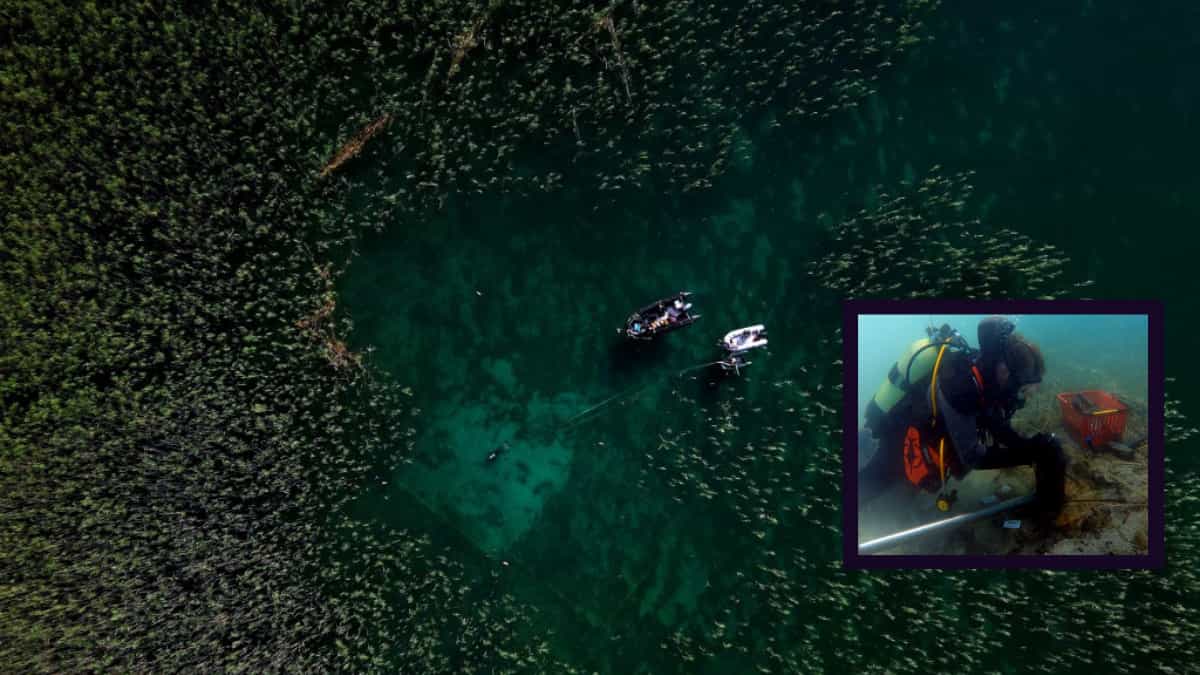
Scientists have come across what may be Europe's oldest lakeside village. Guarded by a fortress of defensive spikes, what could be one of Europe's earliest sedentary communities lies beneath the waters of Lake Ohrid aka, the "Pearl of the Balkans."
The village is estimated to date back around 8,000 years, which makes it the oldest lakeside village in Europe discovered so far, reports AFP.
Ancient settlement

This ancient settlement, as per the AFP report, is located on the Albanian side of lake Ohrid, in areas regularly flooded by rising waters. Because of this, it was located on stilts.
Researchers estimate that it housed around 200 to 500 people and dates back to 6,000 and 5,800 BC.
Talking to AFP, Albert Hafner, a professor of archaeology from Switzerland's University of Bern, said: "It is several hundred years older than previously known lake-dwelling sites in the Mediterranean and Alpine regions."
&imwidth=180&imheight=135&format=webp&quality=medium)
Pakistan to head IMF, World Bank boards after 74 years amid persistent economic crisis
&imwidth=180&imheight=135&format=webp&quality=medium)
'We are not sitting in ivory towers, we are aware': SC issues notice to Rahul Gandhi, Akhilesh Yadav
&imwidth=180&imheight=135&format=webp&quality=medium)
SC panel launches portal to submit evidence of July Jantar Mantar violence
&imwidth=180&imheight=135&format=webp&quality=medium)
Trump invokes national interest to waive new Russia sanctions, tariffs; India gets relief from 100% tariff threat
&imwidth=180&imheight=135&format=webp&quality=medium)
Lizard people? Ex-US Army sniper claims soldier killed by 'reptilian beings' in battle near Area 51
&imwidth=180&imheight=135&format=webp&quality=medium)
Ankita Bhandari murder case: Parents meet CBI, seek impartial investigation
&imwidth=180&imheight=135&format=webp&quality=medium)
Bangladesh resort fire kills 10 tourists, including a 5-year-old child
&imwidth=180&imheight=135&format=webp&quality=medium)
At least 19 killed in stampede-like situation after part of Kolkata Durga Puja pandal collapses
&imwidth=180&imheight=135&format=webp&quality=medium)
IMF chief warns inflation hurts poor countries, AI optimism risks market correction
&imwidth=180&imheight=135&format=webp&quality=medium)
Iranian woman, 23, handed death sentence for ‘blasphemy’ in social media post; appeals for help
&imwidth=180&imheight=135&format=webp&quality=medium)
'Reason UN has lost credibility': Amid SIR protests India hits out at report alleging 'youth repression'
&imwidth=180&imheight=135&format=webp&quality=medium)
Rain washes out 5th T20I as India-West Indies share honours 2-2
&imwidth=180&imheight=135&format=webp&quality=medium)
Abhijeet Dipke released after fresh arrest, signs peace bond for second time
&imwidth=180&imheight=135&format=webp&quality=medium)
‘My president, I mean my husband’: Trump's new press secretary Katie Zacharia's first briefing goes off the rails in 14 minutes
&imwidth=180&imheight=135&format=webp&quality=medium)
China responds to Trump's Press Secretary Katie Zacharia after toilet remark: 'Visit China more often'
&imwidth=180&imheight=135&format=webp&quality=medium)
COVID-19 pandemic led to increase in divorce cases, observes Madras High Court
&imwidth=180&imheight=135&format=webp&quality=medium)
At least 400 arrested as protests turn violent in France; PM blames far left
&imwidth=180&imheight=135&format=webp&quality=medium)
2026 midterms, 2028 ambitions: Five politicians in focus
&imwidth=180&imheight=135&format=webp&quality=medium)
Israel examines Russia's Shahed-type drones sent by Ukraine to combat Iran | Gravitas
&imwidth=180&imheight=135&format=webp&quality=medium)
WATCH | iPhones, luxury perfumes floating in Hormuz? Iranian fishermen make bizarre discovery
&imwidth=180&imheight=135&format=webp&quality=medium)
China’s ‘dark tourism’ boom: Why are young travelers paying to experience simulated disasters?
&imwidth=180&imheight=135&format=webp&quality=medium)
WATCH | Zelensky gives cheeky response when asked if Trump is making him a scapegoat ahead of US midterms
&im=FitAndFill=(700,400)&imwidth=180&imheight=135&format=webp&quality=medium)
Durga Puja 2026: Kajol, Jaya Bachchan, Mouni Roy and other celebs bring festive glam to pandals
&imwidth=180&imheight=135&format=webp&quality=medium)
US business activity grows in June, but tariffs and inflation cloud outlook
&imwidth=180&imheight=135&format=webp&quality=medium)
No Ravindra Jadeja, Yashasvi Jaiswal in India’s 2027 ODI World Cup plans: Report
&imwidth=180&imheight=135&format=webp&quality=medium)
Kolkata Durga Puja stampede: PM Modi announces Rs 2 lakh ex-gratia for kin of dead, Amit Shah to visit injured
&im=FitAndFill=(700,400)&imwidth=180&imheight=135&format=webp&quality=medium)
Inside Tesla's Roadster: 10 features of Elon Musk's 'flying car' that push the limits of electric vehicles | In Pics
&imwidth=180&imheight=135&format=webp&quality=medium)
Anirudh Ravichander-Kavya Maran wedding: Telangana CM reveals Chennai reception date
&im=FitAndFill=(700,400)&imwidth=180&imheight=135&format=webp&quality=medium)
New Friday OTT releases (October 16, 2026): DC, Sacrifice, Aasha- 6 new movies and TV shows coming on Netflix, Zee 5, Prime Video and more
&imwidth=180&imheight=135&format=webp&quality=medium)
One species, two lineages: Why Sri Lanka’s spectacled cobra differs genetically from Indian variant
&imwidth=180&imheight=135&format=webp&quality=medium)
Oil tanker carrying over 2M barrels of crude hits mine in Strait of Hormuz, catches fire, says Iran
&imwidth=180&imheight=135&format=webp&quality=medium)
France protests: 'Block everything' movement escalates as public fury over austerity grows; over 200 arrested. Here's all you to need to know
&imwidth=180&imheight=135&format=webp&quality=medium)
'We feel like Mr India': Gujarat’s undercover SHE team guard garba nights at Navratri

US ends automatic work permit extensions; Indian workers lose 540-day safety net: What it means
&imwidth=180&imheight=135&format=webp&quality=medium)
US lawmaker Pramila Jaypal writes to Rubio, urges to raise handling of CJP protest with India
"To our knowledge, it is the oldest in Europe," he remarked.
Previously, ancient villages in the Italian Alps that date back to 5000 BC were thought to be the oldest European settlements, added Hafner.
Fortification mystery
Guarding these people and the community were defensive structures consisting of around 10,000 spikes were driven into the lake's bottom. These spikes formed defensive barricades that were revealed during recent underwater excavations.
However, this is just speculation. The exact reasons for the need for such extensive fortifications remain a mystery.
Hafner, an expert in European Neolithic lake dwellings, said that to protect themselves in such a way, the residents "had to cut down a forest".
Real treasure trove for research
As per Hafner, the discovery is "a real treasure trove for research". The Lake Ohrid region has a rich archaeological history, the lake itself has been around for more than a million years, reports AFP.
The underwater excavation is yielding valuable insights into the daily life of its ancient inhabitants. Archaeologists, assisted by professional divers, have come across fossilized fragments of wood, including prized pieces of oak.
An analysis of tree rings, as per Albanian archaeologist Adrian Anastasi provides "valuable insights" information about climatic and environmental conditions during that period.
"Oak is like a Swiss watch, very precise, like a calendar," added Hafner.
The site's lush vegetation makes excavation a slow and meticulous process, and in order to "understand the structure of this prehistoric site without damaging it" researchers are "moving very slowly and very carefully" said Anastasi.
Researchers believe that the village relied on agriculture and domesticated livestock for sustenance. According to Ilir Gjepali, an Albanian archaeology professor working at the site, they've found seeds, plants, and bones of both wild and domesticatedanimals. Archaeologists anticipate that it will take another two decades to fully explore and study the site.
(With inputs from agencies)
WATCH WION LIVE HERE
You can now write for wionews.com and be a part of the community. Share your stories and opinions with us here.

