Ireland and Scotland STILL have rocks which carry rare evidence of 'snowball Earth'

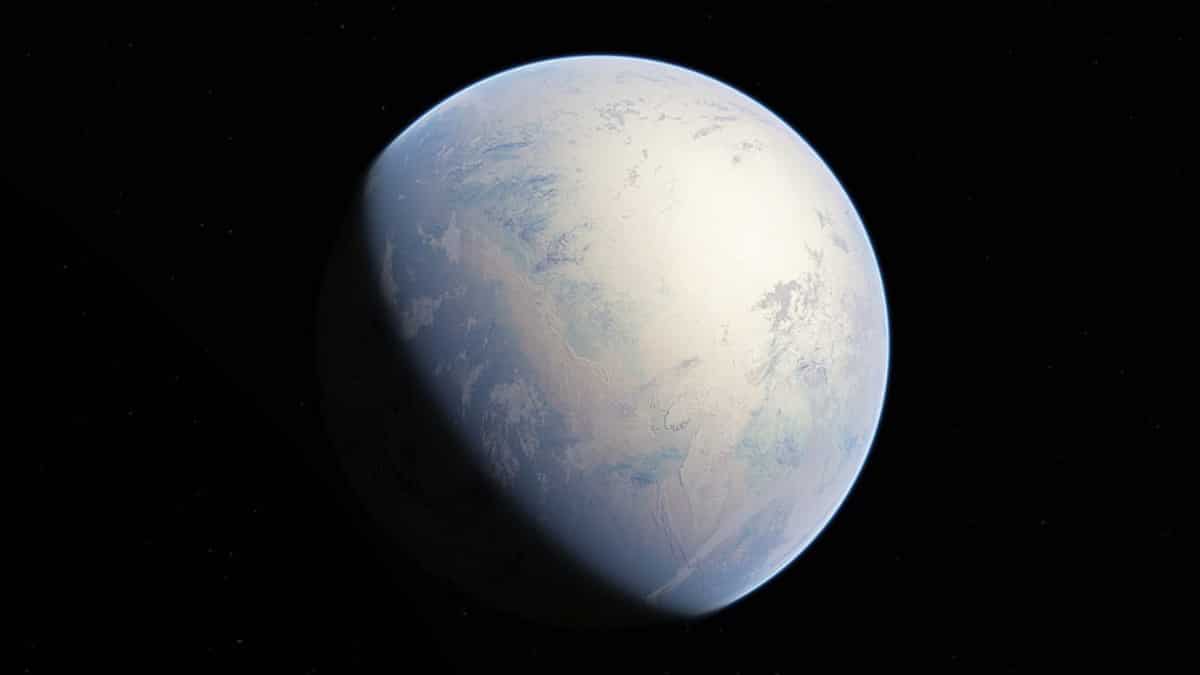
Representational image of 'Snowball Earth'.
In a stunning discovery, UCL (University College London) researchers have found that Ireland and Scotland are hosting a rock formation which may be carrying the rare and complete record of "snowball Earth".
The research, which was publishedin theJournal of the Geological Society of London, discovered that the Port Askaig Formation is filled with layers of rock which are up to 1.1km thick and were probably deposited between 662 to 720 million years ago when the Sturtian glaciation occurred.
This was the first time the world had frozen and led to the development of complex andmulticellular organisms.

In this rock formation, an exposed outcrop on Scottish islands, which was known as the Garvellachs, was unique because it shows how there was the transition of warm and tropical Earth into "snowball Earth".
Also Read:ESA's JUICE mission is set to attempt first-ever Lunar-Earth flyby. Here's how it will impact planet
Some other rocks which were formed at a similar time in North America and Namibia have been missing this transition.
)
Pentagon revives mandatory testosterone testing for male troops aged 30 and above
)
FACT CHECK: Why did PM Modi ask Xi ‘is it okay’ at BRICS Summit? New video reveals...
)
India seeks to build a full semiconductor supply chain
&im=FitAndFill=(700,400))
From Abhishek Sharma to Sahil Chauhan, 5 batters with fastest T20I hundreds
)
Pyongyang dismisses US, western pressure over nuclear programme
)
US And Denmark reach Greenland deal, Trump announces expanded military presence
)
Google’s Gemini AI hacks real systems by guessing passwords during security test
)
US hiding troop deaths in Iran war? Toll higher than Pentagon count, claims report
)
China may have gained access to US's classified F-35 jets; parts meant for repairs diverted to Hong Kong, sparking Pentagon inquiry
)
NASA research plane reaches 61,000 feet over Panama
)
Godfather of AI Geoffrey Hinton gives US lawmakers a one-year warning on AI
)
Trump signs Russia sanctions law: India faces fresh 100% tariff threat over Russian oil
)
Brigitte Bardot’s private collection set for Paris auction; key items and prices revealed
)
Why Ranveer Singh’s Dhurandhar missed India’s Oscar entry; FFI jury member reveals what happened
)
Zendaya and Tom Holland step out for a low-key date in Los Angeles
)
‘Will go to any extent’: Pakistan vows to defend Saudi Arabia amid Houthi attacks
)
The Verdict | When precision fails: US commits war crime in Minab school strike, UN finds
)
Trump signs Russia sanctions bill into law, targets Moscow’s energy sector
66 years of the Indus Waters Treaty: How India and Pakistan settled a bitter river dispute
&im=FitAndFill=(700,400))
New Friday OTT releases (September 18, 2026): Lust Stories 3, You+Me, Best of the Best- 8 new titles coming on Netflix, Prime Video and more
)
Pak: A series of counter terrorism operations in Khyber Pakhtunkhwa
)
Fast bowler Brydon Carse faces no charges over Derby nightclub incident
)
Flying cars in UAE: Ras Al Khaimah signs deal with Chinese company to test new transport
)
Africa is splitting, and a lot sooner than estimated, giving way to a new ocean
)
Trump bans CNN, MS NOW and Politico from White House over ‘FAKE NEWS’
)
Trump 2.0: Dark days ahead for America’s ‘imperial presidency’
)
Trump's Greenland dream comes true? POTUS announces 'Infinite Life' deal with Denmark, claims permanent US control
)
Tirupati Laddu ghee adulterated with chemicals, says ED, supplier arrested
)
Who is Khalilur Rahman? All you need to know about 81st UN General Assembly President
)
IIT Bombay student dies by suicide, was caught seeking AI help during exams
&im=FitAndFill=(700,400))
Meet top 5 bowlers in latest ICC T20I rankings
)
Indian Cinema bets big on mythology, brings ancient stories to modern audiences
)
Ukraine plans record $109 bn defence spending, nearly two thirds of budget amid Russia war
)
Russia holds first parliamentary elections since the beginning of the Ukraine war
&im=FitAndFill=(700,400))
Meet top 5 Indian batters with fastest T20I centuries
)
Here's how Earth sustained life in deep freeze
UCL Earth Sciences senior author Professor Graham Shields said, "These rocks record a time when Earth was covered in ice. All complex, multicellular life, such as animals, arose out of this deep freeze, with the first evidence in thefossil recordappearing shortly after the planet thawed."
UCL Earth Sciences PhD candidate and first author Elias Rugen said, "Our study provides the first conclusive age constraints for these Scottish and Irish rocks, confirming their global significance."
Watch:Astronaut records Moon setting behind Earth amid auroras
"The layers of rock exposed on the Garvellachs are globally unique. Underneath the rocks laid down during the unimaginable cold of the Sturtian glaciation are 70 meters of older carbonate rocks formed in tropical waters. These layers record a tropical marine environment with flourishing cyanobacterial life that gradually became cooler, marking the end of a billion years or so of a temperate climate on Earth," he added.
"Most areas of the world are missing this remarkable transition because the ancient glaciers scraped and eroded away the rocks underneath, but in Scotland, by some miracle, the transition can be seen," Rugen said.
The Sturtian glaciation period lasted for 60 million years on Earth and was one of the two major freezing periods in the Cryogenian Period (between 635 and 720 million years ago).
(With inputs from agencies)