

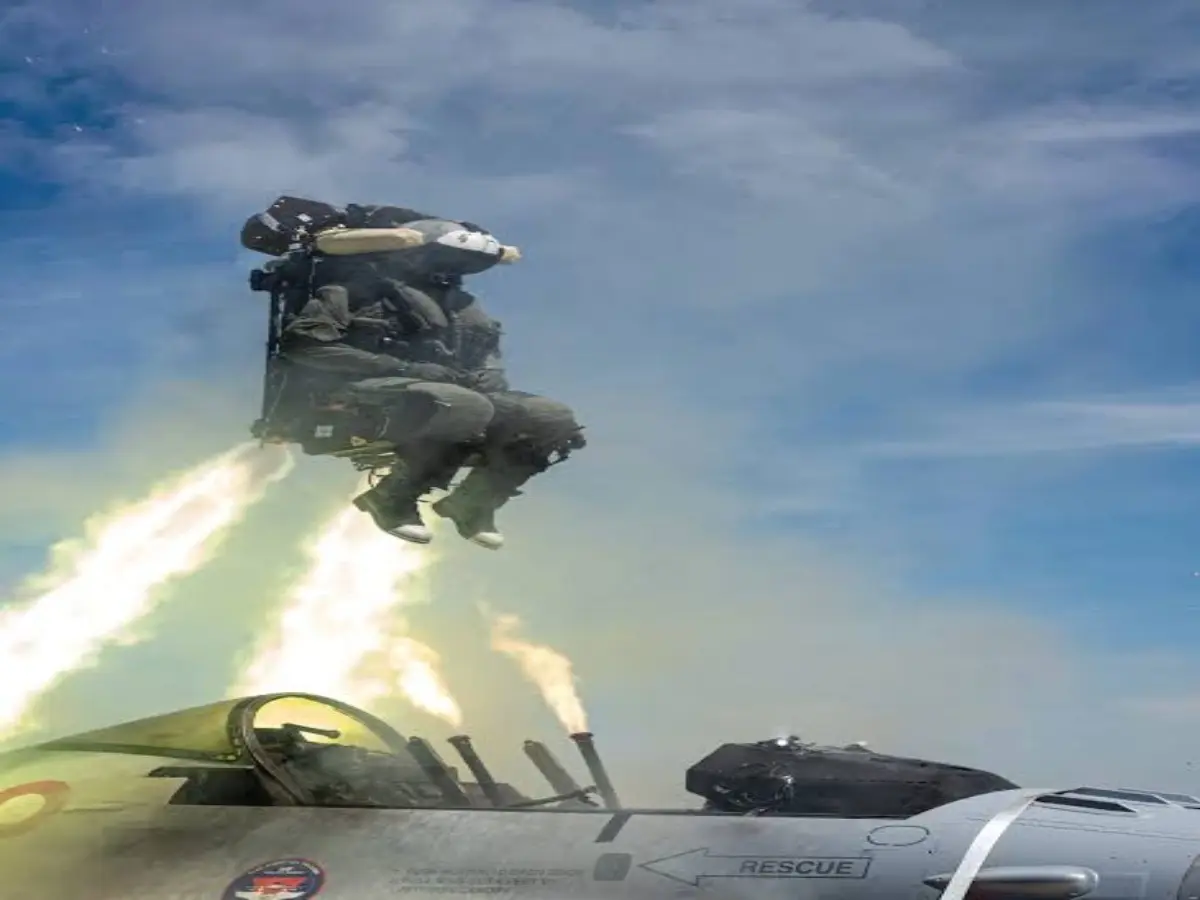
&imwidth=800&imheight=600&format=webp&quality=medium "Zero-zero ejection: Unspoken limits, fatal Tejas crash")
Picture this: Friday, November 21, 2025, the gleaming skies of Dubai during the final day of the Air Show. A Tejas fighter jet, India's homegrown pride, performs breathtaking aerobatics before thousands of eager spectators. Suddenly, at a horrifyingly low altitude, something goes catastrophically wrong. The aircraft nosedives. Wing Commander Namansh Syal has mere seconds to react. But this time, there's no miraculous escape. No parachute blossoms in the sky. The jet slams into the desert at full speed, erupting in a fireball that silences the crowd. Within hours, India mourns. Our pilot is gone, and with him, our unshakeable faith in the zero-zero promise that's supposed to save lives from ground level itself.
For those just getting to know our defence marvels, the Martin-Baker Mk16 ejection seat fitted in every Tejas cockpit is supposed to be foolproof. The term zero-zero isn't just marketing jargon, it's a lifeline. It means pilots can eject safely from zero altitude, literally at ground level, and zero speed, even when the jet's parked on the tarmac. A small explosive motor beneath the seat gives an almighty shove, rocketing you fifty to sixty feet skyward in milliseconds. Then a drogue parachute deploys to steady your tumbling body, before the main chute blossoms open for a gentle landing. Since 1946, Martin-Baker seats have rescued over 7,700 souls worldwide, including dozens of Indian Air Force pilots from burning Jaguars and crashing Mirages. It's why we trusted them completely with our Tejas fleet, never imagining they could fail when it mattered most.
But Dubai shattered that illusion brutally. The crash investigators pieced together a nightmare scenario. Wing Commander Syal was performing a low-altitude manoeuvre when the Tejas suffered what experts call a departure from controlled flight, pilot-speak for the aircraft suddenly becoming uncontrollable. He was barely a hundred feet up, travelling at high speed, when disaster struck. And here's the part that haunts everyone who watched, Wing Commander Syal never ejected. Not because he didn't try, not because the seat malfunctioned, but because cruel physics simply didn't allow it. Eyewitness videos show no parachute, no ejection sequence, nothing. The aircraft was in a violent negative-G turn, meaning forces were pushing everything in the opposite direction of gravity. By the time the emergency became clear, he was already too low, too fast, in the wrong attitude. Even if he had pulled the handle, the three to four seconds needed for the parachute to fully deploy and slow his descent to survivable speeds simply didn't exist. He hit the desert at lethal velocity, and the impact killed him instantly.
This isn't about blaming Martin-Baker or questioning decades of engineering brilliance. Their Bengaluru facility, set up specifically to support our Tejas programme, has been exceptional. Our own Defence Research and Development Organisation added clever touches like a canopy severance system that slices through the cockpit glass microseconds before ejection. The technology is genuinely world-class. What Dubai exposed, heartbreakingly, is that zero-zero capability has invisible asterisks attached. It assumes the aircraft is more or less upright. It assumes you're not in a violent spin or inverted. It assumes you have those critical few seconds between ejection and ground impact. When a jet cartwheels out of control at treetop height during aggressive manoeuvres, even the best ejection seat becomes a desperate gamble rather than a guaranteed escape.
As someone who's followed our aviation journey since childhood, watching Tejas evolve from blueprint to reality, I'm angry and heartbroken. With 83 Mk-1A fighters rolling out and plans for 114 more, we're committing hundreds of young lives to this platform. Every pilot strapping in deserves better than fine-print limitations on their survival gear. Perhaps it's time we demand truly redundant safety systems, maybe explosive charges that can right a spinning aircraft before ejection, or artificial intelligence systems that detect trouble milliseconds earlier. The zero-zero seat remains humanity's best answer to aerial catastrophes, absolutely. But Wing Commander Syal's sacrifice in Dubai's desert teaches us that best available isn't good enough when Murphy's Law strikes with full fury. Our skyward dreams must be grounded in brutal honesty, because every smoking crater represents not just lost metal, but shattered families and extinguished potential. Wing Commander Syal leaves behind his wife, also an IAF officer, their six-year-old daughter, and grieving parents. That's the terrible truth Dubai forced us to confront, sometimes, even guardian angels arrive too late.
Disclaimer: The views of the writer do not represent the views of WION or ZMCL. Nor does WION or ZMCL endorse the views of the writer.
Trending Stories
&imwidth=180&imheight=135&format=webp&quality=medium)
'Hell of a beautiful a**': Trump compliments Nicki Minaj as rapper joins him in Michigan rally
&imwidth=180&imheight=135&format=webp&quality=medium)
'Hire the robot, fire the human': Bill Gates's words hint at a bleak future
&imwidth=180&imheight=135&format=webp&quality=medium)
Telangana unveils AI avatar of IT minister D Sridhar Babu at Hyderabad DevFest 2026
&imwidth=180&imheight=135&format=webp&quality=medium)
Who is Eyal Zamir, Israeli army chief, who reportedly clashed with Netanyahu over Iran?
&imwidth=180&imheight=135&format=webp&quality=medium)
Fire breaks out at Delhi’s North Block, thick black smoke seen | VIDEO
&im=FitAndFill=(700,400)&imwidth=180&imheight=135&format=webp&quality=medium)
Armoured vehicles vs main battle tanks: What is the real difference?
&imwidth=180&imheight=135&format=webp&quality=medium)
IND vs NZ: Tilak Varma sets world record with most T20I catches in a year
&imwidth=180&imheight=135&format=webp&quality=medium)
Harry Kane favourite to win 2026 Ballon d’Or ahead of Lamine Yamal and Kylian Mbappé
&imwidth=180&imheight=135&format=webp&quality=medium)
FIR filed against opposition MPs for ‘trespassing’ amid Jamia Millia students’ protest
&imwidth=180&imheight=135&format=webp&quality=medium)
WATCH | Virat Kohli returns to training ahead of New Zealand ODI series
&imwidth=180&imheight=135&format=webp&quality=medium)
Can Putin cheat death? All about his daughter’s billion-dollar quest for immortality
&imwidth=180&imheight=135&format=webp&quality=medium)
Daler Mehndi controversy: Mika Singh’s team confirms Subodh Uniyal’s apology
&im=FitAndFill=(700,400)&imwidth=180&imheight=135&format=webp&quality=medium)
How do army night-vision systems see in almost complete darkness?
&imwidth=180&imheight=135&format=webp&quality=medium)
Netanyahu warns Israelis of ‘existential threat’ from Iran, posts AI image of nuclear strike
&imwidth=180&imheight=135&format=webp&quality=medium)
Brazil re-elects factory worker Lula for fourth term; Indian PM Modi congratulates 'dear friend'
&imwidth=180&imheight=135&format=webp&quality=medium)
Pakistan airline PIA unveils new crew uniforms, faces online criticism
&imwidth=180&imheight=135&format=webp&quality=medium)
‘That is a miss’: Ravi Ashwin questions Sooryavanshi’s demotion to No. 3 in 2nd T20I vs NZ
&im=FitAndFill=(700,400)&imwidth=180&imheight=135&format=webp&quality=medium)
Why does this fighter jet have a golden window that looks like alien technology?
&im=FitAndFill=(700,400)&imwidth=180&imheight=135&format=webp&quality=medium)
New OTT releases this week (October 26-November 1, 2026): Baththa, Akka, The One About Matthew Perry- 7 titles coming on Netflix, Prime Video and more
&imwidth=180&imheight=135&format=webp&quality=medium)
Elon Musk’s Grok releases first AI-generated Odyssey episode, months after promising ‘historically accurate’ full-length film
&imwidth=180&imheight=135&format=webp&quality=medium)
'Already tired of his 9-to-5': Baby born with a moustache becomes internet sensation, video goes viral | Watch
&imwidth=180&imheight=135&format=webp&quality=medium)
Serbia’s student-led movement defeats Vucic’s party after 14 years in power: Why it matters
&imwidth=180&imheight=135&format=webp&quality=medium)
'I promised Gautam & Kotak Sir that...': Tilak Varma opens up on match-winning mindset against NZ
&imwidth=180&imheight=135&format=webp&quality=medium)
Maldives opposition leader demands transparency on Muizzu Govt's Pakistan defence, security deals
&im=FitAndFill=(700,400)&imwidth=180&imheight=135&format=webp&quality=medium)
Why do some fighter jets have two engines while others use one?
&imwidth=180&imheight=135&format=webp&quality=medium)
Formula 1: Mercedes' Kimi Antonelli one race and ninth spot finish away from title after US Grand Prix win
&imwidth=180&imheight=135&format=webp&quality=medium)
Delhi's new entry rules for vehicles begin November 1. Here's all you need to know about the ban
&imwidth=180&imheight=135&format=webp&quality=medium)
'Clear overkill': Putin rejects claims Russia is behind mass protests in Europe
&imwidth=180&imheight=135&format=webp&quality=medium)
'I've done my work sincerely': AR Rahman on facing backlash over Ramayana soundtrack
&imwidth=180&imheight=135&format=webp&quality=medium)
Clayface tops North American box office, Elizabeth Holmes documentary follows close behind
&imwidth=180&imheight=135&format=webp&quality=medium)
Nagpur man fails to pay rent, allegedly prints fake Rs 500 notes worth Rs 37 lakh
&imwidth=180&imheight=135&format=webp&quality=medium)
Israel elections 2026: How the country is gearing up for a crucial vote
&imwidth=180&imheight=135&format=webp&quality=medium)
Donald Trump targets Bill Maher in lengthy post after White House dinner, says ‘Don’t call anymore’
&imwidth=180&imheight=135&format=webp&quality=medium)
'He is a red flag': Ex-India strength and conditioning coach on Rohit's fitness regime
