Trump’s latest addition to domestic enemies list: ‘Godless communists’

&imwidth=600&imheight=450&format=webp&quality=medium "Trump’s latest addition to domestic enemies list: ‘Godless communists’")
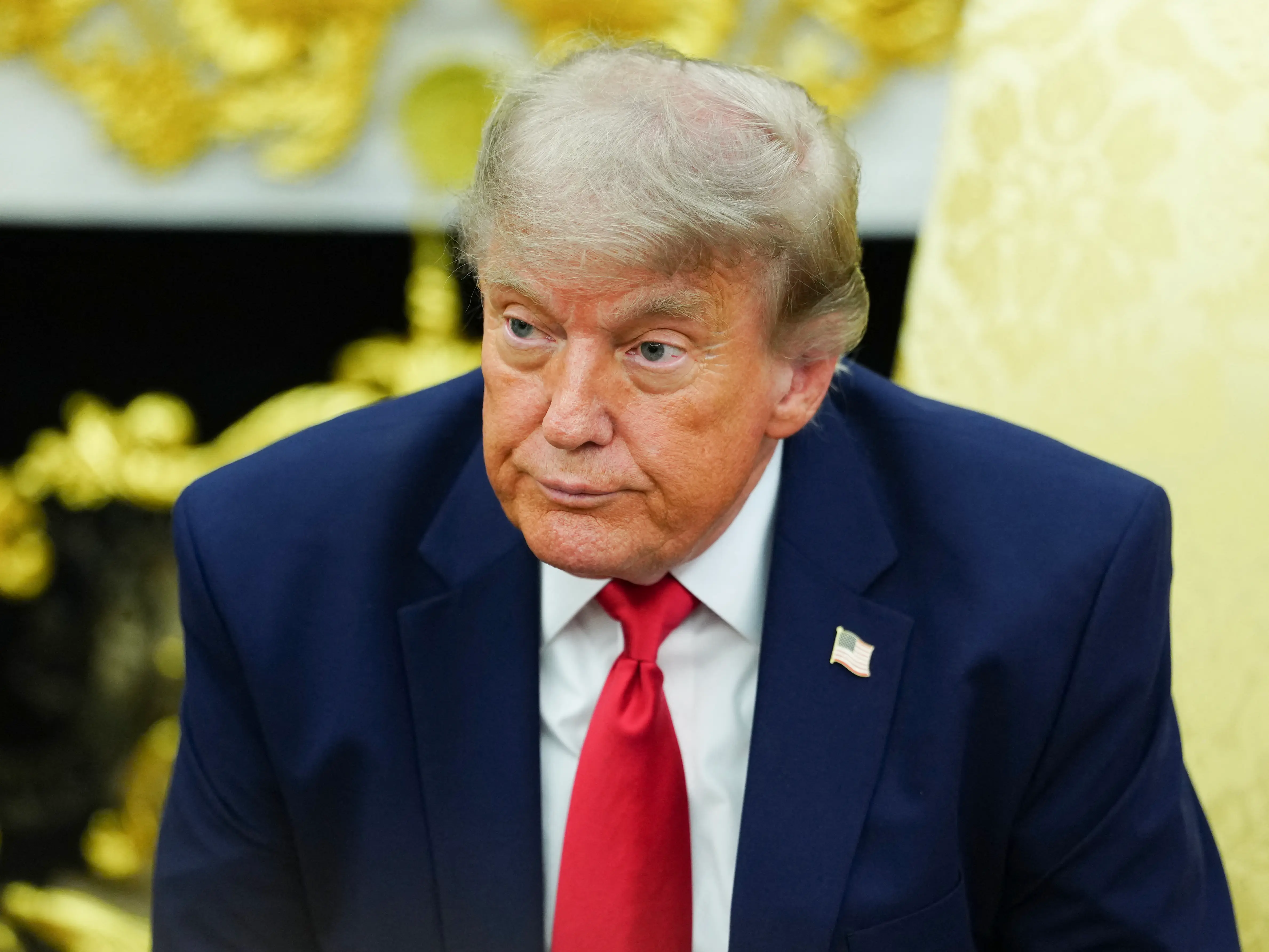
US President Donald Trump Photograph: (AFP)
The reason for Trump’s anti-Communist tirades is obvious: in the run-up to mid-term elections for the House of Representatives, he wants to implant in the mind of voters the idea that the establishment Democratic Party is being pulled to the far left by democratic socialists.
WASHINGTON: Injecting politics into speeches many Americans had hoped would carry unifying messages, US President Donald Trump has revived memories of the 1950s when the country was gripped by anti-Communist hysteria.
Marking America’s 250th birthday, he warned his citizens that “Communism is a mortal threat to American liberty. It is the greatest threat to our country, including World War I, World War II, Pearl Harbour, or even 9-11. We’re not going to let this happen to us. Believe me, we’re not letting it happen."
“Because communism is the enemy of free people everywhere, everywhere in the world. Never works. It’s the enemy of the Constitution. Above all, it’s the enemy of July 4th, 1776. It is the enemy indeed.” He returned to the subject a day later, describing Communism as a cancer “that must be cut out fast.”
Trump’s warnings about Communism grew more strident after June 23, when a string of far-left candidates who identify as democratic socialists won primary contests in New York. This was followed by primary victories in Colorado and Maine. The country’s most prominent democratic socialist, New York mayor Zohran Mamdami, endorsed the winners.
That prompted the president to warn of Communism 81 times in the span of two weeks, giving his political team plenty of material to test whether the message resonates beyond his Make America Great Again (MAGA) base.
The reason for Trump’s anti-Communist tirades is obvious: in the run-up to mid-term elections for the House of Representatives, he wants to implant in the mind of voters the idea that the establishment Democratic Party is being pulled to the far left by democratic socialists.
Trending Stories
&imwidth=280&imheight=210&format=webp&quality=medium)
&imwidth=280&imheight=210&format=webp&quality=medium)
&imwidth=280&imheight=210&format=webp&quality=medium)
&imwidth=280&imheight=210&format=webp&quality=medium)
&imwidth=280&imheight=210&format=webp&quality=medium)
&imwidth=280&imheight=210&format=webp&quality=medium)
&imwidth=280&imheight=210&format=webp&quality=medium)
&imwidth=280&imheight=210&format=webp&quality=medium)
&imwidth=280&imheight=210&format=webp&quality=medium)
&imwidth=280&imheight=210&format=webp&quality=medium)
&imwidth=280&imheight=210&format=webp&quality=medium)
&imwidth=280&imheight=210&format=webp&quality=medium)
&imwidth=280&imheight=210&format=webp&quality=medium)
&imwidth=280&imheight=210&format=webp&quality=medium)
&imwidth=280&imheight=210&format=webp&quality=medium)
&imwidth=280&imheight=210&format=webp&quality=medium)
&imwidth=280&imheight=210&format=webp&quality=medium)
&im=FitAndFill=(700,400)&imwidth=280&imheight=210&format=webp&quality=medium)
&im=FitAndFill=(700,400)&imwidth=280&imheight=210&format=webp&quality=medium)
&imwidth=280&imheight=210&format=webp&quality=medium)
&imwidth=280&imheight=210&format=webp&quality=medium)
&imwidth=280&imheight=210&format=webp&quality=medium)
&imwidth=280&imheight=210&format=webp&quality=medium)
&im=FitAndFill=(700,400)&imwidth=280&imheight=210&format=webp&quality=medium)
&imwidth=280&imheight=210&format=webp&quality=medium)
&imwidth=280&imheight=210&format=webp&quality=medium)
&imwidth=280&imheight=210&format=webp&quality=medium)
&imwidth=280&imheight=210&format=webp&quality=medium)
&imwidth=280&imheight=210&format=webp&quality=medium)
&imwidth=280&imheight=210&format=webp&quality=medium)
&imwidth=280&imheight=210&format=webp&quality=medium)
&imwidth=280&imheight=210&format=webp&quality=medium)
&imwidth=280&imheight=210&format=webp&quality=medium)
&imwidth=280&imheight=210&format=webp&quality=medium)
&imwidth=280&imheight=210&format=webp&quality=medium)
&imwidth=280&imheight=210&format=webp&quality=medium)
&imwidth=280&imheight=210&format=webp&quality=medium)
&imwidth=280&imheight=210&format=webp&quality=medium)
For students of American history in the 20th century, Trump sounded like the Republican Senator Joseph McCarthy, who, beginning in 1950, waged a campaign to root out alleged Communists in the government, the arts, and Hollywood in what became known as the Red Scare.
In the next four years of intense anti-Communist paranoia, thousands of Americans lost their jobs after being blacklisted. The anti-Communist fever burnt itself out when the US Senate censured McCarthy at the end of a series of hearings on allegations by a McCarthy subcommittee that Communists infiltrated the US Army.
There is no serving or aspiring American politician or public figure who describes himself as a communist, so what prompted the President’s return to a dark and now discredited chapter of American history?
As Dough Brinkley, a presidential historian at Rice University, put it: “This is Joe McCarthy red scare idiocy. He (Trump) is out there talking about this communist menace as if it’s the Cold War years. It’s just what he wants the Republicans to run on in this election cycle.”
This is a concern of a good number of moderate members of the Democratic Party which so far is favoured to win back the House of Representatives, where Republicans now have a three-seat majority.
For Trump, whose statements tend to be echoed endlessly on social media, there is no such things as democratic socialists. “These are hardcore, godless communists,” he told the policy conference on the eve of Independence Day. “This is the most serious threat to our country since its existence, in my opinion, 250 years ago. A major threat to our country.”
Democratic socialists believe in taxing the wealthy, universal health care, and an end to arms supplies and unconditional U.S. support for Israel – all demands that enjoy considerable public support.
In an ideal world, America’s 250th year would have been a unifying event. Instead, it shows the deep political divisions of a country whose citizens are in a sour mood, according to surveys, and whose global image has darkened to a remarkable degree.
According to the Pew Research Center, a Washington think tank, roughly two-thirds of Americans believe their country is on the wrong track. . Public trust in government has sunk to a record low, from 40 per cent in 1976 to just 17 per cent in 2025.
Today’s perceptions contrast with decades of the United States enjoying a positive image both at home and in much of the world, more so after the end of World War II, when it began its rise to become the world’s dominant superpower.
How senior US officials (and many ordinary citizens) saw their country was reflected by then Secretary of State Madeline Albright in a 1998 television interview: “We…are America, we are the indispensable nation. We stand tall and we see further than other countries into the future.”
Coming from a measured diplomat, that soaring language produced little or no pushback from “the West” (short for Washington’s allies), which had accepted the US as its leader in international affairs.
But the perception of America as a force for good has been fading gradually and virtually vanished after Donald Trump entered politics and began his second term in office in January 2025, perpetuating the concept of “America First” he developed in his first term from 2017 to 2021.
He cast aside the notion that the United States is an exceptional country destined to exert global leadership and promote democracy and human rights around the world. Trump disdains international organisations and his administration has withdrawn from 66, including the World Health Organization and the Paris Agreement on climate change, which was adopted by 195 countries.
This move underscored the extent to which the United States has abandoned the concept of “soft power”. For years, that served as an important tool to influence other countries by attraction and persuasion rather than coercion, force, and commercial transactions. The world took notice of the emphasis on military might.
Nothing highlights how that has changed perceptions more than a global survey in May that showed more positive views of China and Russia than America.
The survey is an annual exercise commissioned by the Alliance of Democracies Foundation, a watchdog group based in Denmark.
Its findings were drawn from polling more than 94,000 respondents in 85 countries. It is said to be the largest survey of its kind.
In the countries surveyed, citizens in 82 held negative views of the United States. “The fast decline of the United States’ perception around the world is saddening but not shocking,” former NATO Secretary General Anders Fogh Rasmussen said when he presented the survey results.
“US foreign policy over the past 18 months has, among other things, called into question the transatlantic relationship, imposed widespread tariffs and threatened to invade a NATO ally’s territory, “ a reference to President Trump’s repeatedly stated intention to take control of Greenland, a Danish territory.
Add the painful economic impact resulting from the unprovoked war on Iran that Trump launched on February 28, announcing it in a pre-dawn social media posting, and it is easy to understand why Rasmussen, a former Prime Minister of Denmark, said the unprecedented decline of views of America was “not shocking.”
In the countries surveyed, citizens in 82 held negative views of the United States. “The fast decline of the United States’ perception around the world is saddening but not shocking,” former NATO Secretary General Anders Fogh Rasmussen said when he presented the survey results.
But perhaps the most remarkable poll of the mood in America’s birth year has come from Gallup, one of the world’s most respected polling organisations. It found that the share of Americans who are extremely or very proud of their country has fallen to a historic low — just 58%.
Pride in the United States has long been in the DNA of the country but Gallup found that it has declined by deep partisan divides and shifting generational trends, i.e., sceptical views from the young.
In the past, there have been good reasons for pride. Massive waves of immigration around the turn of the 20th century — more than 20 million people arrived between 1880 and 1920 — helped turn the country into a centre of innovation, science and enterprise.
The United States has won more Nobel Prizes than any other country since the prize was first awarded in 1901. According to the Institute of Immigration Research, 142 of the 400 U.S. citizens who won academic Nobel Prizes were immigrants.
This was an era when immigrants were welcomed.
A sonnet written by Emma Lazarus to help fund the pedestal of the Statue of Liberty conveys a bygone culture: “Give me your tired, your poor, your huddled masses yearning to breathe free, the wretched refuse of your teeming shore. Send these, the homeless, tempest-tost to me.”
In 1903, it was engraved on a bronze plaque and placed inside the pedestal. Now, both legal and illegal immigration have been sharply reduced by sweeping restrictions. Trump administration decrees have halted the granting of visas for nationals from nearly 40 countries.
