Ladakh’s Gen Z protesters urged to choose dialogue over discord in Land of Lamas’ peace chants

&imwidth=600&imheight=450&format=webp&quality=medium "Ladakh’s Gen Z protesters urged to choose dialogue over discord in Land of Lamas’ peace chants")
Ladakh protest Photograph: (AFP)
The core of Ladakh's grievances traces back to the 2019 scrapping of Jammu and Kashmir's special status under Article 370, which carved the region into two Union Territories and stripped away layers of autonomy
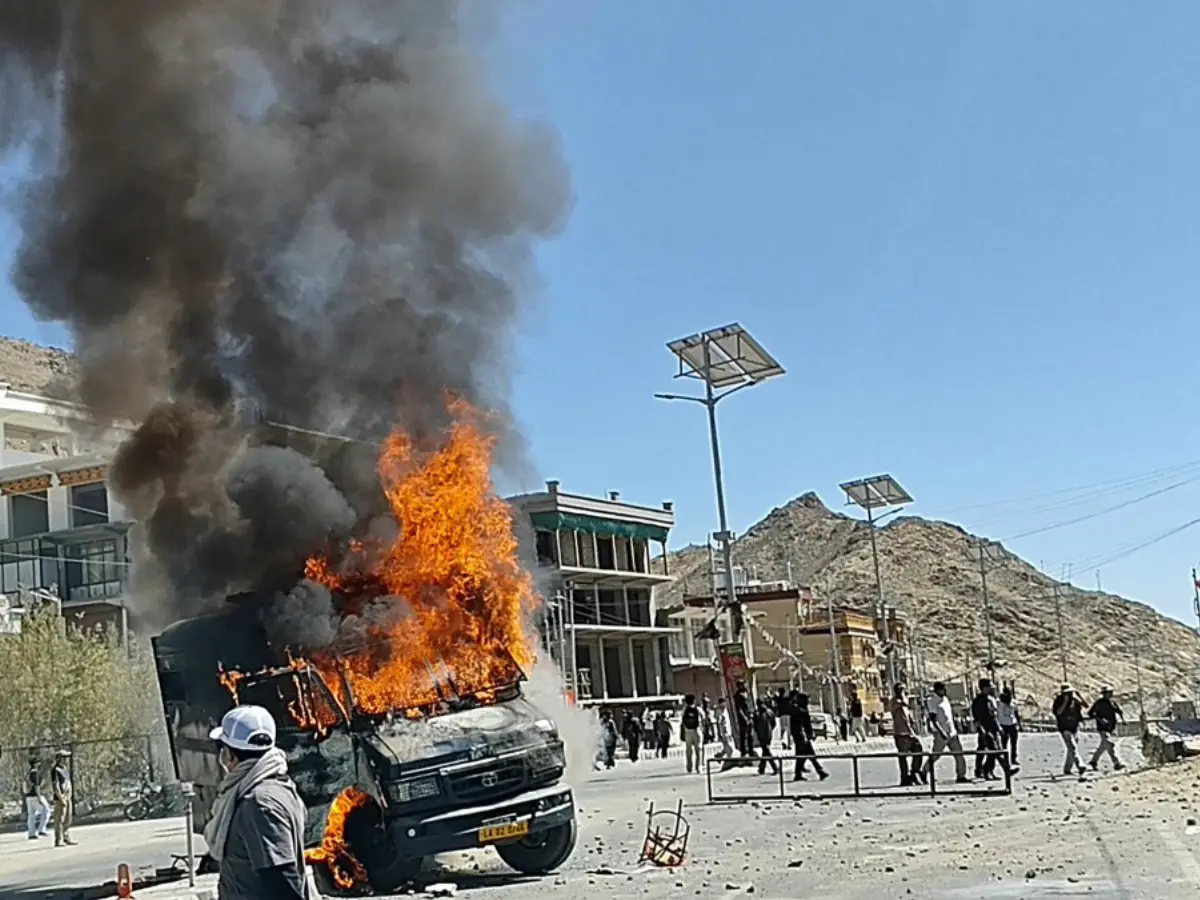
In a sharp escalation that has gripped the nation, Ladakh's long-simmering agitation for statehood boiled over into tragedy, leaving four protesters dead and over 30 injured in clashes with security forces in Leh. A curfew was swiftly imposed across Leh and Kargil districts, with assembly of more than five people banned and over 50 individuals detained to restore order. At the heart of this unrest is a surging wave of Gen Z activism, with young voices from Leh's streets drawing uncomfortable parallels to Nepal's youth-led uprisings, where social media-fueled demonstrations toppled entrenched power structures and forced policy U-turns.
Ladakh's Lieutenant Governor Kavinder Gupta has pointed fingers at such cross-border comparisons, alleging they stirred the crowds into frenzy, while activists like Sonam Wangchuk decry the violence as a desperate cry against Delhi's indifference. This deadly turn has heightened political anxieties in New Delhi, underscoring how a digitally savvy generation, once seen as passive, has now rolled up their sleeves to fix the regional fault lines with their demands that have been echoing for the past few years.
The core of Ladakh's grievances traces back to the 2019 scrapping of Jammu and Kashmir's special status under Article 370, which carved the region into two Union Territories and stripped away layers of autonomy. Protesters, spearheaded by groups like the Leh Apex Body and Kargil Democratic Alliance, are pushing for full statehood to regain legislative powers and self-governance, alongside inclusion in the Sixth Schedule of the Constitution—a provision that grants tribal areas in states like Assam and Meghalaya autonomous councils to safeguard land rights, customs, and resources from external encroachments.
Ladakhi people also seek a second seat in the Lok Sabha to amplify their voice in Parliament, given the region's sparse population of just 2.74 lakh as per the 2011 Census, and the creation of a dedicated Ladakh Public Service Commission to streamline recruitment and curb perceived favoritism from Jammu and Kashmir's cadre. Beneath these structural asks lies a deeper malaise: the erosion of cultural identity and economic despair. New domicile rules demand a continuous 15-year stay in Ladakh from 1989 for eligibility, but post-2019 migrants face a steeper climb, eligible only after 2034, fueling fears of demographic influxes diluting local Bhoti and Purgi languages, now listed alongside English, Hindi, and Urdu as official tongues.
Notably, job scarcity hits hardest among the youth, with unemployment rates hovering above 20 percent in this high-altitude desert, where tourism and horticulture offer slim pickings. Promises of 85 percent reservation for indigenous people in government posts—mirroring high quotas in Mizoram (92 percent) and Arunachal Pradesh (80 percent)—remain mired in rule-making delays, leaving graduates from local colleges sidelined. Hill development councils, revamped with one-third seats for women, are viewed as token gestures without real teeth, prompting five years of rallies that peaked in this week's fury.
What began as a disciplined sit-in snowballed into chaos when frustration over unmet deadlines met a raw nerve. The immediate flashpoint was the hospitalization of two elderly hunger strikers, Tsering Angchuk (72) and another local leader, after they joined Sonam Wangchuk's indefinite fast demanding tripartite talks with the Centre. By dawn on Wednesday, thousands converged on Leh's Polo Ground, waving black flags and chanting for autonomy, but tensions spiked as police barricades held firm against marchers heading toward the administration complex. Eyewitness accounts describe youths hurling stones after security personnel resorted to tear gas and lathi charges to disperse the crowd. In the melee, protesters torched a Bharatiya Janata Party office, symbolizing betrayal over unkept electoral pledges from 2019, when the party had championed the bifurcation as a path to development.
Trending Stories
)
)
)
)
)
)
)
)
)
)
)
)
)
)
)
)
)
)
&im=FitAndFill=(700,400))
)
)
)
&im=FitAndFill=(700,400))
)
&im=FitAndFill=(700,400))
&im=FitAndFill=(700,400))
)
Sad enough, matters jumped from the frying pan to the fire when reports emerged of armed groups—possibly fringe elements—firing in the air, prompting paramilitary forces to open live rounds in self-defense, claiming four lives, including two teenagers, and wounding dozens more, some critically with pellet injuries. Over 70 remain unaccounted for amid the smoke and debris, with Wangchuk himself alleging that some young protesters have lost limbs in the crackdown. The swift imposition of Section 144 and internet blackouts has only deepened the rift, turning a quest for dialogue into a standoff.
Gen Z's right to raise its voice is the bedrock of any democracy, a principle India has upheld through countless movements from independence to the present. Yet, as blood stains Leh's ancient lanes, it is clear that violence solves nothing—it only hardens positions and buries hopes. Ladakh, cradle of Buddhism where the Dalai Lama's teachings of compassion echo from Thiksey Monastery to Hemis, has no room for such spilled blood; its valleys, etched by non-violent sages, demand a higher path.
Peaceful satyagraha, backed by smart mobilization on platforms like X and Instagram, holds far greater sway. History bears this out: the 2020-21 Ladakh marches drew global eyes to their constitutional and developmental concerns without a single casualty, pressuring the Centre into promises of safeguards. A calibrated strategy—petitions to the Supreme Court, alliances with sympathetic MPs, and economic boycotts—could amplify demands without alienating allies.
India's democratic machinery, battle-tested over decades, flourishes on such measured dissent. This Gen Z cohort, armed with smartphones and startup dreams, is the engine propelling the nation toward Viksit Bharat by 2047, innovating in renewables and eco-tourism to green the frontier. But outbursts like this risk derailing progress, inviting meddlesome foreign hands to exploit cracks in border harmony.
The Narendra Modi-led Central government must vet every aspect of the matter earnestly. Grievances over land protections, job quotas, and cultural erosion must be aired in transparent tripartite forums, not dismissed as political propaganda. Whether it is Expedite Sixth Schedule rules, fast-tracking the public service panel, or revisiting domicile timelines, the 2019 assurances by the PM Modi government must be addressed.
Essentially, there is a need to closely examine the geographical location of Ladakh, which borders China. The ongoing border tensions with China require the Central government to have full and unrestricted access to Ladakh at all times, especially to build roads for troop movements and to counter Beijing's incursions. Granting statehood to Ladakh could complicate this, particularly if a party other than the BJP or a trusted ally wins a potential election. Ladakh's youth are urged to think deeply and strategically and trade placards for blueprints, weaving their aspirations into the republic's vibrant mosaic. In a land where Lamas chant for universal peace, dialogue remains the surest bridge over troubled passes.