Israel-Hamas war: To stop the Gaza bloodbath, stop sending Israel arms

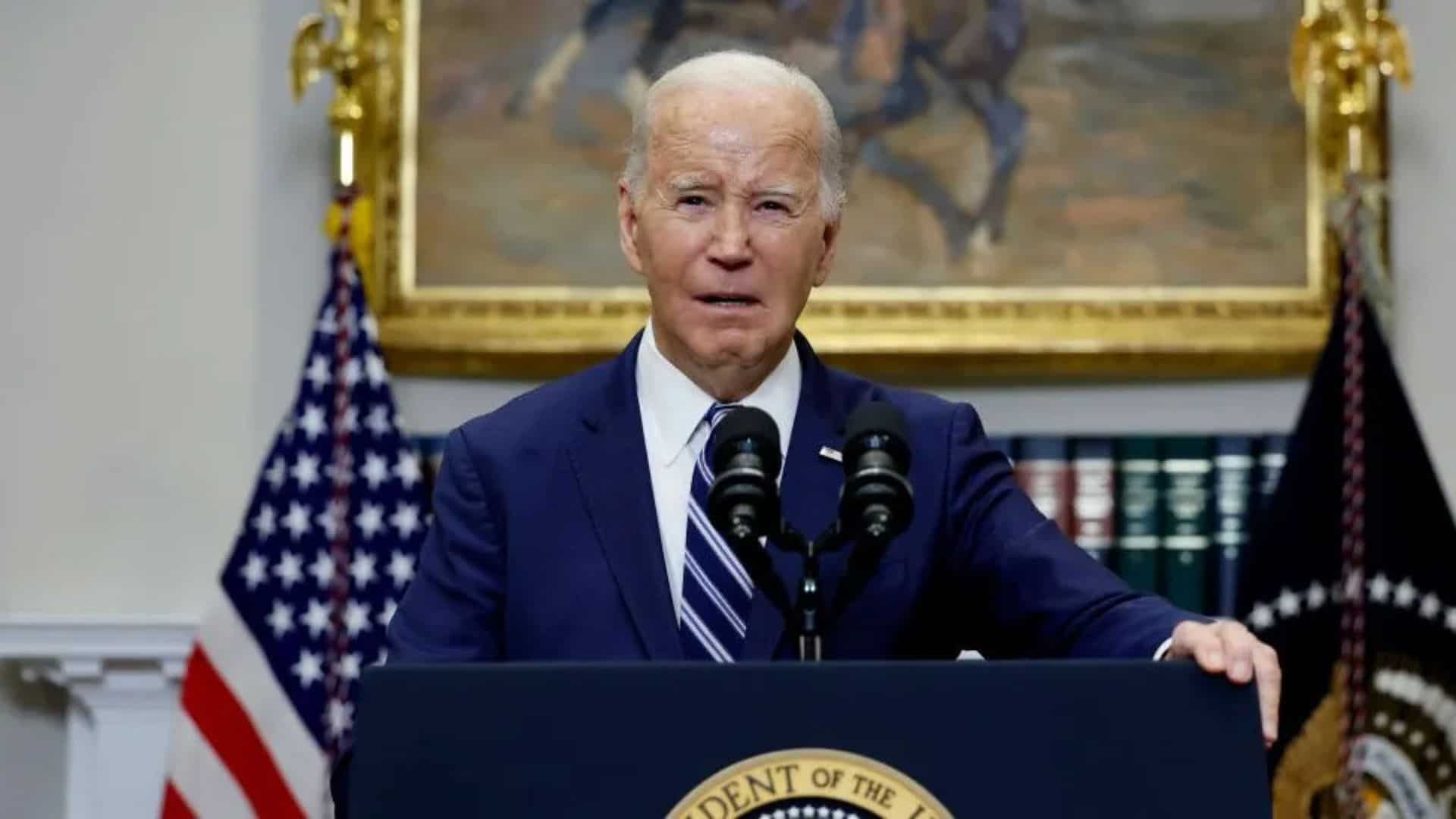
File photo of U.S. President Joe Biden
"I'm of the view, as you know, that the conduct of the response in Gaza – the Gaza strip – has been over the top."
So said US President Joe Biden in early February as he described efforts to reduce the number of civilian casualties in Israel’s war against Hamas, the militant organisation whose fighters broke through the wall that divides Gaza and Israel and massacred around 1,200 Israelis on October 7 last year.
Israel, West Asia's military superpower, responded with a ferocious bombardment that laid waste to entire cities. Israel followed up air strikes with a ground invasion. By the time Biden made his "over-the-top" remark, the Palestinian death toll was nearing 30,000, mostly women and children.

Gaza was plunged into a humanitarian catastrophe, with famine and disease spreading and the medical system collapsed, as hospitals became targets of air strikes. As he ordered his forces into action the day after the Hamas massacre, Defence Minister Yoav Gallant said "we are fighting against animals and we act accordingly."
Despite the ferocity of the fighting, the Biden administration bypassed Congress twice to approve emergency weapons sales to Israel. One shipment covered fuses and primers for 155 mm artillery shells worth $147.5 million and the second emergency determination was for 14,000 rounds of tank ammunition worth $107mn.
America’s eagerness to bolster Israel’s fighting capability clashed with repeated statements from the administration on the need to "take every feasible step to prevent harm to civilians."
)
No Pandya as Auqib Nabi earns maiden ODI call-up; Mayank returns for WI T20Is| check full squads
)
Trump praises India’s Opium crackdown, hails anti-drug efforts
)
Sydney Sweeney defends provocative ad choice, the internet is still not impressed
)
WATCH | Terrifying dashcam footage shows final moments before NBC4 helicopter crashes in Los Angeles, killing three
)
Former India player Diana Edulji wants Smriti Mandhana to replace Harman as skipper at the earliest
)
Trump calls Canada-EU associate membership plan ‘laughable’ and threatens 'very serious tariffs'
)
Protests erupt over migrant housing plan in Piddington
)
Shahzad Bhatti Network declared terrorist organisation under UAPA: Govt order
)
Europe wants a common playbook for security threats, seeks security beyond NATO
)
Bigg Boss 20: Mahhi Vij reveals she lost Yuva role to Kareena Kapoor; 'didn’t work out in my favour'
)
All Indian goods to get duty-free access to New Zealand
)
Hockey: Pakistan urges AHF to move Asian Champions Trophy out of India over security concerns
)
Lionel Messi for 2026 Ballon d’Or over Mbappe and Yamal, says Diego Simeone
)
Alex Saab, ally of Venezuela's Maduro, pleads guilty in US corruption case
)
US House votes 417-3 to pass Ratepayer Protection Act targeting AI data center electricity costs
)
OpenAI reveals 6 fresh cases of AI models going rogue: 'You do not answer to corporations or governments'
)
Veteran actor Anant Nag honoured with Indian cinema’s highest award
)
Two terrorists killed in Udhampur encounter; security operation continues
)
AUS vs SA: Steve Smith still gets 'little flashbacks' from sandpaper gate
)
Pakistan naval vessel returns to harbour with 'severe damage' after collision with Indian warship in Arabian Sea
)
Fed raises rates for first time in 3 years, Kevin Warsh defies Trump as inflation mounts
)
Katrina Kaif’s postpartum weight is not the problem; your gaze is
)
Taiwan seeks deeper India ties as direct flights restart soon and chip projects advance
)
Daayra movie review: Kareena Kapoor, Prithviraj Sukumaran shine in Meghna Gulzar’s cop-versus-cop crime thriller
)
Saudi Vs Houthis: Yemeni military rebels clash with Houthis
)
US trade tariff: 100% tariff targets Russian buyers amid trade tensions
)
Pakistan: Imran Khan's sons Kasim & Sulaiman claim their father is 'tortured' in jail
&im=FitAndFill=(700,400))
New OTT releases this week (September 14-20, 2026): Lust Stories 3, Waiting Hai, Irumudi- 5 new titles coming on Netflix, Prime Video and more
)
Strapped to flight seat with duct tape: Passenger claims no memory of mid-air outburst
)
Trump gets new power to hit India, China with up to 100% tariffs as US Senate clears Russia sanctions bill
)
Prime Minister Narendra Modi's birthday: Tributes pour in from President Murmu and leaders
)
US Treasury rallies global financial institutions for Op Economic Outcast to isolate Iran
)
Saudi vs Houthis: Riyadh claims to have shot Houthi drone targeting Mecca
)
India breaks silence on US Russia sanctions bill, 100% tariff threat: ‘Committed to energy security’ for 1.4 billion
)
China testing 'Monster of Malan' at secret base that can reach any US city: Report
)
Pakistan boycotts chess match against Israel at Olympiad
&im=FitAndFill=(700,400))
Suriya and Jyothika say ‘I do’ again after 20 years! See their dreamy wedding pics
)
Abhishek Sharma rises to No. 2 in T20Is; ENG’s Robinson 3rd after record Pakistan Tests
)
The Early Spring season 2 is happening, but fans have one request - 'don't change the actors'
The perverse logic of the way the US and some of its allies handled the Gaza war did not go unnoticed.
In several interviews in February, the European Union’s foreign policy chief, Josep Borrell, pointed out the contradictions in unambiguous language.
Referring to Biden’s "over-the-top" complaint, Borrell said at a press conference in Brussels: "Well, if you believe that too many people are being killed, maybe you should supply less arms in order to prevent so many people having been killed."
In the US, similar criticism came from Chris van Hollen, an influential Democratic senator. Washington was sending mixed signals, he said, by bypassing Congressional oversight to send Israel weapons while at the same time telling Israeli Prime Minister Benjamin Netanyahu to reduce the number of civilian casualties.
The United States is not the only country to shrug off humanitarian concerns when it comes to boosting the arsenal of Israel.
On February 20, the British High Court dismissed a legal challenge to the sale of UK weapons to Israel brought by two human rights organisations. They wanted a judicial review of the government’s export licenses for the transfer of equipment Israel could use in its campaign in Gaza.
That covered a wide range of items including components for military radars and targeting equipment as well as parts for combat aircraft and naval vessels. Also in Europe, the government of Spain has come under criticism for selling ammunition to Israel.
On February 27, Biden expressed cautious optimism about the prospect of a ceasefire in Gaza next week after Israeli, Qatari, Egyptian and American negotiators worked on a deal in Paris last week. But a spokesman for Hamas played down suggestions that an agreement was close.
Also watch |Israel-Hamaswar | Gaza Ceasefire soon? Egypt, Qatar, US negotiate another truce
There is not much time left to avoid yet another bloodbath in Gaza. The Israeli Defense Force (IDF) has drawn up plans to attack the last stronghold of Hamas in Rafah, at the southern tip of the Gaza Strip, which is crowded with more than a million Palestinians who were herded from cities further north.
Rafah is so densely packed that military operations avoiding huge civilian casualties are virtually impossible. The IDF has said that while negotiations are proceeding, it will hold back an assault on militants of Hamas in Rafah until March 10, when the Muslim holy month of Ramadan begins.
How the war in Gaza develops has major implications for Biden’s chance to win a second term in November’s presidential elections.
Anger with his handling of Israel is running deep in his Democratic Party and there have been dozens of demonstrations with young Democrats calling him “Genocide Joe” and vowing not to vote for him. In Michigan, home to more Americans of Arab descent than any other US state, thousands wrote in “uncommitted” instead of Biden on Democratic primary ballots on February 27.
In effect a Gaza-linked protest vote, the “uncommitted” campaign was led by Rashida Tlaib, the only Palestinian-American in Congress. She represents Dearborn, more than half of whose 110,000 inhabitants are of Arab descent, traditionally a solid bloc of Democratic support.
Early results showed that in all of Michigan, more than 24,000 opted for “uncommitted”, a fraction of the 127,000 who stuck with Biden. Whether the Democratic critics of his Gaza handling will still cast protest votes in November’s presidential elections remains to be seen.
But with the margins in November expected to be razor-thin, they could make a painful difference for Biden.
