Is individualism the secret of the West’s success?


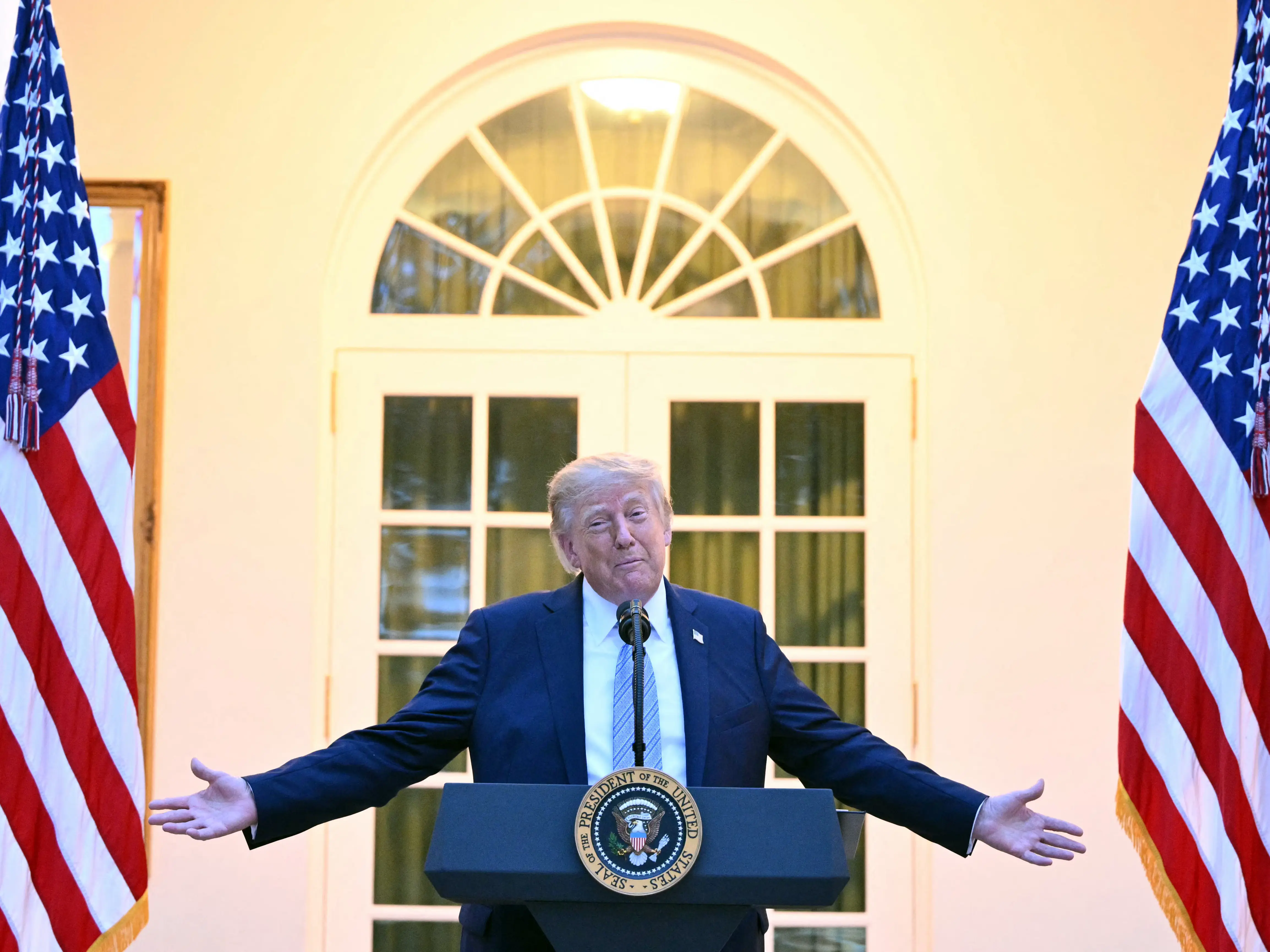
US President Donald Trump gestures as he speaks during the daily briefing on the novel coronavirus, COVID-19
Ever since the Industrial Revolution, the entity known as the West, essentially in the nature of a loose grouping of political, social and philosophical ideas reified coincidentally by a certain people inhabiting a certain part of the world, has reigned supreme. Be it forms of political organisation, scientific discovery, industrial organisation, technological innovation and so, the West has been the pioneer and led the way. What, the question is, explains the West’s success?
A one rather conventional and clichéd explanation is that it is individualism that is the reason for both the West’s ascendance and, well, even superiority. Individualism roughly posits that the individual precedes and is superior to the group which might be social, political, family or even tribal. And, that an individual has moral worth that is intrinsic and an individual’s life must be free from external interferences. On the face of it, this ‘pure’ theory of individualism is powerful (I call the theory pure because, in my opinion, no society even in the West corresponds exactly to it. There are approximations and variations to the ideal type of individualism). It is powerful because it is intuitive and rests on powerful philosophical foundations.
And, speaking in empirical terms, a corpus of evidence can be marshalled to support the theory of individualism. But, the first quibble with the pure theory of individualism is that it, to repeat, is an ideal type. Consider an example. While there is no argument with the assertion that the individual has moral worth and is an autonomous agent or being, but in the real world, even in the West, individuals are subject influences external to them. The mass media, (or ‘social media contemporarily), mass advertising, the pressures to conform, say in or among subcultures or social groupings corroborate and point out to these external influences and pressures. Politically, as has been evident over the past few years, to employ Noam Chomsky’s phrase, consent can be manufactured. All this suggests that there is no such thing as pure individualism.

Moreover, in the region that is held to be the West in geographical terms, there are various and varying permutations and combinations with respect to the individuals’ relation to the basic social unit, the family and the state and market relations. But, this does not mean that individualism in various avatars does not exist in the West. It does. However, attribution of the West’s success and progress cannot and must not be isolated to individualism. It may that institutions and their evolution plus responsiveness to both people and change might be a more powerful variable that accounts for the success of the West. The correlation between individualism and material progress then does not entirely hold.
But this does not mean that an individual is worthless. To the contrary, it is perhaps only in an individual, the lone, eccentric genius, the fundamental spark of creativity can find expression in. The Newtons, the Edisons, the Wordsworth, Keats, Dickens, Dostoyevsky, or contemporarily, Bill Gates, Elon Musks of the world might be classic examples of lone geniuses transforming the world with their inventions, discoveries or literature. These doyens through their transformative works have, in one way or the other, transformed the world and the one feature that stands common to them is that they are Western. How then has been made possible?
Besides institutionalist explanations, what might offer an explanation here is the context in which these eminence grises operate(d) and the acceptance of their ideas, grudging or otherwise. But, perhaps more importantly, especially in the instances of inventors and innovators, the commercialisation of their ideas is an important variable. The reference here is not to free-market capitalism, but an allusion to what some or even many might find shocking: monopoly capitalism. It was the sheer scale of monopoly capitalism that allowed Microsoft, for example, to be Microsoft, for GE to become GE and, to use a colourful phrase electrify the world. But, on the face of it, monopoly capitalism might be incompatible with pure individualism. However, that is what it appears to be.
&im=FitAndFill=(700,400))
Meet top 5 bowlers in latest ICC T20I rankings
)
The Verdict | When precision fails: US commits war crime in Minab school strike, UN finds
)
FACT CHECK: Why did PM Modi ask Xi ‘is it okay’ at BRICS Summit? New video reveals...
)
Indian activist-lawyer Prashant Bhushan's post brings focus on ‘conflict of interest’ appointments of ex-govt officials at Reliance, Adani groups
)
Godfather of AI Geoffrey Hinton gives US lawmakers a one-year warning on AI
)
Russia holds first parliamentary elections since the beginning of the Ukraine war
)
Ukraine plans record $109 bn defence spending, nearly two thirds of budget amid Russia war
)
Three labourers killed as DU student loses control of his car, rams into them on Dwarka Expressway
)
Pyongyang dismisses US, western pressure over nuclear programme
&im=FitAndFill=(700,400))
Meet top 5 Indian batters with fastest T20I centuries
)
IIT Bombay student dies by suicide, was caught seeking AI help during exams
)
US And Denmark reach Greenland deal, Trump announces expanded military presence
)
Trump signs Russia sanctions law: India faces fresh 100% tariff threat over Russian oil
)
Pentagon revives mandatory testosterone testing for male troops aged 30 and above
)
‘Will go to any extent’: Pakistan vows to defend Saudi Arabia amid Houthi attacks
)
Trump's Greenland dream comes true? POTUS announces 'Infinite Life' deal with Denmark, claims permanent US control
)
Trump 2.0: Dark days ahead for America’s ‘imperial presidency’
)
Why Ranveer Singh’s Dhurandhar missed India’s Oscar entry; FFI jury member reveals what happened
)
India seeks to build a full semiconductor supply chain
)
Trump bans CNN, MS NOW and Politico from White House over ‘FAKE NEWS’
)
Africa is splitting, and a lot sooner than estimated, giving way to a new ocean
)
Indian Cinema bets big on mythology, brings ancient stories to modern audiences
)
Who is Khalilur Rahman? All you need to know about 81st UN General Assembly President
)
Trump signs Russia sanctions bill into law, targets Moscow’s energy sector
)
Laura Wolvaardt sets new world record for most WT20I runs in a year
)
China may have gained access to US's classified F-35 jets; parts meant for repairs diverted to Hong Kong, sparking Pentagon inquiry
&im=FitAndFill=(700,400))
New Friday OTT releases (September 18, 2026): Lust Stories 3, You+Me, Best of the Best- 8 new titles coming on Netflix, Prime Video and more
&im=FitAndFill=(700,400))
From Abhishek Sharma to Sahil Chauhan, 5 batters with fastest T20I hundreds
)
Drone strikes cooling tower at Russia's Kursk Nuclear Plant, IAEA confirms
)
Google’s Gemini AI hacks real systems by guessing passwords during security test
)
Shivakumar attends 79th Kalyana Karnataka Utsav in Kalaburagi
)
NASA research plane reaches 61,000 feet over Panama
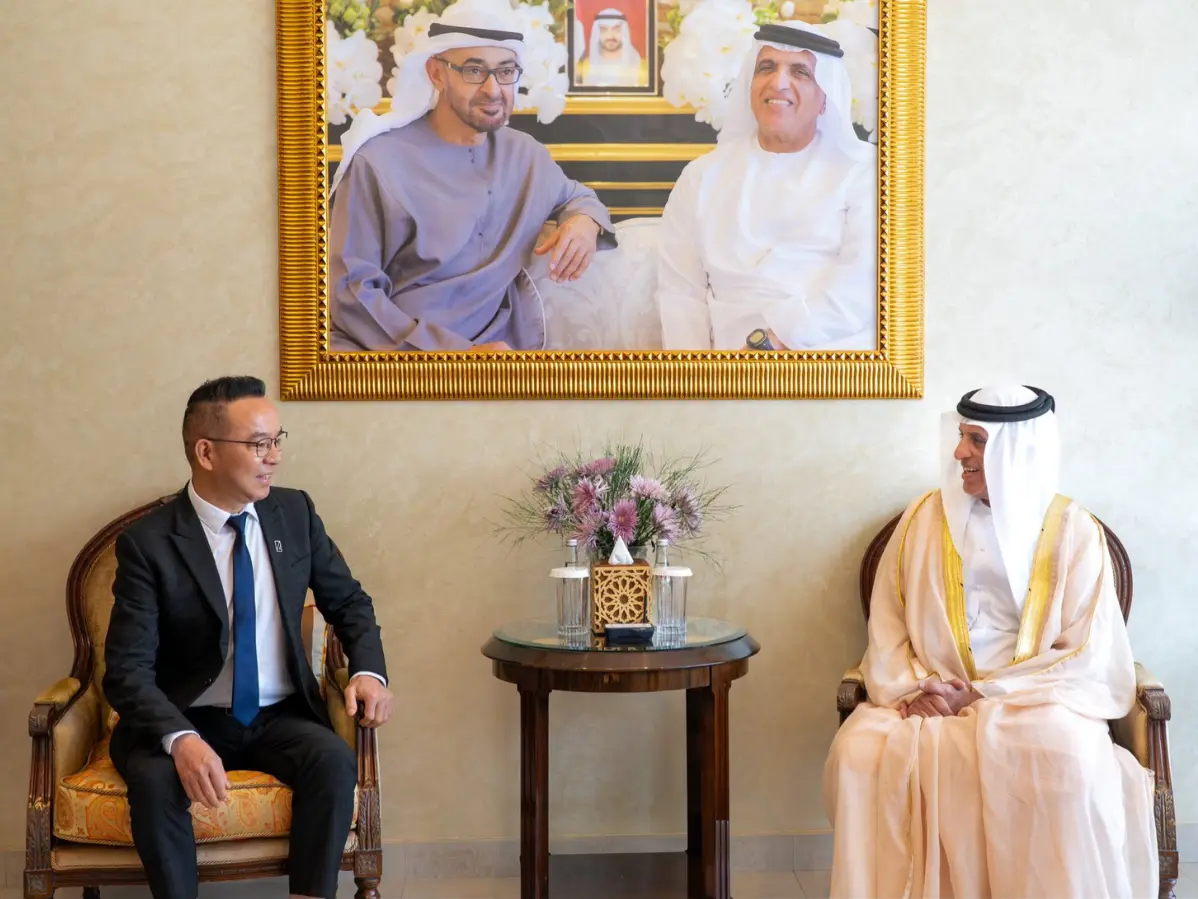)
Flying cars in UAE: Ras Al Khaimah signs deal with Chinese company to test new transport
)
'Gangsta' crab shoves knife blade at man and his dog in Florida - Watch
There, then, is a paradox at the heart of the West’s progress and success where individualism, seems to be more in the nature of a foundational myth for nations in its pure form. This is not to decry individualism or deny it. The point is for other societies to take lessons, the right ones, in their quest for development or progress. The lesson is: while individualism may be one aspect of the West’s success but for progress and development, there’s more that goes into the constituent mix. One such component of success is the quality of institutions and the acceptance of ideas and inventions in the development sphere, howsoever crazy these might sound or even be. The rest is mere corollary.
(Disclaimer: The opinions expressed above are the personal views of the author and do not reflect the views of ZMCL)