

&imwidth=800&imheight=600&format=webp&quality=medium "Unveiling Vikram-1: India's first commercial private rocket launched. know about payload and orbital adjustments")
Prime Minister Narendra Modi on Thursday virtually inaugurated Skyroot Aerospace's Infinity Campus in Hyderabad, unveiling Vikram-I, India's first orbital rocket developed by a private agency. PM Modi stated that India is on its way to emerge as a global leader in satellite launch systems, calling the achievement a symbol of the credibility and innovation of the country.
"India has created its insignia in credibility, capacity, and value in the space sector," Prime Minister Modi said while virtually inaugurating the rocket and appreciated the founders of Skyroot, Pawan Chandana and Bharath Daka, calling them a "big inspiration for the youth of the country."
While addressing, Prime Minister Modi underscored the growth of the private space sector, pioneered by companies like Skyroot, which is a direct testament to the reforms of the government aiming at fostering innovation and allowing private enterprise to enter the space domain.
What is the Vikram-I rocket?
Vikram-I, designed and developed by Hyderabad-based Skyroot Aerospace, which is India's new private orbital-class launch vehicle, has been named after space pioneer Vikram Sarabhai. The four-stage rocket, Vikram-I, targets the small satellite market, covering rapid and cost-effective launches.
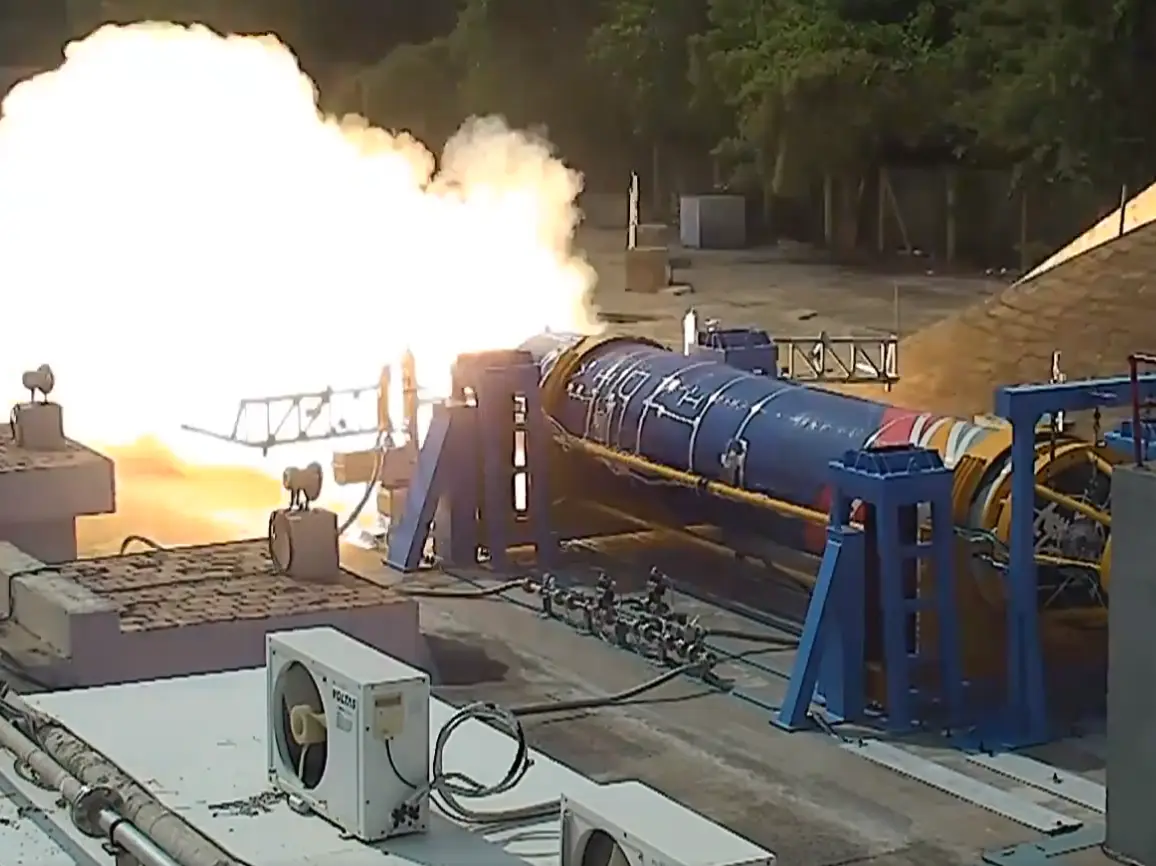
It is 20 meters tall with a diameter of 1.7 meters, which generates 1,200 kN of thrust using an all-carbon composite structure for lightweight strength, including efficiency. The design of the rocket covers simplicity, reliability, and quick reverse, enabling it to launch within 24 hours from any site. In addition, the solid-fueled first three stages of the rocket provide a robust initial boost, topped by a hypergolic liquid upper stage for precise orbital adjustments.
Key advances include 3D-printed engines that cut weight by half and shorten production time by 80 per cent, along with ultra-low-shock pneumatic separation systems and upgraded avionics that enable real-time navigation.
Skyroot’s Vikram-I launcher is capable of placing up to 350 kg into low Earth orbit (LEO) or 260 kg into a sun-synchronous orbit (SSO), with its payload capacity varying by mission profile. For instance, it can carry 290 kg to a 500 km SSO, or 480 kg to a 500 km LEO at a 45-degree inclination.
A series of successful trials, including Kalam-1200 proof-pressure testing and payload-fairing separation, has confirmed the rocket’s readiness. Vikram-I strengthens India’s private space sector and complements ISRO’s capabilities as global competition intensifies.
Skyroot is aiming for an early-2026 debut flight, aiming to tap into the fast-expanding small-satellite market, within an Indian space economy expected to grow $77 billion by 2030.

