Opinion: Why India can't repeat Operation Cactus in the Maldives

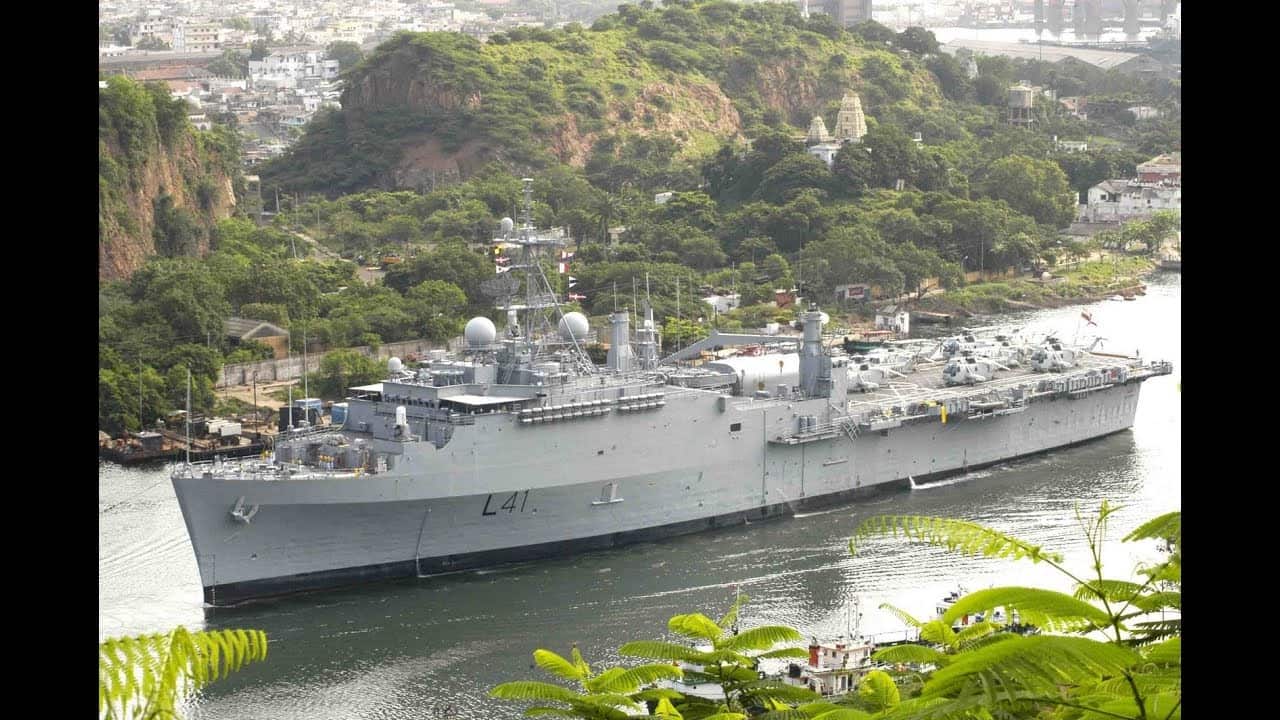
INS Jalashwa
President Yameen, fully backed by his security forces and supported by the radical elements, make it impossible for the Indian troops to land at Velna airport with impunity as it was the case in 1998.
On February 5, 2018, President Abdulla Yameen declared a state of emergency in the Maldives, plummeting the whole of Indian Ocean Region (IOR) into dangerous instability. This he did after the Supreme Court ordered him to reinstall opposition MPs and release political prisoners thrown in jail by him.
Defying the order of the Supreme court, Yameen ordered his military to arrest the Chief Justice. Security forces then stormed the court and arrested two judges, as well as a former leader.
On February 6, President Yameen in a statement said that the Supreme Court had reversed the ruling that precipitated the crisis and nine political prisoners would not be released.

This political drama sparked concerns in India. Last week, in an unusually strong statement, India pointed out how it is "imperative" for the Maldives government to obey the Supreme Court.
China, which signed a free trade agreement with the Maldives last year, said on February 4 that the Maldives, a country of roughly 400,000 people, has "the wisdom and capabilities to cope with the current situation independently”.
Amidst all this, the exiled ex-Maldivian President Mohamed Nasheed has urged India for helping his country out of this crisis through diplomatic and military intervention. India, on its part, reacting to the crisis said that it was “disturbed” over the situation in the archipelago.
&imwidth=180&imheight=135&format=webp&quality=medium)
'My name has always been Ilhan Omar': Congresswoman hits back at Trump, calls him a 'creep'
&imwidth=180&imheight=135&format=webp&quality=medium)
Gravitas | US attack could trigger WW III: Russian planes in Tehran, Israeli jets, US warships in action
&imwidth=180&imheight=135&format=webp&quality=medium)
Viral video shows cross falling on Colombia priest, no official confirmation | WATCH
&imwidth=180&imheight=135&format=webp&quality=medium)
'This is humiliation': Vijay Deverakonda under fire over controversial marriage proposal remark on Koffee With Karan 9
&imwidth=180&imheight=135&format=webp&quality=medium)
US Navy, Marine Corps boards defy Trump's transgender military ban, vote to retain troops
&imwidth=180&imheight=135&format=webp&quality=medium)
Will the US attack Iran this weekend? Trump's envoy says, 'absolutely'
&imwidth=180&imheight=135&format=webp&quality=medium)
Fauzi teaser out: Prabhas takes on the British Empire in patriotic avatar | Watch
&imwidth=180&imheight=135&format=webp&quality=medium)
India-China face-off continues near Arunachal’s Taksing, reveals ITBP chief in first official confirmation of tensions
&imwidth=180&imheight=135&format=webp&quality=medium)
Nairobi building collapse: Several feared trapped after 16-storey structure crumbles; rescue operation underway
&imwidth=180&imheight=135&format=webp&quality=medium)
Pakistan airline PIA unveils new crew uniforms, faces online criticism
&imwidth=180&imheight=135&format=webp&quality=medium)
Did Neha Bora call for Bangladesh-like GenZ protest, 'anarchy' in India? WION Fact-checks viral claim
&imwidth=180&imheight=135&format=webp&quality=medium)
Scientists make digital nose that can sniff and send scents over the internet
&imwidth=180&imheight=135&format=webp&quality=medium)
'Already tired of his 9-to-5': Baby born with a moustache becomes internet sensation, video goes viral | Watch
&imwidth=180&imheight=135&format=webp&quality=medium)
Horrific video shows the moment 18-year-old fell to her death from Mexico amusement park ride
&imwidth=180&imheight=135&format=webp&quality=medium)
IND-W vs ZIM-W, 1st ODI: Rawal, Charani star in India’s nine-wicket win over Zimbabwe
&imwidth=180&imheight=135&format=webp&quality=medium)
Massive 7.2 magnitude quake off Vanuatu triggers tsunami warning for coasts within 300 km
&imwidth=180&imheight=135&format=webp&quality=medium)
Microsoft AI diagnoses complex medical cases more than twice as accurately as doctors, study finds
&imwidth=180&imheight=135&format=webp&quality=medium)
Google Fitbit Air’s new health guardian feature tracks trends: How it works
&imwidth=180&imheight=135&format=webp&quality=medium)
US midterms 2026: Trump revises Canada tariffs as Susan Collins faces tight re-election race in Maine
&imwidth=180&imheight=135&format=webp&quality=medium)
US midterms 2026: Viral video claims Lindsey Graham paid underage men for sex; clip released weeks before his sister's Senate race
&imwidth=180&imheight=135&format=webp&quality=medium)
IND vs NZ 2nd T20I: Shreyas Iyer on brink of breaking Rohit Sharma’s record
&imwidth=180&imheight=135&format=webp&quality=medium)
AI deepfakes are spreading online: Why is removing them so difficult?
&imwidth=180&imheight=135&format=webp&quality=medium)
China's dancing robot turns violent bodyguard, lifts cars and fights intruders - Watch
&imwidth=180&imheight=135&format=webp&quality=medium)
Global cybersecurity alert: PHP flaws trigger website shutdowns as hack attempts surge into millions
&imwidth=180&imheight=135&format=webp&quality=medium)
'You’re a horrible little reporter, aren’t you?': Trump snaps at NBC reporter questioning his support for Ramaswamy's campaign ad
&imwidth=180&imheight=135&format=webp&quality=medium)
Chemical warehouse explosion in Mexico: Several injured in multiple blasts, 1,000 evacuated in León
&imwidth=180&imheight=135&format=webp&quality=medium)
US charges two former FBI officials with lying to Congress about Hunter Biden probes. 'Politically motivated' Trump grievance or something else?
&im=FitAndFill=(700,400)&imwidth=180&imheight=135&format=webp&quality=medium)
New Friday OTT releases (October 23, 2026): Gajab Raat, Dorothy, Chaar Yaar- Watch these 6 new movies and TV shows on Netflix, Prime Video and more
&imwidth=180&imheight=135&format=webp&quality=medium)
Anthropic security chief issues grim cyberattack warning: ‘It’s going to get a lot worse’
&imwidth=180&imheight=135&format=webp&quality=medium)
Tu Hai Meri Kiran film review: Sonakshi Sinha and Zaheer Iqbal's thriller gets tangled in its own twists
&imwidth=180&imheight=135&format=webp&quality=medium)
First Lady Melania Trump secures ceasefire between Russia, Ukraine in Oleshky: White House
&imwidth=180&imheight=135&format=webp&quality=medium)
Jenna Ortega plans TV break after Wednesday: ‘I want to leave time for new things’
&imwidth=180&imheight=135&format=webp&quality=medium)
Five killed, several injured after explosion in Bihar's Siwan as firecrackers catch fire
&imwidth=180&imheight=135&format=webp&quality=medium)
Iran targeting US diplomats? Intelligence warns of 'advanced' assassination plots: Report
&imwidth=180&imheight=135&format=webp&quality=medium)
Emmanuel Macron calls Paris suburb shooting a 'racist terrorist attack' after one killed, several injured
On the other hand, India is no more first. The Maldives has sent its first envoy after this crisis erupted, to friendly nations to explain declaration of emergency. The special envoys are visiting China, Saudi Arabia and Pakistan. Interestingly, just a month ago Yameen’s envoy to Delhi had reaffirmed “India First” policy.
Meanwhile here in India, the leading dailies reported Indian troops ready for intervention on short notice. Some quoted the government’s sources saying that the troops are on standby as per the SOP for evacuation of the Indians if the situation develops dangerously.
However, that may not be so forthcoming and simple as it is being talked about. A lot has changed ever since 1988. Increased sea trade traffic, extreme vulnerability to disruption of shipping and trade by terrorists and pirates make the Maldives strategically very important.
Located in the middle ofthe Indian Ocean, the Maldives archipelago comprises of 1,200 coral islands, dotting around the key shipping lanes. Making them the potential security pivots in ensuring uninterrupted energy supplies to countries, such as China, Japan and India. The regional and global powers consider the Maldives to become the epicentre to dominate the region.
Over the past decades, in the name of antipiracy operations, all the major global and regional powers have increased their Naval presence in the Indian ocean right up tothe Gulf of Aden. Maldives' significance has steadily grown and now it's at the heart of international geopolitics. This new found position is well understood by the President of Maldives. Thus, Yameen is exploiting it to his advantage.
Maldives provides the crucial link to the Chinese geopolitical designs of String of Pearls in the IOR. Starting from Hambantota in Sri Lanka to Male and stretching over to Gawadar in Pakistan and then to Dijobuti, China is India’s main geopolitical challenger in the Indian Ocean Region. China has built ports, airports and other infrastructure in consolidating its position in these countries. Djibouti, a small African nation that is also home to China’s first overseas military base, add complexity to this overall security dimensions.
India on her part has been more assertive under Prime Minister Narendra Modi in pushing to maintain geo-strategic supremacy in the Indian Ocean. Today India has the backing from the U.S. and Japan, thus making this region a perfect playground for the great game.
Being the ‘net security provider’ to the whole of Indian Ocean region, India is the key stability factor. India needs to exercise its role rather diligently in ensuring regional peace, working closely with the Maldives amongst others on matters of defence and security.
However, China's massive economic presence in the Maldives is a major concern for India. With 70% of Maldives' external aid coming from China, India was left out high and dry, just like it happened in Rajapaksa’s Sri Lanka. India has no other options but to regain its lost space in her area of influence. This political crisis may prove to be the right opportunity and push back.
"As India tries to establish itself as the preeminent power in the Indian Ocean region, the Maldives has become increasingly important," said Constantino Xavier, a fellow at Carnegie India in New Delhi. Yameen has "definitely accelerated his outreach to China, to fend off pressure from the west and also reduce leverage from India."
The Maldives has become politically volatile in recent years. Yameen, who has courted Chinese and Saudi investment since coming to power in an election in 2013, has been criticised by the US State Department for jailing opposition politicians and eroding human rights protections.The U.S. has condemned the state of emergency.
It should be recalled that Maldives was the only SAARC country which showed reluctance to follow India's call for the boycott of SAARC summit in Pakistan after the Uri attack. India has to get the Maldives back into its folds to ward off the long-term dangers to its security posed by the Chinese and the growing Islamic fundamentalism.
The archipelago accounts for one of the highest numbers of foreign fighters in Syria in terms of per capita. Pakistan’s ISI is also reported to be supporting the LeT activities in this country and exploiting its proximity to the Indian state of Kerala. India can ill-afford a neighbour with high Islamic radicalisation.
A leading Indian national daily on February 7th reported, 'Exiled former presidentMohamed Nasheedon Wednesday asked India to play the role of "liberators" and intervene militarily to resolve the ongoing political turmoil in the Maldives, in a rebuke to China which has opposed military intervention and called for dialogue to resolve the crisis.' The newspaper further mentioned, “China haswarned against any military interventionin the Maldives, saying such a move would further complicate the situation in the island nation where embattled PresidentAbdulla Yameen, who is closely allied with Beijing, declared a state of emergency on Monday and arrested two top judges”.
Under these circumstances, it would be extremely difficult for Indian planners to take a call and put up a repeat of Operation Cactus in restoring the situation. President Yameen, fully backed by his security forces and supported by the radical elements (in all probabilities they could well be armed), make it impossible for the Indian troops to land at Velna airport with impunity as it was the case in 1998.
India’s recently raised Amphibious force with a motto of, “No land too far, No Sea too deep” could ideally be spearheading the military part of Indian foreign policy’s hard power option this time around.
Unconfirmed sources do indicate that this formation is on a short notice to respond to this arisen contingency. It could well mean seeing India’s sole Landing Platform Dock, INS Jalashwa in action if the show of strength fails to bring about that necessary change.
Catering for a strong Chinese naval presence in the IOR with an equally strong countervailing Indian naval battle groups must be high on the agenda of South Block. Shadowing and manoeuvring around the Chinese on the high seas to deter them from any misadventure and threatening moves to Indian interests will be an operation by itself.
Mustering this large force may still take a few days for India. But, will Yameen give India reasons enough to intervene, on the pretext of evacuating stranded Indians or saving the lives of beleaguered political prisoners, is what that needs to be seen.
(Disclaimer: The opinions expressed above are the personal views of the author and do not reflect the views of ZMCL)