

&imwidth=800&imheight=600&format=webp&quality=medium "Jammu and Kashmir faces severe rainfall deficit of 85%, south Kashmir worst hit")
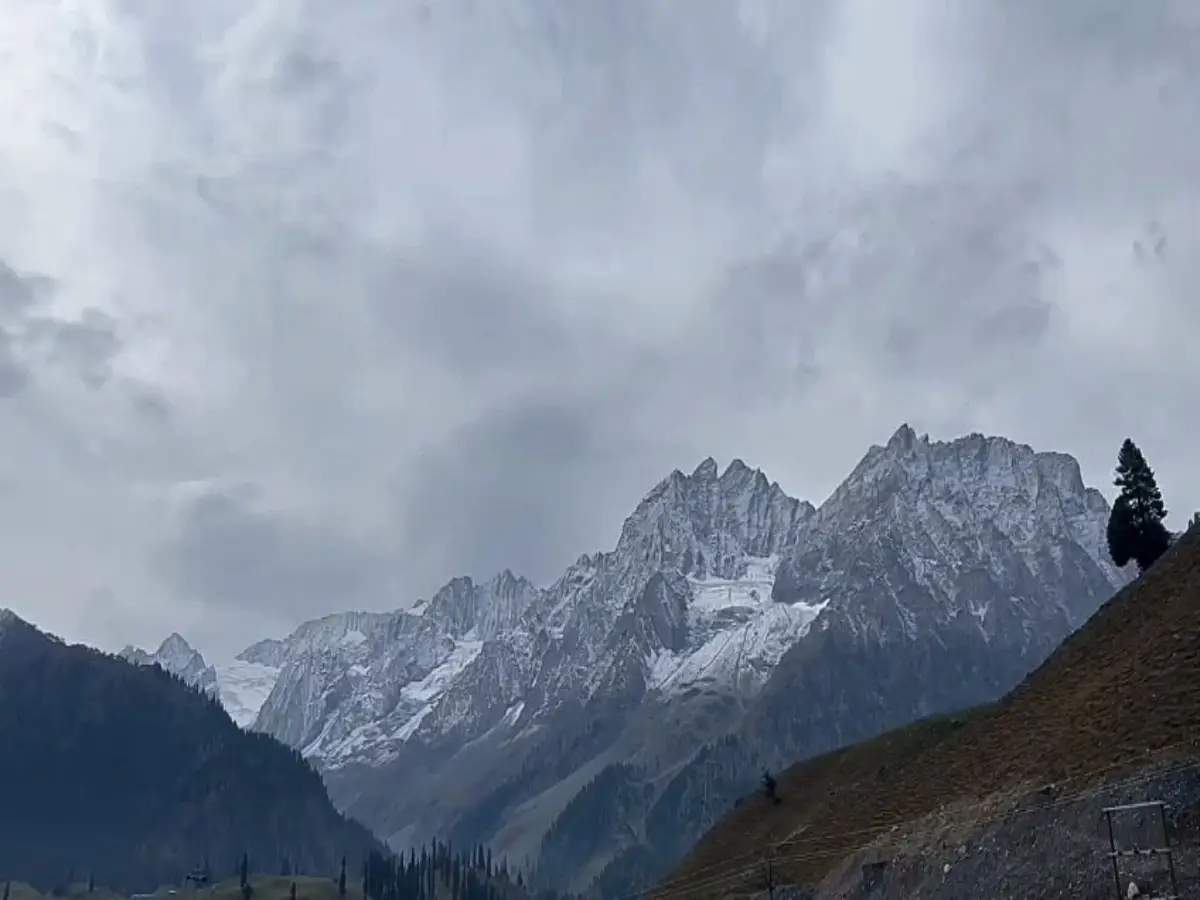
Jammu and Kashmir is grappling with an exceptionally dry winter season, as the region faces one of its most severe rainfall deficits in recent years. According to the official Data, the Union Territory has recorded a staggering 85% shortfall in rainfall. From November 1, 2025, to January 17, 2026, Jammu and Kashmir received just 20.6 mm of rainfall over the three-month period, a dramatic shortfall from the usual 139.0 mm.
The rainfall crisis has engulfed the entire region, with the most acute conditions prevailing in the Kashmir Valley and the Jammu region. In the Kashmir Valley, normally the recipient of substantial winter precipitation every district has recorded severe to extremely severe rainfall deficits.
Srinagar, the summer capital, received just 22.4 mm of rainfall, a 81% deficit compared to its normal of 115.4 mm. Other districts, such as Budgam (16.4 mm, -80%) and Ganderbal (29.3 mm, -77%), also saw significant shortfalls. North Kashmir, typically wetter during winter, did not escape the trend either, with Bandipora (56.9 mm, -45%), Baramulla (35.8 mm, -72%), and Kupwara (72.2 mm, -49%) all reporting sharp deficits.
South Kashmir’s rainfall situation has been especially dire. Kulgam received just 13.4 mm against a normal of 196.8 mm, a crushing 93% deficit. Other districts in the south, including Shopian (9.0 mm, -91%) and Pulwama (17.5 mm, -77%), also recorded drastically low levels of precipitation. Anantnag, with 22.6 mm of rain, experienced an 80% shortfall.
Meanwhile, in the Jammu region, the rainfall collapse has been even more pronounced. Kathua, for example, received only 1.1 mm of rainfall, compared to the normal of 131.3 mm, an alarming 99% deficit. Other districts such as Doda, Ramban, Udhampur, and Samba saw negligible rainfall, with deficits ranging from 87% to 98%. Jammu district itself recorded only 8.6 mm of rainfall, a 91% shortfall. Poonch was the only district in Jammu to record a lesser deficit of 42%, although still well below average levels.
Across the UT, the cumulative rainfall deficit stands at 85%, while Ladakh recorded a 77% deficit for the same period.
Trending Stories
&imwidth=180&imheight=135&format=webp&quality=medium)
Why Europe’s protests are about more than austerity and rising costs
&imwidth=180&imheight=135&format=webp&quality=medium)
‘Do I make a deal or finish them off’: What Trump said on resuming Iran strikes
&imwidth=180&imheight=135&format=webp&quality=medium)
Saudi says debris fell in Mecca, Medina after missile interceptions; Houthis deny targeting holy cities
&imwidth=180&imheight=135&format=webp&quality=medium)
'Clear overkill': Putin rejects claims Russia is behind mass protests in Europe
&imwidth=180&imheight=135&format=webp&quality=medium)
‘Modi ka baap bhi jayega,’ Kharge loses cool at party event in Patna; BJP slams him
&imwidth=180&imheight=135&format=webp&quality=medium)
Pahalgam, Gulmarg record season’s first sub-zero temperatures as winter chill intensifies in Kashmir
&imwidth=180&imheight=135&format=webp&quality=medium)
Anthropic's leaked AI bill would act only at 50 deaths or $1bn in harm
&imwidth=180&imheight=135&format=webp&quality=medium)
US midterms 2026: Election workers face rising threats, vote-counting process under pressure
&imwidth=180&imheight=135&format=webp&quality=medium)
Russia-Ukraine drone attacks kill 6, injure 31 across both countries
&imwidth=180&imheight=135&format=webp&quality=medium)
IND-W vs ZIM-W, 2nd ODI: Harmanpreet Kaur, Vaishnavi Sharma star in India's 121-run win
&imwidth=180&imheight=135&format=webp&quality=medium)
Trump revives ‘shithouse countries’ slur, targets Abdul El-Sayed and Ilhan Omar at Georgia rally
&imwidth=180&imheight=135&format=webp&quality=medium)
'If it was up to me, it wouldn't have ended like this': James Anderson opens up on Lancashire exit
&imwidth=180&imheight=135&format=webp&quality=medium)
Govinda breaks silence on divorce rumours with Sunita Ahuja, calls her his first love
&imwidth=180&imheight=135&format=webp&quality=medium)
WATCH | Langur walks into Odisha repair shop, hugs shopkeeper; internet reacts to heartwarming video
&im=FitAndFill=(700,400)&imwidth=180&imheight=135&format=webp&quality=medium)
How do army night-vision systems see in almost complete darkness?
&im=FitAndFill=(700,400)&imwidth=180&imheight=135&format=webp&quality=medium)
What is the real meaning behind Pete Hegseth's tattoos?
&imwidth=180&imheight=135&format=webp&quality=medium)
Javed Akhtar backs Rashmika Mandanna after Koffee With Karan 9 accent trolling, calls out ‘linguistic superiority’
&imwidth=180&imheight=135&format=webp&quality=medium)
‘Saddam Hussein opened a cheesecake factory’: Obama mocks Trump’s White House renovations; defends Abdul El-Sayed
&imwidth=180&imheight=135&format=webp&quality=medium)
'This is humiliation': Vijay Deverakonda under fire over controversial marriage proposal remark on Koffee With Karan 9
&imwidth=180&imheight=135&format=webp&quality=medium)
Telangana unveils AI avatar of IT minister D Sridhar Babu at Hyderabad DevFest 2026
&imwidth=180&imheight=135&format=webp&quality=medium)
Can Putin cheat death? All about his daughter’s billion-dollar quest for immortality
&imwidth=180&imheight=135&format=webp&quality=medium)
Pakistan airline PIA unveils new crew uniforms, faces online criticism
&imwidth=180&imheight=135&format=webp&quality=medium)
Byeon Woo Seok makes first public appearance as Sung Jin Woo for Solo Leveling at Netflix Korea’s 10th anniversary event
&imwidth=180&imheight=135&format=webp&quality=medium)
Kim Kardashian, Kris Jenner turn heads with Bold looks at All’s Fair season 2 premiere in Rome
&imwidth=180&imheight=135&format=webp&quality=medium)
Nagpur man fails to pay rent, allegedly prints fake Rs 500 notes worth Rs 37 lakh
&im=FitAndFill=(700,400)&imwidth=180&imheight=135&format=webp&quality=medium)
Why do some fighter jets have two engines while others use one?
&imwidth=180&imheight=135&format=webp&quality=medium)
'I promised Gautam & Kotak Sir that...': Tilak Varma opens up on match-winning mindset against NZ
&imwidth=180&imheight=135&format=webp&quality=medium)
FIR filed against opposition MPs for ‘trespassing’ amid Jamia Millia students’ protest
&imwidth=180&imheight=135&format=webp&quality=medium)
Netanyahu warns Israelis of ‘existential threat’ from Iran, posts AI image of nuclear strike
&imwidth=180&imheight=135&format=webp&quality=medium)
'Already tired of his 9-to-5': Baby born with a moustache becomes internet sensation, video goes viral | Watch
&im=FitAndFill=(700,400)&imwidth=180&imheight=135&format=webp&quality=medium)
Armoured vehicles vs main battle tanks: What is the real difference?
&im=FitAndFill=(700,400)&imwidth=180&imheight=135&format=webp&quality=medium)
Why does this fighter jet have a golden window that looks like alien technology?
&imwidth=180&imheight=135&format=webp&quality=medium)
China's dancing robot turns violent bodyguard, lifts cars and fights intruders - Watch
&imwidth=180&imheight=135&format=webp&quality=medium)
Venezuelan opposition leader María Machado returns home after over 10 months in exile
&imwidth=180&imheight=135&format=webp&quality=medium)
Bigg Boss 20: Rohit Shetty indirectly reacts to firing at his Mumbai home
&imwidth=180&imheight=135&format=webp&quality=medium)
Tiger Shroff’s team calls report on actor’s reaction to Mumbai attack ‘completely untrue’
“Jammu and Kashmir is facing a rainfall deficit of 85 per cent from November 2025 to January 2026, with some areas of south Kashmir recording a shortfall of up to 90 per cent. Similar conditions prevail in Jammu and Ladakh as well. In January 2026 alone, there has been virtually no rainfall in the first 17 days, pushing the deficit to 97 per cent. The situation at present is extremely alarming, '' said Faizan Arif, Weather Analyst and Forecaster.
The situation worsened significantly in January, with the dry spell intensifying across J&K. Between January 1 and 17, 2026, the region received only 1.5 mm of rainfall, a staggering 97% deficit compared to the normal of 44.4 mm.
Several districts recorded no rainfall at all during this period, including Srinagar, Budgam, Shopian, Doda, Ramban, Samba, and Udhampur. Other districts, such as Anantnag, Baramulla, Kupwara, and Jammu, saw only trace amounts of rainfall, leading to a near-total collapse of precipitation.
In Ladakh, rainfall for the same period stood at 1.1 mm, a 56% deficit compared to the normal of 2.6 mm, with Leh experiencing a sharp 79% shortfall.
The near-total rainfall collapse is raising concerns across the region. The extended dry spell is expected to have far-reaching impacts on agriculture, water resources, and the local economy. Winter crops, which depend on this critical precipitation, are particularly vulnerable to the deficit, potentially threatening food security in the region. Additionally, the significantly reduced snowpack in the mountains could affect spring and summer water supplies, compounding the challenges for local communities.
“As far as the implications are concerned, south Kashmir has been the worst affected. This will have a direct impact on glaciers and water resources. The south Kashmir districts have recorded a rainfall deficit of around 90 per cent, which effectively means almost no precipitation, making the figures extremely alarming. Water resources are already under stress. Over the past five to six winters, the trend clearly shows a continuous decline in winter precipitation, leading to falling water levels. Even the Jhelum is currently at a very low level. This will impact agriculture and horticulture, and if the situation does not improve, the consequences could be severe, resulting in significant losses to the agriculture and horticulture sectors. "said Faizan Arif, Weather Analyst and Forecaster.
With no major precipitation witnessed during first half of January, experts are urging the administration to prepare for a difficult year ahead, with climate change potentially contributing to the growing unpredictability of weather patterns in the region.
