Explained | How Air India’s diverted flight to Russia landed amid airspace row between Moscow, the West

Air India explainer
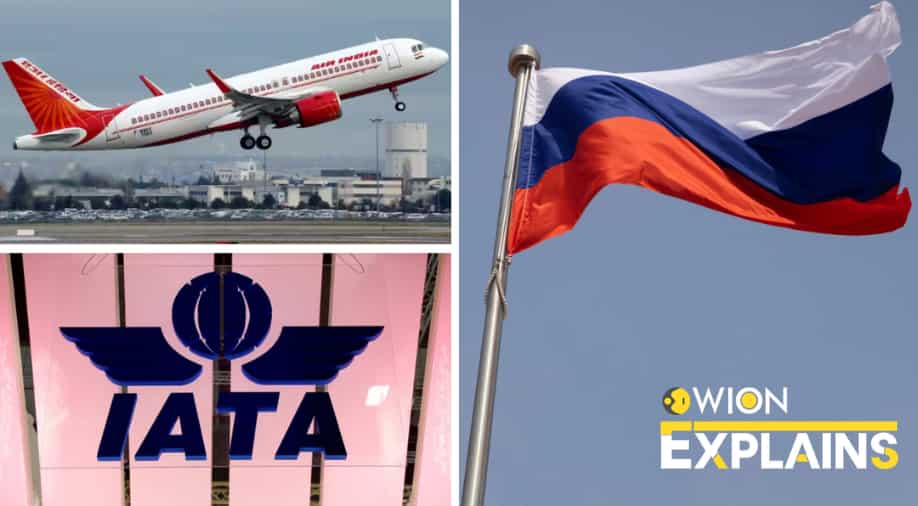
A United States-bound Air India flight which took off from the Indian capital city ofDelhi was diverted to Russia’s Magadan, on Tuesday after a “technical issue” in one of the engines. The diversion incidentally took place a day after the CEO of a US carrier raised concerns about flights using Russian airspace with American citizens on board amid the ongoing tensions between Washington and Moscow.
Air India, on Thursday (June 7) also sent a replacement flight from Mumbai to Magadan to take the passengers to San Francisco from the Russian town. The flighttouched down in San Francisco a little after midnight (local time). The incident took place in the midst of Moscow’s ban on some Western carriers and about the use of Russian airspacebyforeignairlines withAmerican passengerson board.
Here’s what the Russian airspace row with the West is all about:

What happened to the Air India flight?
The San Francisco-bound flightfrom Delhi was carrying216 passengers and 16 crew. However, after facing some “technical issue” in one of the engines the AI173 was reported to have safely landed in the Russian town of Magadan.
The Indian airline went to assure that passengers were provided support on the ground and later confirmed that it would send an alternative aircraft while passengers are accommodated in local hotels in the Russian town.
&imwidth=180&imheight=135&format=webp&quality=medium)
'Hell of a beautiful a**': Trump compliments Nicki Minaj as rapper joins him in Michigan rally
&imwidth=180&imheight=135&format=webp&quality=medium)
'Hire the robot, fire the human': Bill Gates's words hint at a bleak future
&imwidth=180&imheight=135&format=webp&quality=medium)
'Lousy president': Trump hits back at Obama over 'cheesecake factory' White House jibe
&imwidth=180&imheight=135&format=webp&quality=medium)
Jordan strikes 'terrorist organisations' in Syria after deadly church attack as Damascus shuts main border crossing
&imwidth=180&imheight=135&format=webp&quality=medium)
Microsoft offers voluntary exit packages to 60,000 employees in India, US, UK and Canada
&imwidth=180&imheight=135&format=webp&quality=medium)
WATCH | Virat Kohli returns to training ahead of New Zealand ODI series
&imwidth=180&imheight=135&format=webp&quality=medium)
'He is a red flag': Ex-India strength and conditioning coach on Rohit's fitness regime
&imwidth=180&imheight=135&format=webp&quality=medium)
One dead, six injured in Elizabeth, New Jersey mass shooting; suspect flees
&imwidth=180&imheight=135&format=webp&quality=medium)
Maurene Comey, daughter of ex-FBI director James Comey, was unlawfully fired as federal prosecutor, judge rules
&imwidth=180&imheight=135&format=webp&quality=medium)
Hijack scare unfolds on United flight over suspicious text message. Here is what happened
&imwidth=180&imheight=135&format=webp&quality=medium)
‘That is a miss’: Ravi Ashwin questions Sooryavanshi’s demotion to No. 3 in 2nd T20I vs NZ
&imwidth=180&imheight=135&format=webp&quality=medium)
Pakistan airline PIA unveils new crew uniforms, faces online criticism
&imwidth=180&imheight=135&format=webp&quality=medium)
Police called after 3-year-old scores 10 goals in 12 minutes at Florida youth soccer game
&imwidth=180&imheight=135&format=webp&quality=medium)
Trick or Treat -Anthropic's IPO sales pitch is the perfect Halloween scare for AI enthusiasts
&im=FitAndFill=(700,400)&imwidth=180&imheight=135&format=webp&quality=medium)
New OTT releases this week (October 26-November 1, 2026): Baththa, Akka, The One About Matthew Perry- 7 titles coming on Netflix, Prime Video and more
&imwidth=180&imheight=135&format=webp&quality=medium)
Mohra re-release in 4K: Akshay Kumar, Raveena Tandon’s film to clash with Ranbir Kapoor’s Ramayana
&imwidth=180&imheight=135&format=webp&quality=medium)
US Midterms 2026: Last leg polls and forecasts indicate Democratic momentum, but Senate control remains uncertain
&imwidth=180&imheight=135&format=webp&quality=medium)
'Already tired of his 9-to-5': Baby born with a moustache becomes internet sensation, video goes viral | Watch
&imwidth=180&imheight=135&format=webp&quality=medium)
Zimbabwe slips four places to 14th out of 29 in Africa’s Digital Rights and Inclusion ranking
&imwidth=180&imheight=135&format=webp&quality=medium)
Storm Boelo’s fierce winds push passenger plane onto grass in UK, terrifying landing caught on cam
&imwidth=180&imheight=135&format=webp&quality=medium)
Democrats allege 'desperate efforts to cover up' Trump's involvement in Jeffrey Epstein sex crimes, release 50-page report
&imwidth=180&imheight=135&format=webp&quality=medium)
'She is a beautiful woman': Trump mocks Mexican President Sheinbaum, mimics her voice at US Midterms rally
&imwidth=180&imheight=135&format=webp&quality=medium)
Uttarakhand innovator Ravi Tamta builds flying car without any formal engineering degree
&imwidth=180&imheight=135&format=webp&quality=medium)
US midterms 2026: Democrat Annie Andrews gains bipartisan backing against Trump's pick Darline Graham in South Carolina Senate race
&imwidth=180&imheight=135&format=webp&quality=medium)
Chris Brown given suspended eight-month jail term for London nightclub attack
&imwidth=180&imheight=135&format=webp&quality=medium)
Shah Rukh Khan unveils new poster of King, Internet reacts
&imwidth=180&imheight=135&format=webp&quality=medium)
'Shove that ballroom up your a**': Trump heckled at Mississippi rally over White House ballroom renovations | WATCH
&imwidth=180&imheight=135&format=webp&quality=medium)
Trump accused of 'brutal' rape by ex-Miss Switzerland; Beatrice Keul alleges 'Don's best friend' Epstein facilitated assault in 1993
&imwidth=180&imheight=135&format=webp&quality=medium)
Meta’s AI bet is getting more expensive: What its $95 billion share plan means
&imwidth=180&imheight=135&format=webp&quality=medium)
Trump’s oil and gas holdings surge to $81.6 million amid Iran war as Americans face rising fuel costs
&imwidth=180&imheight=135&format=webp&quality=medium)
'I've done my work sincerely': AR Rahman on facing backlash over Ramayana soundtrack
The emergency landing was confirmed by the Russian aviation authority Rosaviatsia. Citing a source present at the Magadan airport, Reuters reported that Air India engineers would arrive on the reserve plane with spare parts, on Wednesday.
It was not until Thursday that Air India addressed the "technical issue"Boeing 777 encountered which was an indication of low oil pressure in one of the engines."The aircraft encountered a technical issue whereby the pilots received an indication of low oil pressure in one engine. Out of caution, they elected to land the aircraft at a nearby airport rather than continue the journey," said Air India.
Washington is closely monitoring the situation
US State Department Deputy Spokesperson Vedant Patel told reporters they are aware of the incident and “are continuing to monitor thesituation closely.”He added that since the flight was bound for the US, it is “likely” that there are American citizens on board.
So far, Air India has not mentioned anything about the passengers'nationalities. It was on Wednesday, thatPatel told reporters that less than 50 UScitizens were aboard the Air India flight.
Row between Moscow and the West over airspace
The Air India incident has brought the recent tensions between the West and Russia over its airspace to the forefront. In a retaliatory move over the thousands of sanctions against Russia, it had last year banned certain foreign carriers from using its airspace, causing disruptions in the global air transport network.
Thisaffected the aviation industryas it was forced to redraw air routes to avoid flying over the largest country in the world. Multiple airlines from the US, Europe, and Japan have already stopped flying over Russia. However, Gulf, China, as well as Air India, continue to use Russian airspace which has made flying times shorter and cut costs giving them an edge over their competitors.
ALSO READ |Global airline industry to report billions in losses this year; may return to profit in 2023: IATA
Over a year ago, days after Russia began what it calls its “special military operation in Ukraine,” Moscow had moved to ban airlines from 36 countries over the sanctions imposed, which included all 27 member nations of the European Union, Canada, and the United Kingdom. This was after the US, UK, Canada, and Europe banned Russian aircraft from flying over their airspace.
This move prompted US airlines to lobby in Capitol Hill and at the White House as they were losing business to foreign competitors who could take passengers between the US and Asia faster and at a lower cost. Industry lobbying group Airlines for America told lawmakers in Washington last year that the US carriers are expected to witness collective losses of up to $2 billion per year.
Over the years, US airlines were able to access to Russian airspace following a series of agreements between Moscow and Washington. The US-based and other foreign carriers would pay what amounts to hundreds of millions of dollars per year to the Russian government as a fee for their air traffic control support, reported the New York Times, citing industry sources.
United Airlines, Air India chiefs argue at recent global industry meet
The incident in Russia took place a day after the CEOs of United Airlines and Air India butted heads at the International Air Transport Association’s (IATA) annual meetingheld in Istanbul. Scott Kirby, CEO of United Airlines, raised concerns about planes flying through Russian airspace with American citizens onboard.
“What’s going to happen if an airline lands in Russia with some prominent US citizens on board? That is a potential crisis in the making,” said Kirby, adding that this issue should be solved “before the crisis happens".
However, Air India CEO Campbell Wilson defended the airline’s use of Russian airspace. “Air India, we operate according to the ambit of what is provided to us by the nation of India and not all nations agree,” said Wilson. He added, “So there are going to be different outcomes as a consequence.”
ALSO WATCH |Gravitas: Air India inks one of the biggest deals in aviation history
The disagreement, yet again, hasbrought to the forethe strategic and geographic importance of Russia as the world’s largest country in global aviation. Kirby also said United was forced to stop operating several flights to India before the COVID-19 pandemic and now “we fly one and it’s an extra two hours.”
“It’s clearly a big impact to us,” said the US carrier’s CEO, adding that even with the extra time it cannot fly the other routes non-stop. Additionally, US carriers have also pushed for the government to discourage carriers from landing on US soil after crossing Russian airspace as they are paying Moscow for it.
Some Chinese airlines have also avoided flying over Russian airspace to and from the US, months after Senators urged President Joe Biden administration’s to stop Chinese airlines and foreign carriers from flying over Russia, as per Reuters.
Should geopolitical differences affect aviation?
During the meeting in Istanbul, IATA Director General Willie Walsh told Reuters, “What we would like to see is everybody using Russian airspace. I’m clear that it's not a security or a safety issue.” Similarly, Vinod Kannan, CEO of Indian airline Vistara said as long as the “law of the land” is not violated, it should not be an issue.
“It's a sensitive geopolitical issue and applying geopolitics to the aviation industry that does so much to link the world, I’m not sure that’s a link that should be made,” said Wilson, as quoted by Reuters.
It is also worth noting that Kirby’s concerns are not entirely unfounded. In 2018, a Norwegian Air Boeing 737 was forced to make an emergency landing in Iran weeks after Washington had re-imposed sanctions. While the passengers flew out of Iran the next day, the aircraft was stranded for two months as its engines were made by US-based General Electric which waited weeks for a US Treasury export licence.
Air India sends replacement flight
Air India sent a replacement plane to ferry stranded passengers in Russia from Mumbai, on Thursday. “The ferry flight is carrying essentials in addition to a sufficient amount of food to cater to all passengers on the onward flight scheduled from GDX (Magadan airport) to San Francisco (SFO),” said the Indian carrier, in a statement.
The airline also said that “given the infrastructural limitations around the remote airport, we can confirm that all passengers were eventually moved to makeshift accommodationafter making sincere attempts to accommodate passengers in hotels locally with the help of local government authorities.”
“As we do not have Air India staff based in the remote town of Magadan or in Russia, all ground support being provided to passengers is the best possible in this unusual circumstance,” said Air India. The Indian Civil aviation minister Jyotiraditya Scindia also confirmed that Air India told the ministry some passengers had been housed in a school building near the airport.
In an update, on Thursday (June 8), Air India saidFlight AI173D from Magadan (GDX) landed safely in San Francisco (SFO) at 12:07 am(local time). It added, "All our passengers are being extended maximum on-ground assistance with clearance formalities and provided other necessary support."
Air India Chief Customer Experience and Ground Handling Officer Rajesh Dogra, on Thursday, issuing an apology said, "We will fully refund the fare for your journey and, in addition, provide you a voucher for future travel on Air India," as quoted by PTI.
Air India’s passengers affected by US sanctions on Russia
A report by the Associated Press, citing Delhi-San Francisco flight passengers, said that they have been barred from leaving the makeshift accommodation where they have been staying and cannot use their credit cards to buy items from vending machines or stores because of the sanctions.
Additionally, speaking to the Indian media, a passenger also said how many US citizens were worried due to the ongoing tensions between Moscow and Washington.
(With inputs from agencies)
WATCH WION LIVE HERE
You can now write for wionews.com and be a part of the community. Share your stories and opinions with us here.