Blog: What young rescuers braved in middle of Kerala deluge


Kerala floods
Kerala is not wiped out of the map; do not think it is destroyed. Its charm, beauty and exuberance lives on and will resurrect
It takes centuries to build what crumbles within seconds -- the deluge in Kerala and the destruction that followed sums it up. The helplessness of people returning to their humble abodes, only to find their hopes soiled in the muck left behind by the flood, is unfathomable.
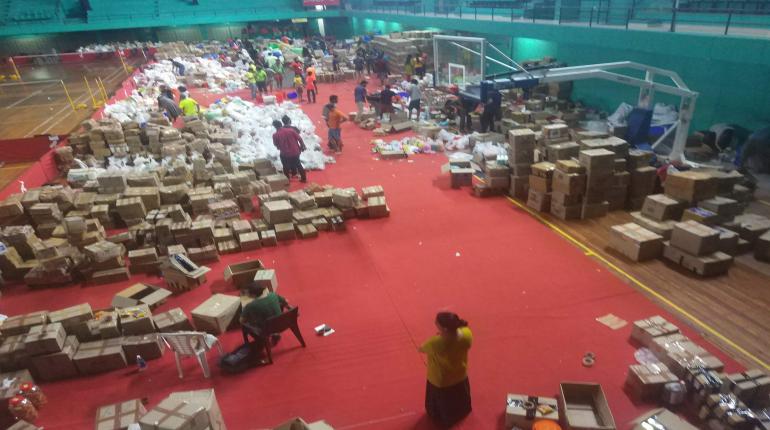
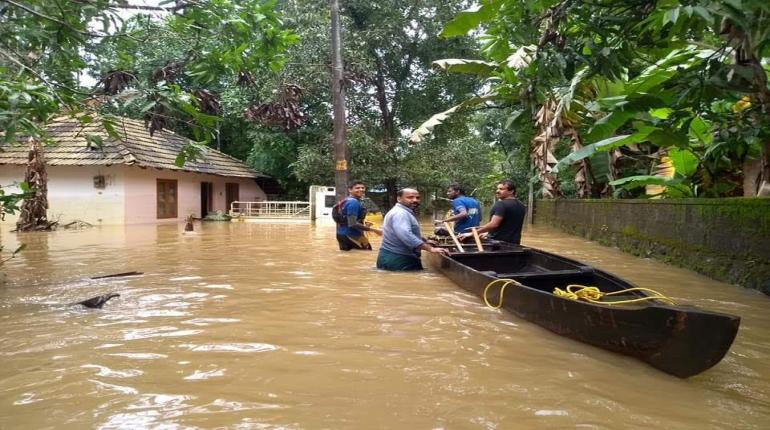
I got a chance to speak to a group of young, bright lot from Kerala who dived headlong into the catastrophe to save people and help with the relief work. They waded, swam, went without food and water to ensure safety and relief to hundreds of flood-hit people.
This is an attempt to summarise their experiences and get a glimpse of the disaster from a different lens.

The start
Georgy Cherian, Amrit Appaden and Puja Barthakur became part of the rescue and relief work as volunteers. “I would say that WhatsApp and social media were the virtual control rooms. We all were part of some groups, some had people from the Navy in it. We all got in touch with the people from the Navy and started heading out as and when we got the co-ordinates of the locations” Puja, who works as the HR lead at Baker Hughes in Kochi, shared.
&imwidth=180&imheight=135&format=webp&quality=medium)
Poland: 19-year-old stabs several at Polish vocational school
&imwidth=180&imheight=135&format=webp&quality=medium)
'Baseless and misconceived': India issues statement after Elon Musk's 'oligarchs' claim over Starlink delay
&imwidth=180&imheight=135&format=webp&quality=medium)
‘Team first and team ahead’: India coach Gambhir pens heartfelt wish for chief selector Ajit Agarkar
&imwidth=180&imheight=135&format=webp&quality=medium)
Trump's naked 23-karat gold statue unveiled near European Parliament
&imwidth=180&imheight=135&format=webp&quality=medium)
Nana Patekar: Remembering a legend of the Indian cinema
&imwidth=180&imheight=135&format=webp&quality=medium)
Russia warns Lithuania over nuclear weapons, Europe braces for massive hybrid attack | Gravitas
&imwidth=180&imheight=135&format=webp&quality=medium)
Captain Smit Machchhar on feet again, walks 10 steps as recovery continues after Flydubai flight attack
&imwidth=180&imheight=135&format=webp&quality=medium)
'They came in, they hit us': New videos show Iranian attacks on US Camp Buehring in Kuwait | Watch
&imwidth=180&imheight=135&format=webp&quality=medium)
Trump distances himself from senior political advisers over work for pro-Russian government
&imwidth=180&imheight=135&format=webp&quality=medium)
Narendra Modi Stadium bomb threat declared hoax; India & Australia U19 squads safe
&imwidth=180&imheight=135&format=webp&quality=medium)
US midterms 2026: Why the Latino vote could shape control of Congress
&imwidth=180&imheight=135&format=webp&quality=medium)
US Midterms 2026: Barack Obama hits campaign trail to boost Democratic candidates
&imwidth=180&imheight=135&format=webp&quality=medium)
Shia LaBeouf and Mia Goth head for divorce after nearly 10 years
&imwidth=180&imheight=135&format=webp&quality=medium)
Nicolas Maduro, wife likely to face new charges over alleged torture of US citizens: Report
&imwidth=180&imheight=135&format=webp&quality=medium)
Texas man executed by lethal injection; first US execution since botched Christa Pike execution
&imwidth=180&imheight=135&format=webp&quality=medium)
Jon Rahm quits LIV Golf as breakaway tour attempts to relaunch itself
&imwidth=180&imheight=135&format=webp&quality=medium)
Christa Pike wakes after failed execution, asks 'Where am I and who are you?'
&imwidth=180&imheight=135&format=webp&quality=medium)
Christa Pike 'angry' and 'confused' after failed execution; judge orders to preserve evidence
&imwidth=180&imheight=135&format=webp&quality=medium)
Nigerian President Bola Ahmed Tinubu hails Modi’s 25-year leadership milestone, calls for deeper Nigeria-India strategic ties
&im=FitAndFill=(700,400)&imwidth=180&imheight=135&format=webp&quality=medium)
US midterms 2026: 10 leaders and candidates to watch in the battle for Congress
&imwidth=180&imheight=135&format=webp&quality=medium)
Africans knew how to build 20-storey skyscrapers 2,800 years ago
&imwidth=180&imheight=135&format=webp&quality=medium)
Nana Patekar's #MeToo controversy: From Tanushree Dutta’s allegations to court ruling
&imwidth=180&imheight=135&format=webp&quality=medium)
Veteran actor Nana Patekar dies at 75 after suffering cardiac arrest
&imwidth=180&imheight=135&format=webp&quality=medium)
Musk alleges ‘oligarchs’ blocking Starlink in India, here is what we know so far
&imwidth=180&imheight=135&format=webp&quality=medium)
Lightning strikes IndiGo Patna-Lucknow flight at 17,000 feet, damages nose; all 110 safe
&imwidth=180&imheight=135&format=webp&quality=medium)
Mall of America attack: FBI arrests man over alleged ISIS-inspired mass shooting plot with AK-47 and 200 rounds
&imwidth=180&imheight=135&format=webp&quality=medium)
France holds talks with Taliban government amid diplomatic outreach
&imwidth=180&imheight=135&format=webp&quality=medium)
'I should win it': Trump renews Nobel Peace Prize claim ahead of 2026 announcement
&imwidth=180&imheight=135&format=webp&quality=medium)
IndiGo flight struck by lightning at 17,000 feet, nose of Patna-Lucknow flight damaged
&imwidth=180&imheight=135&format=webp&quality=medium)
US readying to strike Iran? Report suggests Trump preparing to put on show of strength ahead of US midterms
&im=FitAndFill=(700,400)&imwidth=180&imheight=135&format=webp&quality=medium)
World’s top vehicle producers: Top 10 countries making the most cars. Check where India stands
&imwidth=180&imheight=135&format=webp&quality=medium)
Trump to honour Elon Musk, Sergey Brin and Jensen Huang with top science honour at White House. Check the full list here
&imwidth=180&imheight=135&format=webp&quality=medium)
'We don't think so': Trump says Russian plague lab worker's death not linked to bio-weapon
&imwidth=180&imheight=135&format=webp&quality=medium)
France protests: How a Gen Z school movement turned into a political war | The Verdict
Challenges ahead
But the challenges were many, some of them had never been imagined by the rescuers.
“Reaching to the interiors was tough. One place was completely cut-off and was only accessible through a two-and-a-half hour long boat ride. Sometimes we met with false calls and wasted time travelling to those areas. Some people didn’t want to leave their houses, others wanted to be airlifted only. It was difficult to make them understand,” explained Amrit Appaden, an independent chef and co-partner of a Kochi-based sports management firm.
The team went to some of the worst-hit districts including heavily flooded areas like Aluva, Alleppey, Kuttanad and Chalakudy. Braving neck-deep, dirty water and the risk of contamination and deadly animals looming overhead, these youngsters ate whatever came their way and on most days, went without sleeping, eating or changing damp clothes.
“The priority was to rescue as many people as possible and get them food. I remember there was this day when the supplies were dropped over a relief camp and the makeshift roof had collapsed, we had to fix it. We had to swim to this bridge to get supplies and swim back to the relief camp. It would get pitch dark at night, water would get really cold, it was windy and raining,” Amrit recalled.
Undying motivation
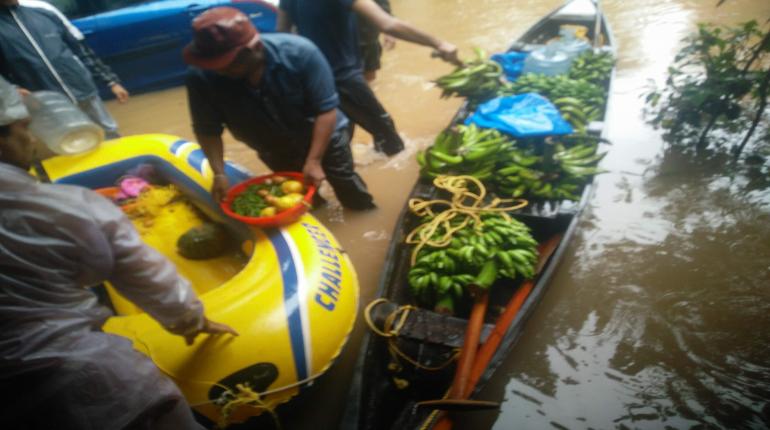
But the suffering they saw only humbled them into sacrificing more. The team said they didn’t want to eat into the bits of food that came for the relief camps. On some days they survived on goods bits from a bunch of rotting bananas while on another day a volunteer shared a completely soiled, muddy piece of chikki with the rest of the team.
“You can’t even begin to assess the severity of the loss here. People are in a quandary everywhere. They don’t know whom to turn to in a situation like this. Getting your entire life’s savings wiped out in a jiffy and finally having to dispose or even burn everything right in front of your eyes, because of its non-usability, makes you ponder about survivability,” shared Georgy Cherian who recently returned to Kerala after working as an electrical engineer in New Zealand.
Road to recovery
According to Puja, the state will take at least a year to get back to normalcy, and that is for people like you and me. “What about those whose livelihood was connected to the land? The farmers, the fishermen, the construction workers, daily wage-earners -- they have no work. Tourism has taken a hit. Yesterday only I saw people from the Fisheries department trying to assess the loss incurred by the sector. Just imagine, these people have had no income ever since the deluge struck and have now lost everything. We also need rehabilitation of jobs,” she reasoned.
The team stated that now is the time when the story of the aftermath needs to be told. The story of that family which was stuck in floodwaters with a child who needed a liver transplant, of those simple people who lived, ate, bathed and slept by the riverside and now have nowhere to go.
While Puja pressed for more supplies, Georgy and Amrit noted that last-mile delivery is a challenge now. “Supplies are coming in from all across the globe, but whether or not that is reaching to the one in need is a different ballgame altogether,” Georgy said.
As I closed my set of queries, each one of them came up with an interesting, thought-provoking message, what they described as their takeaways from the whole situation.
Final call
Georgy called for bolstered up disaster management, “People should shed their consumerist ways of living and turn to minimalism followed in countries like Japan. Disaster preparedness hasn’t been done and hence you see people still at loggerheads about what to do in such circumstances”.
Amrit focused on the prompt response from the youth of Kerala that, in a way, helped avert a lot of casualties, “It all went into disarray on August 15, the very next day, whoever I know was involved in the relief work. There were many success stories, cases of casualties averted. No one is focusing on the lives saved, the good deed done, the proactiveness displayed,” Amrit exclaimed.
Puja asked more and more people to come forward and help Kerala’s cause, leaving the differences behind. “I am from Assam, lived for 18 years in Delhi and moved to Kochi only two years back. I am not a Malayali, I don’t speak or understand Malayalam, but it was not a barrier for me. It did not stop me from helping. Why should it? I would urge people to send supplies -- books, blankets, medicines, clothes, anything -- every effort counts. Visit Kerala, it would help create jobs for some people,” Puja concluded.
Kerala is not wiped out of the map, do not think it is destroyed. Its charm, beauty and exuberance lives on and will resurrect. Its undying spirit twinkles in the humble eyes and magnanimous hearts of its people who you and I can help bounce back to normalcy.
(Disclaimer: The opinions expressed above are the personal views of the author and do not reflect the views of ZMCL)