
&imwidth=800&imheight=600&format=webp&quality=medium "'The human touch can never be replaced': Amaan and Ayaan Ali Bangash on AI, Grammys and a Michael Jackson story | Exclusive")
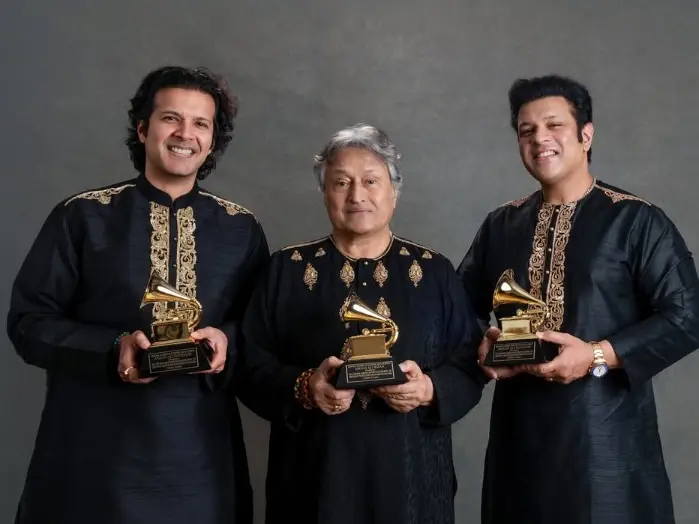
Classical music is often boxed into a corner, seen as formal, rigid, and even out of touch with today’s generation. But when you speak to Amaan Ali Bangash and Ayaan Ali Bangash, they explain it in easy terms. Fresh from Lollapalooza India, and Grammy wins, the Sarod maestros are proving that classical music can be both timeless and timely.
In this exclusive interview with WION, the brothers open up about breaking stereotypes, the real lesson behind their Grammy with the Dalai Lama, a lesson from their father, Ustad Amjad Ali Khan, as they also shared a story of when their project with Michael Jackson didn’t come to fruition. Other things they talked about were youth in classical music, and AI.
Read the edited excerpts from the chat:

WION: You've just come off performing at Lollapalooza India and working on global projects. Now you've released a conservation-driven album, Celebrating Our Tigers. How does this project feel different from everything you have done before?
Amaan Ali Bangash: It's a very humbling project to start with because it's to do with nature. It's very real. And even the music that we've produced in this with our other producers, who have helped us put the album together, is very raw. It's unlike, you know, either we go classical or we go very electronic. Which has this. This has got a very pure feel to it.
Ayaan Ali Bangash: The very important factor behind it has always been the fact that it's been passion-driven, be it a recent, project and collaboration with His Holiness the Dalai Lama, where one wanted to just celebrate compassion and oneness all over the world, which is so much needed, that went on to be recognised by the Grammys as well.
Trending Stories
)
BRICS Summit: China resumes Guangzhou-New Delhi flight, issues 'good-neighbourliness' remark ahead of Xi-Modi meet
)
Why dehydration is the hidden cause of travel fatigue on long flights
)
‘Partners, not rivals’: Xi outlines four point plan for stronger India-China ties
)
Anthropic is giving Claude to schools free, and the reason is not philanthropy
)
9-year-old Chennai prodigy clears Cambridge IGCSE grade 10 exams
)
Why do wild animals need quiet places to survive?
)
From drones to KAAN fighters: Turkey outlines 229% surge in defence spending amid regional shifts
)
BRICS Summit 2026: PM Modi says India and Iran should pursue win-win strategy
)
BRICS Summit: All about Xi Jinping's armoured limousine Hongqi that will ferry him in New Delhi
)
Bigg Boss 20: Uditi Singh reacts to ex Karan Wahi’s possible wildcard entry
)
Israel spent nearly $470,000 on PM's hair, makeup since 2019, data shows
)
Odisha gets investment proposals worth Rs 2.42 trillion from UAE with 6.18 lakh potential jobs
&im=FitAndFill=(700,400))
BRICS Summit 2026: Inside PM Modi’s meetings with global leaders
)
Trump says Canada eager to reach a deal, it could come ‘fairly soon’ if Ottawa treats US farmers better
)
BRICS declaration calls for stronger people ties, women-led growth and greater youth cooperation
)
BRICS Summit 2026: 30+ countries seek BRICS membership
)
BRICS Declaration: China, Russia back India’s UN role, push for greater Global South representation
)
How does the loss of forests affect the way wildlife lives and moves?
)
BRICS Summit 2026: Iran's Pezeshkian praises PM Modi at BRICS
)
‘Differences should not become disputes’: Modi, Xi stress long term India-China ties during bilateral talks
)
800 million years old - Scientists discover 'fingerprints' of supercontinent Gondwana in ancient rocks
)
From severe mobility problems to recovery: Madhuri the elephant’s journey of wildlife care
)
BRICS Summit 2026: Special BRICS session on 'inclusive global governance'
)
Osama Bin Laden's son ALIVE? Al-Qaeda releases video 7 years after US declared him dead
)
Frustrated man demolishes his kitchen after thousands flock to see Mother Mary his wife spotted on the wall
)
IND vs AFG, 1st T20I: When and where to watch live streaming in India?
)
From India, Putin warns Europe against sending troops to Ukraine, Zelensky expresses willingness to meet him at G20 Summit
)
BRICS Summit 2026: India ensures consensus: BRICS nations to issue joint statement today
)
Why going digital does not always mean becoming more efficient
)
Could staying indoors all day affect your health?
)
Why asking questions could be more important than memorising answers
)
9/11 attack anniversary: The day that changed America forever
)
ENG vs PAK: Joe Root breaks Sachin Tendulkar’s record for most Test fifties
)
Why does your skin need protection from UV rays?
)
Humans may lose control of AI: Anthropic CEO calls for slowdown, Altman, Musk back him
)
Modi, Putin, Xi ‘bromance’ goes viral as leaders captured holding hands at BRICS Summit
)
BRICS Summit 2026: Modi-Xi meeting to test India-China reset after border tensions
)
Top 5 places to visit in Goa beyond its famous beaches
And then our recent collaboration with the young blood at Lollapalooza or the upcoming album with Gorillaz, all these things, it's all been passion-driven, and the desire to push the envelope of Sarod and classical music to very different arenas. So this project covers most of the inspiration. But this project is also a salutation and a homage to resilience. And it just became so wonderful that WWF made us ambassadors, which has been extremely humbling. So it all fell in place organically.
WION: You were part of the Grammy-winning project Meditations: The Reflections of His Holiness the Dalai Lama. What was it like working on that project?
Amaan Ali Bangash: Basically, it's a proud moment. We were the only Indians from our country that got this big honour. Thanks to His Holiness, the Dalai Lama. Because this was a very different category. It was the audiobook category, which is unlike a typical Grammy category. Kabir Sehgal, my father, Amjad Khan Sahib, Ayaan Bhai and I are the music producers of the album.
So, because the author, Dalai Lama, is the name of the album, but it was produced by us. So we underplayed it when it got nominated. Also, we didn't milk it because we believe in letting things happen naturally.
And I didn't want to make it, honestly, like a trophy in terms of this is everything. A lot of people, with all due respect, who use Grammy or a Padma Bhushan or Shree as their benchmarks. These are blessings. These are not benchmarks. These are blessings in life. You receive it, you move on, you create better work. It's not that you hold on to it and you market it and milk it and say what, I am somebody, that's why I've got an award. So my father has taught us this one thing that keeps going. Whatever comes your way is a blessing, but don't brag about it too much.
WION:Classical music feels like something the younger generation isn’t really connecting with nowadays; they seem more drawn to hip hop. What are your thoughts on that?
Amaan Ali Bangash: It is a fault of the performer that they're not connecting to it. A bad restaurant cannot blame its customers, who are not walking in. It's as simple as that. So there are a few that the youngsters connect with, not many, definitely not many. But we are all trying very hard to make Indian classical music popular again; there's no doubt on that, but it gets a bigger draw. From a 5000 audience that we gathered, we wanted to go to about 25,000 to 30,000. Because, see, a purist, when you say Indian classical music, you cannot do certain things to attract an audience. For example, Ayaan and I have done a lot of fusion. But after that point, we can't do anything more than that. Because we cannot. It's not that it's going to be detrimental, but coming from your family, or a responsibility, you are responsible for a situation. But I humbly request all the Indian classical musicians to make it very easy for youngsters. Don't put too much hardcore information on them. More than an entertainer, be an engager. That is important today. You have to engage your audience and entertain the audience.
WION: What’s one big misconception people have about classical music? A lot of people picture it as stiff or boring. Is that fair?
Amaan Ali Bangash: Some of the musicians, when they go to college, start performing in the hardcore system. You don't have to teach. See, this is the problem with Indian musicians, that a lot of people end up teaching and giving gyaan. When you go to perform, you have to perform as an entertainer, as an engager, not as a performer to educate.
Ayaan Ali Bangesh: Classical music, interestingly, has had an organic way of redefining itself on its own every decade.
Obviously, the performers contributed a lot to it, and they have continued to contribute a lot to it and still do. But all the great legends, they kind of changed how it was perceived, how it was presented. And the youngsters today, including all of us, our generation of artists, we're all doing things our way, because no rulebook conveyed how classical music should be presented.
So that's why, you see, the main issue is every time you talk about any genre of music, we are constantly comparing it to film music, which is not a fair comparison at all. You can't, I mean, if you have butter chicken, but there's also sushi. So they're takers of both.
You can't say what is easily consumed, what is not easily consumed. This was always an art form for the connoisseurs back in the day; we know that. But today, it's filling up stadiums also. So the newer listener today, I think, has kept that faith and belief and a window open of wanting to hear new things and reconnecting to their roots. So this is always something, which will be a very big part of someone's life who has at least grown up in India.
WION:You have three generations of musicians in your family: your father, the legend, you, and now your children. Do you and your father ever discuss modern music like hip hop or rap? Is he interested in it at all?
Amaan Ali Bangash: My father's always been, because his Indian classical image was so big, it's so big, that other things get underlined. So back in the day, he did collaborate with Charlie Bird, who was one of the biggest jazz musicians. Four years back, he made an album with the lead singer, Joe Walsh of Eagles, you know, Hotel California, the guy who made Eagles. He's worked with them. He's worked with a lot of pop stars, also back in the day. He had to collaborate with Michael Jackson. And suddenly, something came up in the family that prevented him from attending the meeting with Michael Jackson in Santa Barbara. This is the late 80s, early 90s. So my father had, and then apart from the western collaborations, he's done his symphony orchestras, he's done several concertos, he's done, it's collaborated with a lot of musicians. He's worked with Gulzar sahib. He's worked with Anand Bakshi. He's worked with Gulzar sahib on his documentary. But my father's always been a very contemporary person. H's never stopped us from working. He says just be creative.
WION:As we talk about modern versus traditional, AI in music is also one of the biggest concerns for younger audiences today. How do you see AI? Is it an opportunity for creativity or a threat to it?
Ayaan Ali Bangesh: I think you see AI is a new kid on the block, obviously. As far as music is concerned, and as far as our kind of well, one will obviously have to realise how much is too much and how little is too little. You see the human touch, human emotion, which is one of the very important key factors of executing and in classical music, cannot be taken over through AI. I mean, it might co-exist. There might be a different world of AI doing classical music. But the human touch can never be replaced. It can't be replaced.

