
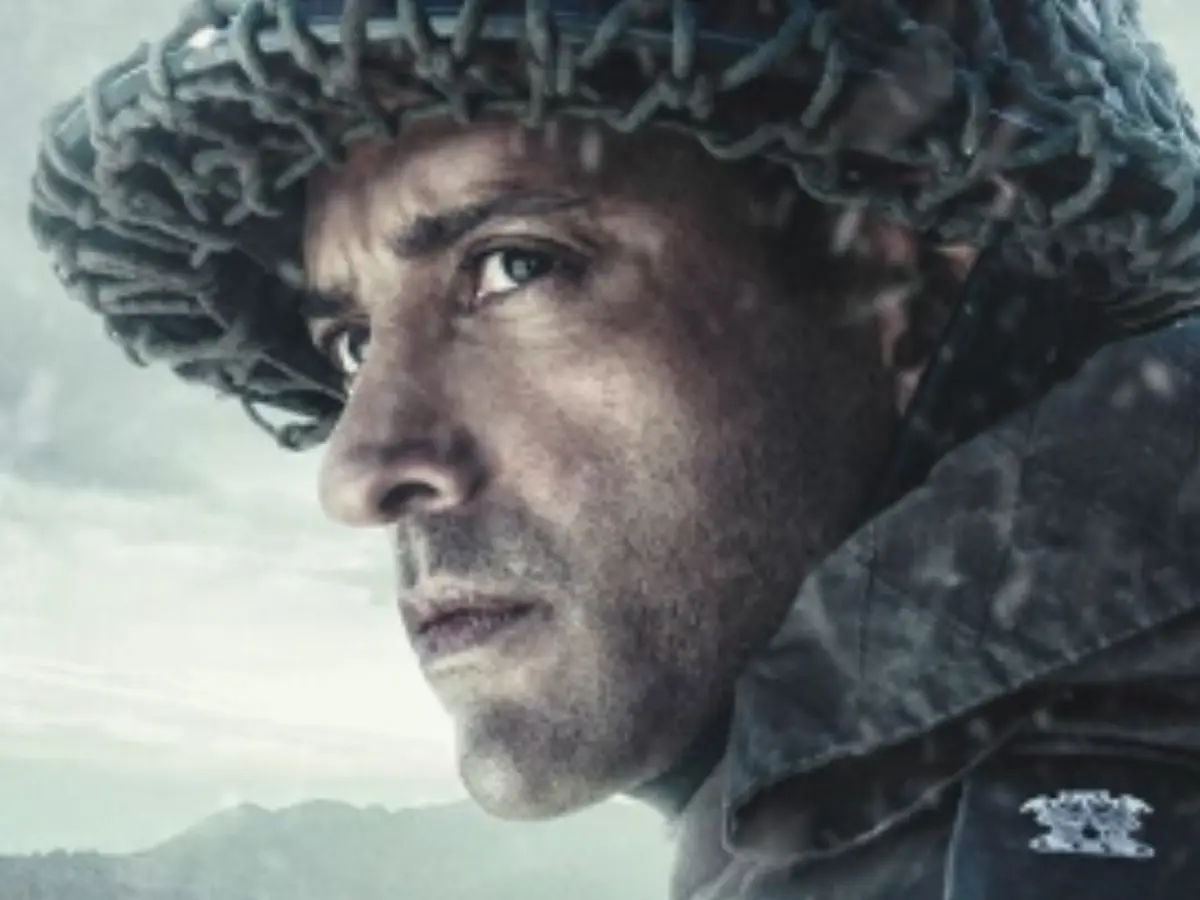
&imwidth=800&imheight=600&format=webp&quality=medium "120 Bahadur movie review: Farhan Akhtar's film is well-meant with mediocre execution")
The major problem in Bollywood is that when a trend emerges, everyone follows it. While some pictures turn out to be really compelling and move you to your core, others don’t, and Farhan Akhtar’s 120 Bahadur falls in the latter category. Stories from war zones must be impactful enough that they lead the audience to talk about the contribution of the army men, not about the nitty-gritty of the movie, mentioning where it missed and the points where it did great. The story should be impactful enough on its own, especially when you are telling an unsung story of a warrior. And Akhtar’s film tells one such story of Major Shaitan Singh, who fearlessly led India’s 120 men during the 1962 Indo-China War.
The technical part of the movie wins. But where does this story of valour lack - Is it the performances, which make this drama overwhelming, or it’s simply the execution that was not well-plated? Let's find out.
The true story of 120 Bahadur

First things first, the movie tells the courageous story of Major Shaitan Singh, who single-handedly led his battalion of 120 soldiers in the minus temperatures, in stopping Chinese troops from capturing Chushul. The Charlie Company was successful in stopping Chinese troops during the 1962 Indo-China War.
Under the leadership of Shaitan Singh, the 120 soldiers courageously fought against approximately 3000 Chinese soldiers. For his valour, Major Shaitan Singh was posthumously awarded the Param Vir Chakra, India's highest military honour.
How is the story of Shaitan Singh told in the movie?
Trending Stories
)
BRICS Summit 2026: Global leaders of BRICS nations attend main open session
)
Houthis launch cross-border strike on Saudi Arabia as Yemen war escalates
)
Why asking questions could be more important than memorising answers
)
BRICS Summit 2026: PM Modi addresses Day 2 of 18th BRICS summit
)
IND vs AFG, 1st T20I: When and where to watch live streaming in India?
)
Why going digital does not always mean becoming more efficient
)
Migration protests return to Portsmouth as rival demonstrations face off
)
PM Modi and China's Xi offered to help resolve Russia-Ukraine war: Kremlin
)
War is making Russia stronger? How Ukraine is shaping Moscow’s next generation of weapons
)
Could staying indoors all day affect your health?
)
Humans may lose control of AI: Anthropic CEO calls for slowdown, Altman, Musk back him
)
BRICS Summit 2026: PM Modi, Xi reach key consensus on ties, China to assume BRICS chairmanship in 2027
)
Bigg Boss 20: Qazi Touqeer gets a special ‘rockstar’ moment from Salman Khan
)
800 million years old - Scientists discover 'fingerprints' of supercontinent Gondwana in ancient rocks
)
Top 5 places to visit in Goa beyond its famous beaches
)
Osama Bin Laden ‘planned’ to target India, CIA reveals dozens of declassified documents
)
BRICS Summit 2026: PM Modi to hold bilateral with leaders of seven countries
)
BRICS Summit 2026: Consensus on joint declaration, diplomatic win for India
)
BRICS Summit 2026: Chinese president Xi Jinping departs from New Delhi after attending BRICS summit
)
'He is popular...': Malaysian PM Anwar Ibrahim's praise for PM Modi during bilateral meeting | WATCH
)
How does the loss of forests affect the way wildlife lives and moves?
)
Trump says Canada eager to reach a deal, it could come ‘fairly soon’ if Ottawa treats US farmers better
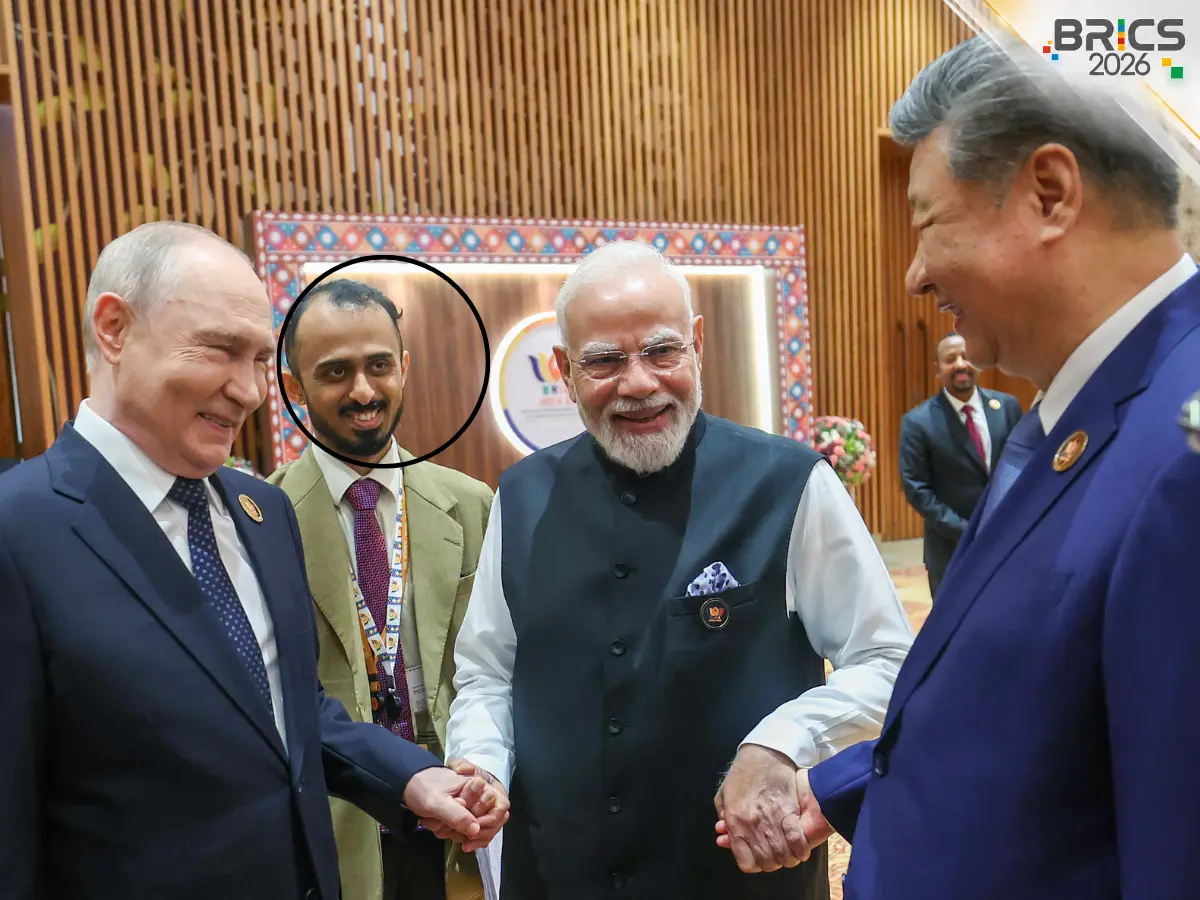)
Who is the smiling man beside Modi, Putin and Xi at BRICS Summit 2026?
)
Why does your skin need protection from UV rays?
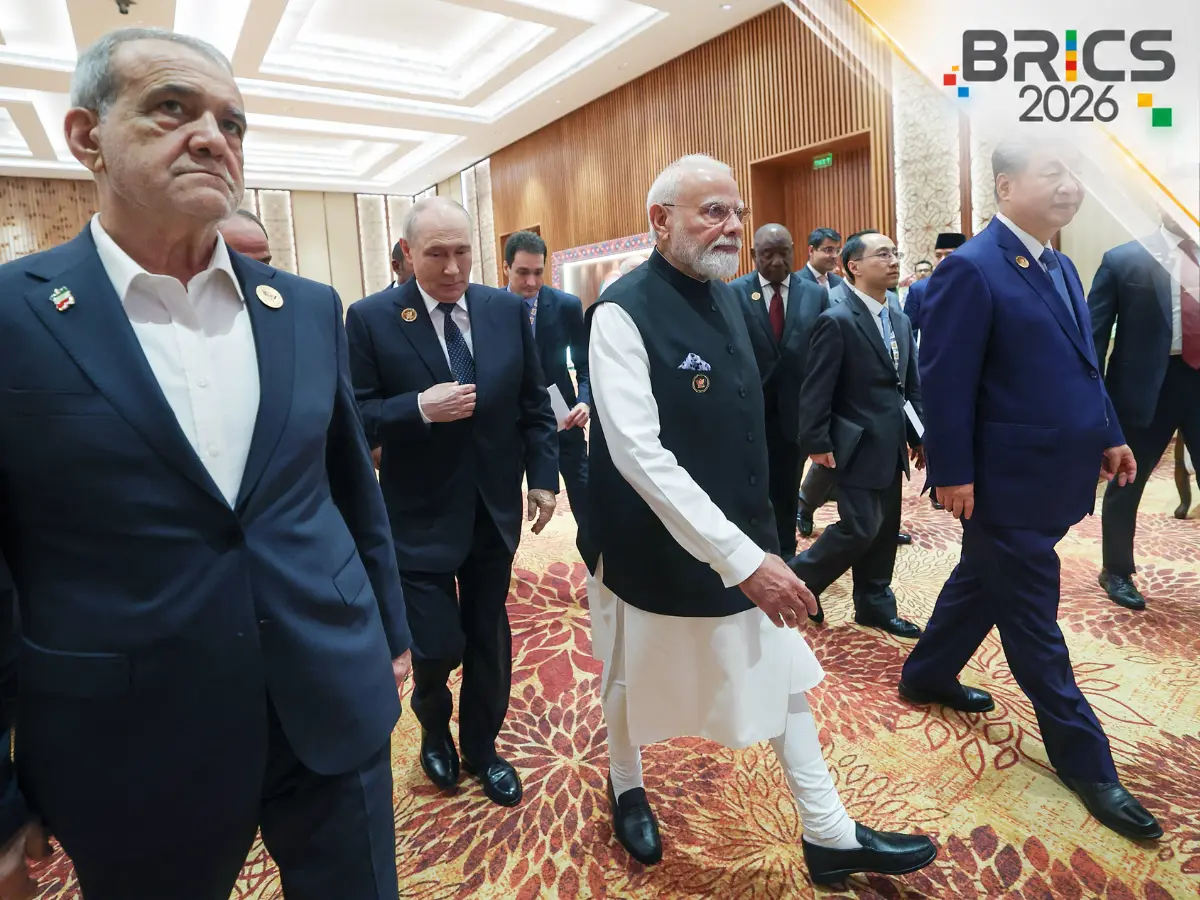)
'Iran won't surrender': Pezeshkian sends blunt message to US while attending BRICS Summit in India
&im=FitAndFill=(700,400))
Why do air defence missiles explode near their target instead of hitting it?
&im=FitAndFill=(700,400))
Why Chinese PL-15 air-to-air missiles use dual-pulse motors compared to European interceptors
)
Ramanathaswamy temple takes centre stage as PM Modi welcomes world leaders at BRICS
)
BRICS Summit day 1: New Delhi declaration adopted with full consensus, big diplomatic win for India
)
Why dehydration is the hidden cause of travel fatigue on long flights
)
Did Iran President Pezeshkian touch feet of Hindu spiritual leader at Delhi event as shown in viral video?
)
Celine Dion makes emotional stage comeback after six years: 'I'm so delighted to see you'
&im=FitAndFill=(700,400))
Meet top 5 batters fastest to 3000 runs in T20Is
)
9-year-old Chennai prodigy clears Cambridge IGCSE grade 10 exams
)
Why do wild animals need quiet places to survive?
)
‘Partners, not rivals’: Xi outlines four point plan for stronger India-China ties
)
Why does your body need time to adjust after a long journey?
)
From severe mobility problems to recovery: Madhuri the elephant’s journey of wildlife care
In 1962, India was still emerging as a young independent nation, following its independence from British rule in 1947 and years after the Panchsheel Agreement in 1954, when Prime Minister Jawaharlal Nehru and Chinese Premier Zhou Enlai started a new chapter of friendship between India and China with the slogan “Hindi-Chini Bhai Bhai.” While the friendship that began with mutual trust was soon shattered in 1962 when China attacked India, it not only changed the relationship of the two neighbouring countries forever, but it also rocked India and its defence power, testing their capabilities. However, one of the battles that was fought during the war was the Razang La, the famous clash between Indian and Chinese troops that saved the Chushul area in Jammu and Kashmir.
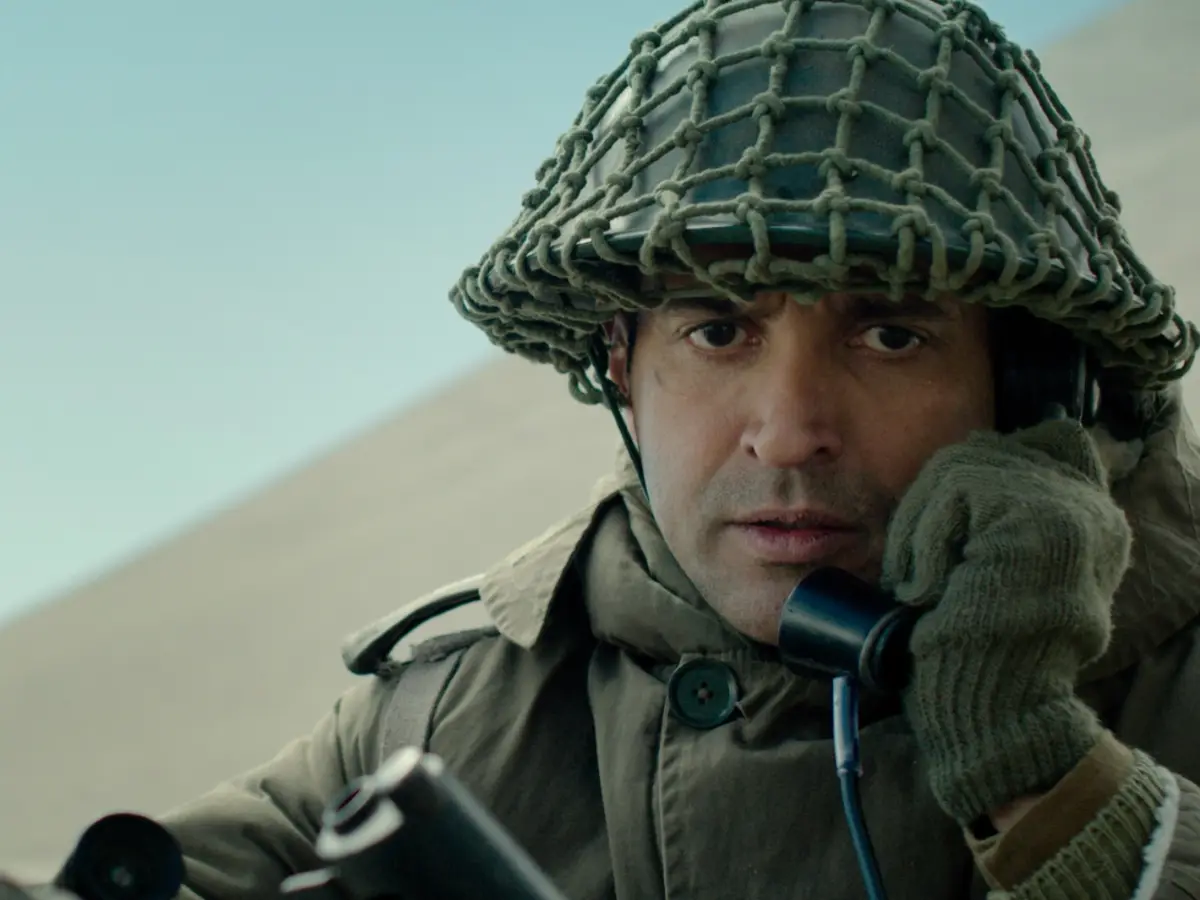
The film opens in the war zone after China has attacked India, and officers are preparing in whatever way possible to save Indian lands. The film is narrated through the radio operator, played by Sparsh Walia, the only one to survive the battle and left to tell the courageous story of 120 soldiers of Charlie Company, 13 Kumaon Regiment, led by Shaitan Singh Bhati, and how they fought the battle against Chinese troops and made them take a step back.
What works and what does not
The story of Razang La deserves to be told and celebrated, especially to the young generation, the majority of whom have been unaware of the bravery and the story of valour and determination, except through rote learning to pass examinations. Cinema is the best way to bring any story to life through powerful storytelling, visuals, and performances. And that is the power of cinema, or we could say its magic.
From the time when Kranti captivated the hearts of Indians, to Border, and even Shershaah, these are films that successfully clinched the strings of your heart with their stories of valour and emotions. They made you cry at times, and at others, they filled you with pride for the army men who fought. This is what a war film should be like. But when it comes to 120 Bahadur, it does its job when it comes to telling the story of soldiers, but have they did it in the best way, I’m sceptical.
Directed by Razneesh Ghai, this type of movie is not just for mere entertainment, but should hold the power to transport you to the world; it should make you empathise with the characters and their stories. But this is where 120 Bahadur fails. It grips you at one point, but at the next, it makes you lose interest.
Without wasting much time, the movie gets straight to the point of the battlefield, and in between, we get snippets of their personal lives. No matter how many times this has been repeated in films, it still wrenches your heart when you think of children and wives left behind in their homes. But in this film, it feels like yes, these are actors, and they are merely acting. The emotions are missing at many points. However, what usually acts as a boon to such movies is the music, and that also didn’t add any specific touch to the movie.
Despite being based on a lesser-known part of history, the movie comes with a familiar tone and plot. The makers have done a fantastic job when it comes to the authenticity of the story. One of the instances mentions how officers doubted Shaitan Singh's idea of protecting the passage of Razang La, and even the Ahir troops in the mountains.
)
Farhan Akhtar Photograph: (X)
With its familiar tone and plot, the first half of the movie takes a lot of time to grip your attention, with several scenes just missing the mark. At the same time, the caricature-like presentation of Chinese officers does not at all look compatible with soldiers on the other side of the border.
The movie holds you in the second half when the battle actually begins. But it doesn’t last for long. Even in the climax, there is a longing for emotions and the feeling of pride that one should have while watching it. The movie is the best tribute to the heroism and courage of the story, but the result is not that impactful.
If we talk about Farhan Akhtar, he looked forced. Even while delivering dialogues with deep words, they just don't land well. Off the field, the scenes showing him with his family, wife played by Raashi Khanna, fail to create a impact. Whether it’s emotions or the heart-wrenching deaths, this movie fails to engage our emotions in the way many patriotic movies did in the past.
Apart from Akhtar, the other cast members, such as Ankit Siwach, Vivan Bhatena, Dhanveer Singh, Sahib Verma, and Sparsh Walia, did a good job when it comes to performing more naturally.
The technical aspects, such as the shots and framing, deserve recognition. But they are not sufficient on their own to tell the stories of the soldiers. Good visuals alone aren't enough; the story and performances should be impressive enough to captivate the audience. Every other aspect of filmmaking comes after that.
120 Bahadur fails to resonate at several points.

