Japan's service sector stumbles: a wake-up call for economic strategy

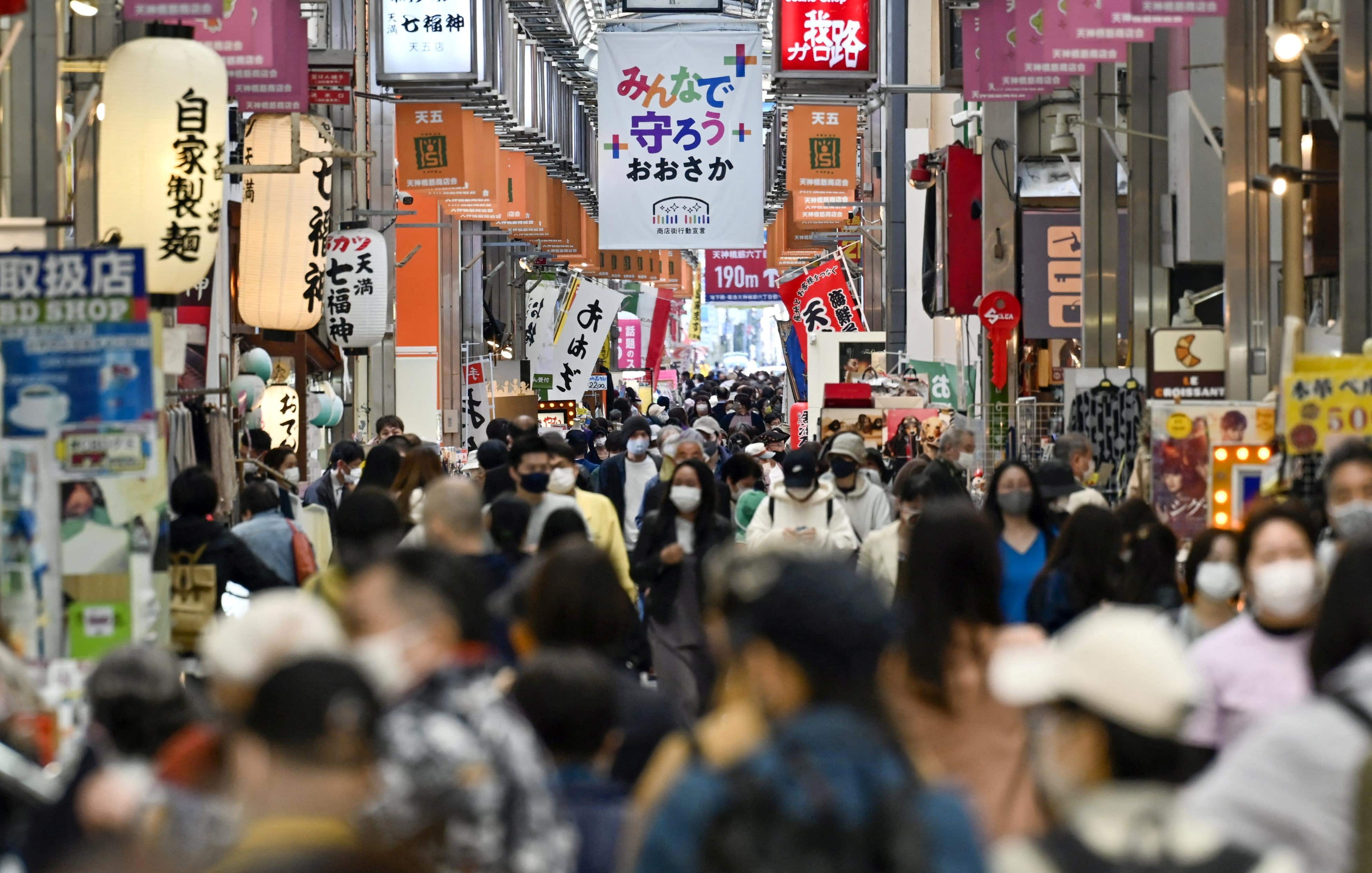
Osaka, Japan
A private sector survey data shows that Japanese services activity in June contracted for the first time since August 2016, largely because of easing domestic demand. Notwithstanding the contraction, business confidence and hiring indicators rub off a positive note.
The service sector has turbocharged Japan's economy and so far has cushioned the blow from a poor performance in the manufacturing sector. The final au Jibun Bank Service Purchasing Managers' index (PMI) slid to 49.4 in June from 53.8 in May, bringing a 21-month streak of growth to an abrupt halt, the S&P Global Market Intelligence survey showed. The PMI was weaker than the preliminary figure of 49.8 and the first reading below the 50.0 threshold separating expansion from contraction since August 2022.
Trevor Balchin, economics director at S&P Global Market Intelligence, commented June's decline in new business simply reflects a pause in growth, rather than any great fall in demand.

"Looking beyond the headline figure, the picture is less concerning," Balchin said.
Consumer services, finance and insurance, and real estate and business services were all seeing a fall in demand, but transports and storage together with information and communication rose in June. Meanwhile, the weak yen-the currency has lost over 12 per cent so far this year-boosted foreign demand for Japanese services.
While still broadly positive, at a slower pace, the 12-month outlook for employment and business confidence grew. At the same time, rising wages and food and fuel costs, along with the weaker yen, firmed up the input price increases, driving through the fastest rate of inflation since last August.
&imwidth=180&imheight=135&format=webp&quality=medium)
Brendan Taylor overtakes Andy Flower to become Zimbabwe’s leading ODI run-scorer
&im=FitAndFill=(700,400)&imwidth=180&imheight=135&format=webp&quality=medium)
What is the real meaning behind Pete Hegseth's tattoos?
&imwidth=180&imheight=135&format=webp&quality=medium)
Kenyan cult leader found guilty over starvation deaths of nearly 200 children
&imwidth=180&imheight=135&format=webp&quality=medium)
Two Indians among 28 arrested in California over alleged voter registration fraud, DOJ says
&imwidth=180&imheight=135&format=webp&quality=medium)
Flying car race: Alef Aeronautics welcomes Tesla Roadster '11 years' later, but are the two models the same?
&imwidth=180&imheight=135&format=webp&quality=medium)
France is burning. Trump blames immigrants. But who is answering Europe's real questions? | The Verdict
&imwidth=180&imheight=135&format=webp&quality=medium)
Shastri backs Shami comeback; lauds Bhuvi and warns Bumrah on format workload ahead of World Cup
&imwidth=180&imheight=135&format=webp&quality=medium)
Netanyahu rival Benny Gantz quits Israel election race, vows to push for unity government
&imwidth=180&imheight=135&format=webp&quality=medium)
US Midterm 2026: What do opinion polls and prediction markets say less than two weeks before voting
&imwidth=180&imheight=135&format=webp&quality=medium)
WATCH | Albania protesters set Supreme Court on fire as anti-Rama riots escalate
&imwidth=180&imheight=135&format=webp&quality=medium)
Indian Air Force turns to homegrown firefighting robot developed under iDEX programme
&imwidth=180&imheight=135&format=webp&quality=medium)
Trump Commerce Secretary Howard Lutnick’s family fortune more than doubles to $7.3 billion, outpacing his boss
&imwidth=180&imheight=135&format=webp&quality=medium)
Pete Hegseth meets Benjamin Netanyahu during unannounced visit to Israel ahead of election
&im=FitAndFill=(700,400)&imwidth=180&imheight=135&format=webp&quality=medium)
Ghaziabad is world's fastest-growing city; Surat, Patna, Rajkot also feature on list
&imwidth=180&imheight=135&format=webp&quality=medium)
‘Spare India from anarchy’: Over 400 Indian-origin academics from MIT, Oxford condemn anti-CEC protests
&imwidth=180&imheight=135&format=webp&quality=medium)
WATCH | Japan launches historic mission to collect samples from Mars' moon Phobos
&imwidth=180&imheight=135&format=webp&quality=medium)
‘My president, I mean my husband’: Trump's new press secretary Katie Zacharia's first briefing goes off the rails in 14 minutes
&imwidth=180&imheight=135&format=webp&quality=medium)
Pakistan betrays Iran, shuts border, trade as Trump moves towards new war
&imwidth=180&imheight=135&format=webp&quality=medium)
PCB omits Atherton, Hussain from tri-series commentary panel over Imran Khan interview row
&imwidth=180&imheight=135&format=webp&quality=medium)
Trump calls on New Mexico to become 'New America', claims 'home values and incomes would rise'
&imwidth=180&imheight=135&format=webp&quality=medium)
US Congressman Raja Krishnamoorthi describes foiled temple attack as ‘divine intervention’, criticises Vance and MAGA rhetoric
&imwidth=180&imheight=135&format=webp&quality=medium)
Girl 'dead' for 8 hours wakes up at her own funeral, dad insists she wasn't breathing
&imwidth=180&imheight=135&format=webp&quality=medium)
Pujara says 'Samson and Vaibhav cannot be in Playing XI' for India on NZ tour
&imwidth=180&imheight=135&format=webp&quality=medium)
US midterms 2026: From Pooja Sethi to Vivek Ramaswamy, here are Indian-origin candidates to watch out for
&imwidth=180&imheight=135&format=webp&quality=medium)
Elon Musk features on Lucknow's 'anti-India' Ravan poster alongside Rahul Gandhi, Akhilesh
&im=FitAndFill=(700,400)&imwidth=180&imheight=135&format=webp&quality=medium)
New OTT releases this week (October 19-25, 2026): Gajab Raat to Chaar Yaar-8 titles to watch during Dussehra week on Netflix, Prime Video and more
&imwidth=180&imheight=135&format=webp&quality=medium)
Baby orangutan rescued in India returns to Indonesia
&imwidth=180&imheight=135&format=webp&quality=medium)
India moves to buy 10,000 more AI chips for a national compute pool open to startups
&imwidth=180&imheight=135&format=webp&quality=medium)
'Whatever I can do to end this war': Trump floats China Summit with Putin and Xi, questions Zelensky's role in peace talks
&imwidth=180&imheight=135&format=webp&quality=medium)
'Paris is going to be a Muslim city very soon': Trump blames immigration for France unrest, urges Macron to tighten border policies
&imwidth=180&imheight=135&format=webp&quality=medium)
WATCH | Viral video shows woman jogging past burning barricade amid Paris unrest, sparks online debate
&imwidth=180&imheight=135&format=webp&quality=medium)
'We feel like Mr India': Gujarat’s undercover SHE team guard garba nights at Navratri
&imwidth=180&imheight=135&format=webp&quality=medium)
Cattle-feed bran in biscuits, detergent in milk: FSSAI acts against 3 companies
&imwidth=180&imheight=135&format=webp&quality=medium)
'It's a joy to see the makers bring it on such a grand scale': SS Rajamouli on Ramayana
&imwidth=180&imheight=135&format=webp&quality=medium)
Priest dies after crucifix falls on his head during livestreamed Mass in Ecuador | VIDEO
&imwidth=180&imheight=135&format=webp&quality=medium)
Ramayana advance booking: Ranbir Kapoor, Yash's film cross $500K ahead of Diwali release
Companies continued to pass on price hikes to consumers against the backdrop of higher wages and material costs, and the pace of growth of average prices charged remained close to record levels seen in April and May.
The composite PMI, which combines manufacturing and services activity figures, fell to 49.7 in June from 52.6 in May indicating the first reading below the 50.0 level in seven months.
The economy now approaches a critical juncture, dependent as it has been on services to balance out a weak manufacturing sector, following the recent Japanese service sector contraction. In addition, the au Jibun Bank Service PMI final reading dropped to 49.4 in June, which signals no growth, even though business confidence and hiring indicators showed resilience and thus held some potential for recovery. However, these might be constrained by rising input costs and inflation. As these continue to be passed on to consumers from companies, the economic landscape will balance inflationary pressures with sustainable growth.