
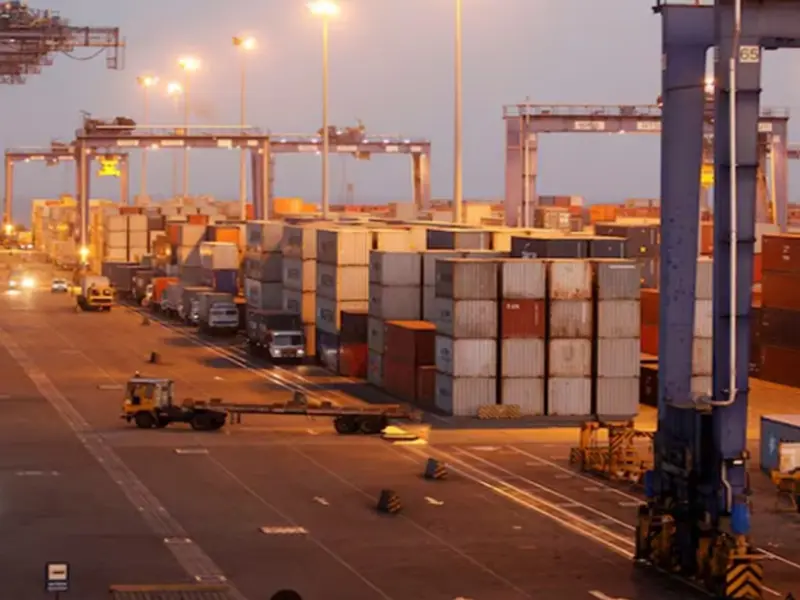
India has imposed sweeping new restrictions on imports from Bangladesh, targeting goods worth $770 million, which accounts for 42 per cent of total bilateral imports, according to the Global Trade Research Initiative (GTRI).
The Union Ministry of Commerce and Industry, through a directive by the Directorate General of Foreign Trade (DGFT) issued on Saturday, announced immediate port restrictions on several categories of Bangladeshi imports. The decision now bars most affected goods from entering India via land routes, restricting them to select sea ports.
What does the ban cover?

Among the key sectors hit by this move are garments, processed foods, and plastic items. Of these, garments alone constitute $618 million worth of annual imports. These can now only be brought in through two designated sea ports, cutting off traditional land trade routes that had previously served as the backbone of cross-border commerce.
According to the GTRI, this change “severely impacts Bangladesh’s most lucrative export channel to India,” especially since the majority of their ready-made garment (RMG) consignments moved via land.
Why India took this step?
Trending Stories
)
China thinned Himalayan troop presence in 2025, India defence report says; terms border situation 'stable'
)
Israeli minister calls to strip Gaza film directors of citizenship
)
China discovers vast gold and silver 'mine' in the Pacific with unheard-of deposits
)
Crude oil prices jump more than $107 per barrel following Houthi attacks on Saudi
)
Ganesh Chaturthi 2026: Devotees throng the iconic Lalbaugcha Raja pandal in Mumbai
)
Did China give Iran intel before US base strike that killed 3 troops? Trump says, 'You’re right...'
)
Did India risk its US trade deal despite softer stance at BRICS?
)
Turkish Airlines plane flies through a storm three times, triggering severe turbulence
)
Trump says Canada eager to reach a deal, it could come ‘fairly soon’ if Ottawa treats US farmers better
)
Russian drone hits Warsaw-bound train near Polish border, Zelensky accuses Moscow of ‘deliberate’ targeting
)
First naval drone battle? Ukraine says Sargan 3000 sank Russian unmanned boat
)
Video of Pakistani lawmaker struggling to read English tribute to Jinnah goes viral - WATCH
&im=FitAndFill=(700,400))
New OTT releases this week (September 14-20, 2026): Lust Stories 3, Waiting Hai, Irumudi- 5 new titles coming on Netflix, Prime Video and more
)
‘Want to reset ties with India, have engagement based on mutual interests,’ says Bangladesh minister
&im=FitAndFill=(700,400))
Why Chinese PL-15 air-to-air missiles use dual-pulse motors compared to European interceptors
)
Iran, India agree to deepen humanitarian and political ties, President Pezeshkian says
)
Plane carrying prominent figure crashes at Libya’s Misrata airport: Report
)
Natural caffeine sources gain popularity; matcha & botanicals offer calm energy
)
Saudi Arabia discovers 110 million tonnes of Uranium-rich ore in Madinah region
)
Humans may lose control of AI: Anthropic CEO calls for slowdown, Altman, Musk back him
)
Practical Magic 2 breaks Spidey spell over North American box office
)
‘Let’s go’: Newly declassified videos show dramatic rescue of US Air Force officers downed in Iran
)
800 million years old - Scientists discover 'fingerprints' of supercontinent Gondwana in ancient rocks
)
Russia proposes to build 360 kmph Ivolga FG trains in India: What happened on sidelines of BRICS
)
Women's Asia Cup 2026: India denied trophy once again despite winning the title
)
'Huge destructive power': North Korea calls its latest missile launches 'live-fire drill' even as US dismisses 'immediate threat'
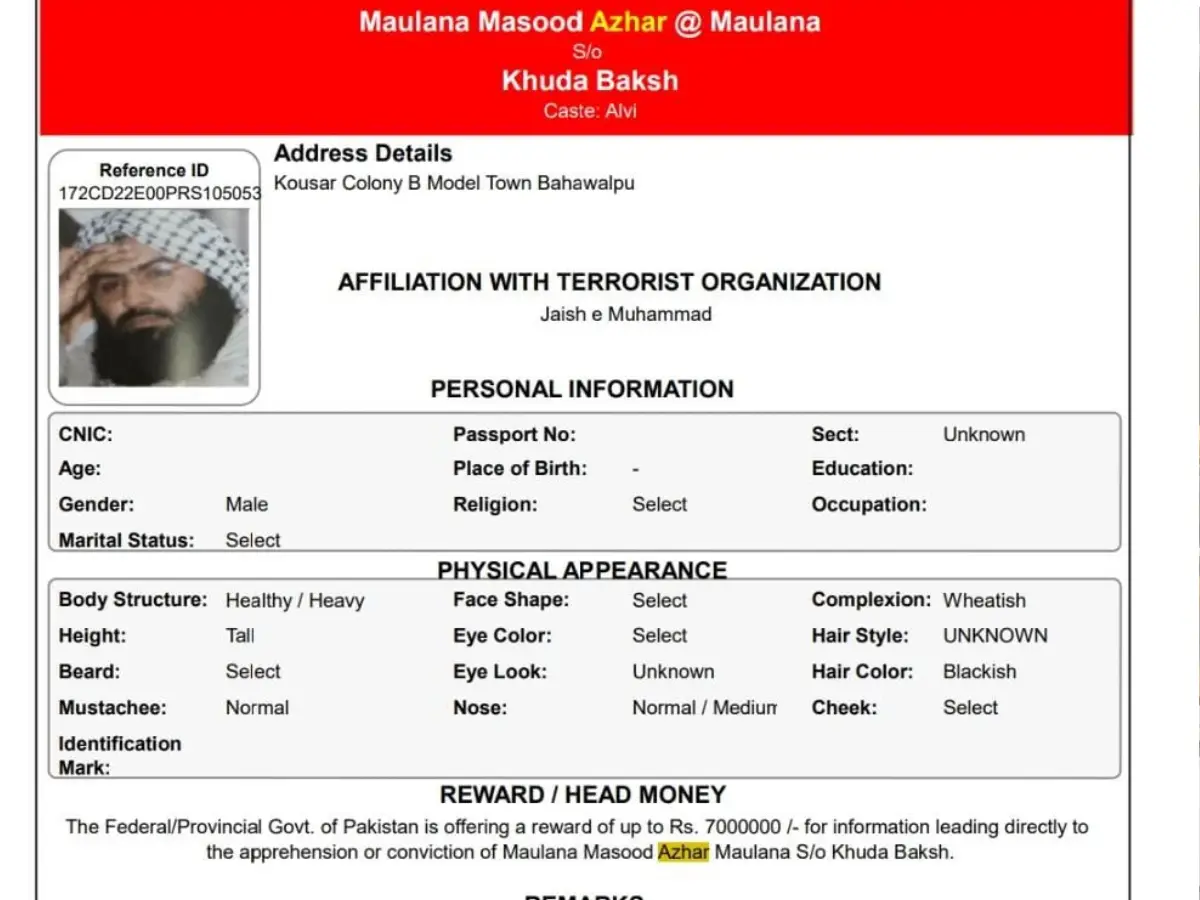)
Pakistan puts Pak Rs 70 lakh bounty on UN terrorist Masood Azhar; move draws skepticism in Delhi
)
Indian importers urge Bangladesh to lift export ban on 'Hilsa' fish ahead of Durga Puja
)
Delhi’s balancing act: BRICS serves as a stage for West Asia diplomacy
)
Liam Neeson sparks romance rumours after holding hands with Stella Stocker at TIFF 2026
&im=FitAndFill=(700,400))
Why European Meteor missiles use ramjet engines compared to standard US solid rockets
)
Veteran Bollywood actress Nafisa Ali shares health update as Stage 4 cancer progresses, starts targeted therapy
)
Orlando Bloom addresses Pirates of the Caribbean comeback and reunion with Johnny Depp
The move is being widely interpreted as retaliatory. Trade experts believe the restrictions reflect India’s response to a series of recent economic and diplomatic developments initiated by Dhaka.
According to the GTRI, “The restrictions look like India’s response to Dhaka restricting imports from India on a large number of items and its diplomatic pivot towards China.” Over the past year, Bangladesh has gradually imposed several curbs on Indian exports. In April 2025, it banned Indian yarn imports through five key land ports.
It has also tightened regulations on rice shipments and enforced import bans on a range of Indian goods including paper, tobacco, fish, and powdered milk.
In addition, Dhaka has introduced a new transit fee of 1.8 taka per tonne per kilometre on Indian goods moving through Bangladeshi territory, adding to the operational burden faced by Indian exporters.
Such measures have led to operational delays and mounting frustration among Indian businesses, prompting calls for a calibrated policy response from New Delhi.
Rising Bangladesh-China ties add tension
India’s decision also comes amid worsening diplomatic ties and growing China-Bangladesh alignment. The recent change in political leadership in Dhaka—from Prime Minister Sheikh Hasina’s pro-India government to an interim administration under Muhammad Yunus—has drastically altered regional dynamics.
In March 2025, Yunus visited China and secured USD 2.1 billion in investments across infrastructure and economic cooperation. His controversial remarks in Beijing, calling India’s northeastern states “a landlocked region with no access to the ocean,” have drawn sharp criticism in New Delhi.
Indian officials reportedly viewed these comments as undermining India’s sovereignty and regional connectivity goals, especially in light of ongoing projects like India’s Act East Policy and BIMSTEC corridor plans.
India-Bangladesh trade ties
Despite the current friction, India and Bangladesh share a deeply interwoven trade relationship. In FY24, bilateral trade stood at $15.9 billion, with India exporting goods worth $12.5 billion and importing around $3.4 billion, according to data from the Indian Ministry of Commerce and Industry.
However, India’s textile industry has long expressed concern over what they term “unfair advantages” granted to Bangladeshi exporters.
These include duty-free imports of Chinese fabrics and generous Bangladeshi government export subsidies, which reportedly provide a 10 to 15 per cent price advantage to Dhaka’s garment producers in the Indian market, according to the Global Trade Research Initiative (GTRI).
With these new curbs, India appears to be sending a strong message, not only protecting domestic industries but also signalling disapproval of Dhaka’s shifting geopolitical stance.