

&imwidth=800&imheight=600&format=webp&quality=medium "Dollar slumps to 50-year low as Trump’s tariffs, Fed rift rattle markets")
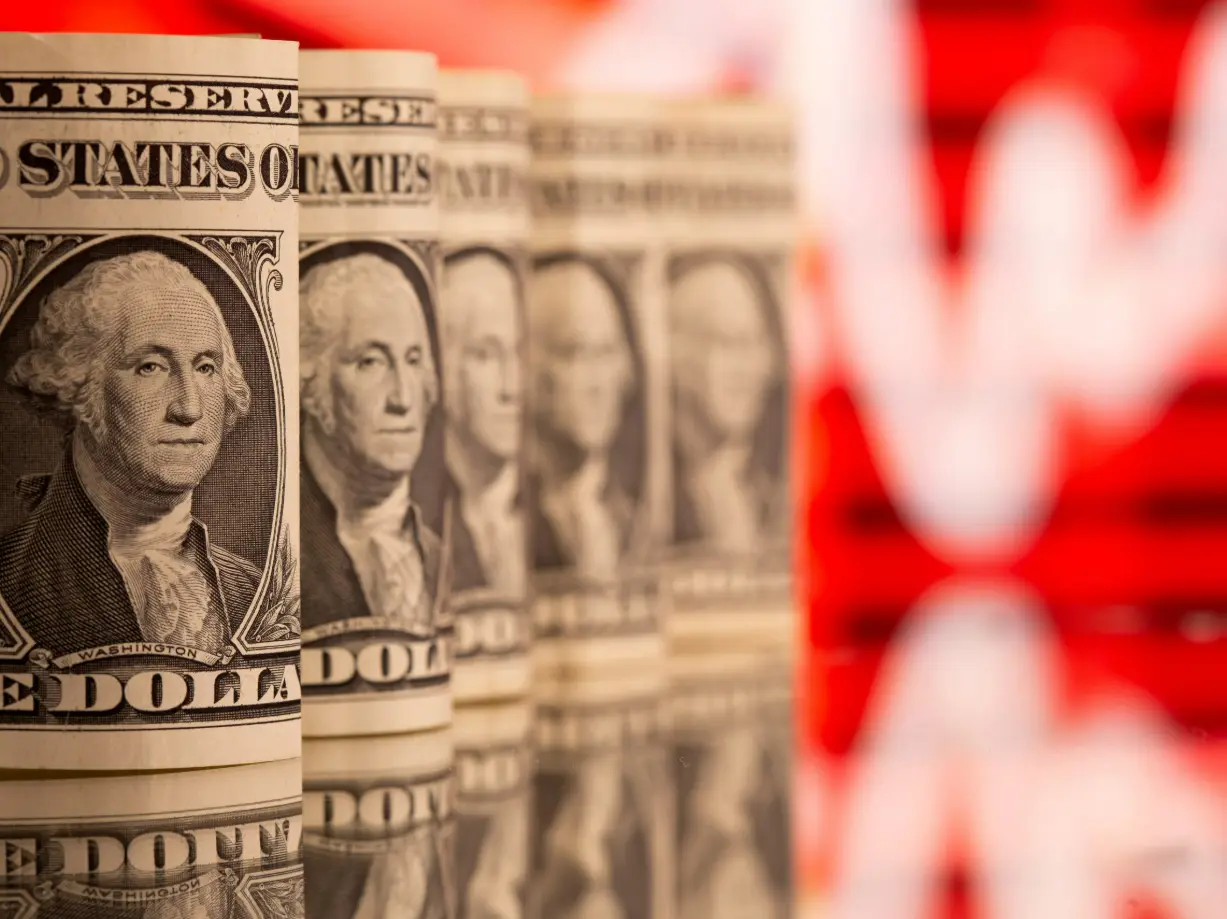
The US dollar has posted its worst first-half performance in more than 50 years, hit by President Donald Trump’s aggressive tariff policies, investor fears over rising national debt, and bets on Federal Reserve rate cuts. According to Bloomberg and The Guardian, the US Dollar Index fell 10.8 per cent in the first six months of 2025, a slump unmatched since 1973.
Dollar index dives amid policy uncertainty
The US Dollar Index, which measures the greenback against a basket of major currencies, has dropped to its lowest level since March 2022. The scale of this year’s decline rivals the 14.8 per cent plunge in the first half of 1973 during Richard Nixon’s presidency. According to Bloomberg, traders have been spooked by Trump’s surprise “Liberation Day” tariff hikes in April. The policy, aimed at extracting concessions from China, Mexico and Canada, triggered a sharp sell-off in dollar assets and prompted fears of a global trade war.
Although the White House paused some tariffs for 90 days under pressure from investors, uncertainty remains high. Analysts say the repeated tariff threats have undermined confidence in the dollar as a safe-haven currency, while worries about the US fiscal outlook are adding to the strain.
Here’s a snapshot illustrating how severe the 2025 slump has been in historical context:
| Year | First-Half Dollar Index Change (%) |
| 1973 | -14.8 |
| 2025 | -10.8 |
| Typical Range (Recent Decades) | -1 to +5 |
Source: Guardian graphic, data from LSEG
This graphic highlight that outside of crisis years like 1973, the dollar typically moves within a far narrower band in the first half of the year. The 2025 slump is one of the largest moves in over five decades, underlining just how severely investor sentiment has been shaken.
Rate-cut expectations deepen dollar weakness
As reported by Bloomberg, traders are increasingly convinced that the Federal Reserve will have to cut interest rates to counter weaker growth. President Trump has repeatedly attacked the Fed for not cutting fast enough and has suggested he might replace Chair Jerome Powell with someone more dovish.
Markets are pricing in multiple rate reductions over the coming year. Lower rates reduce the yield on dollar-denominated assets, making the currency less attractive to global investors.
Investors rotate away from US assets
According to The Guardian, the dollar’s decline has been matched by strength in rival currencies. Sterling has risen to a three-year high of $1.37, while the euro is up around 5 per cent so far this year.
Trending Stories
&imwidth=180&imheight=135&format=webp&quality=medium)
Brendan Taylor overtakes Andy Flower to become Zimbabwe’s leading ODI run-scorer
&imwidth=180&imheight=135&format=webp&quality=medium)
Pakistan to head IMF, World Bank boards after 74 years amid persistent economic crisis
&imwidth=180&imheight=135&format=webp&quality=medium)
"The scariest thing was"... flydubai Captain Smit Machchhar recalls cockpit fight and how he thought of his son and daughter
&imwidth=180&imheight=135&format=webp&quality=medium)
'We are not sitting in ivory towers, we are aware': SC issues notice to Rahul Gandhi, Akhilesh Yadav
&imwidth=180&imheight=135&format=webp&quality=medium)
Flying car race: Alef Aeronautics welcomes Tesla Roadster '11 years' later, but are the two models the same?
&imwidth=180&imheight=135&format=webp&quality=medium)
6-year-old among 2 killed as vehicle crashes into youth soccer game in US
&imwidth=180&imheight=135&format=webp&quality=medium)
‘I have very severe problems’: Trump fuels health speculation during address to firefighters
&imwidth=180&imheight=135&format=webp&quality=medium)
US midterm elections 2026: Postal ballots and voter disenfranchisement — A key battle for Donald Trump
&imwidth=180&imheight=135&format=webp&quality=medium)
Lizard people? Ex-US Army sniper claims soldier killed by 'reptilian beings' in battle near Area 51
&imwidth=180&imheight=135&format=webp&quality=medium)
‘I don’t know how my family escaped': Congressman Raja Krishnamoorthi chokes while revealing he was inside US temple during foiled attack
&imwidth=180&imheight=135&format=webp&quality=medium)
At least 19 killed in stampede-like situation after part of Kolkata Durga Puja pandal collapses
&imwidth=180&imheight=135&format=webp&quality=medium)
Rain washes out 5th T20I as India-West Indies share honours 2-2
&imwidth=180&imheight=135&format=webp&quality=medium)
'Reason UN has lost credibility': Amid SIR protests India hits out at report alleging 'youth repression'
&imwidth=180&imheight=135&format=webp&quality=medium)
‘My president, I mean my husband’: Trump's new press secretary Katie Zacharia's first briefing goes off the rails in 14 minutes
&imwidth=180&imheight=135&format=webp&quality=medium)
China responds to Trump's Press Secretary Katie Zacharia after toilet remark: 'Visit China more often'
&imwidth=180&imheight=135&format=webp&quality=medium)
UAE agrees with Saudi Arabia to rejoin Yemen fight as Houthi strikes rattle Riyadh
&imwidth=180&imheight=135&format=webp&quality=medium)
PCB omits Atherton, Hussain from tri-series commentary panel over Imran Khan interview row
&imwidth=180&imheight=135&format=webp&quality=medium)
SA vs AUS 2nd Test: Rain delays start as Rabada returns; Boland replaces Lyon for Australia
&imwidth=180&imheight=135&format=webp&quality=medium)
At least 400 arrested as protests turn violent in France; PM blames far left
&imwidth=180&imheight=135&format=webp&quality=medium)
WATCH | iPhones, luxury perfumes floating in Hormuz? Iranian fishermen make bizarre discovery
&imwidth=180&imheight=135&format=webp&quality=medium)
Two students die, 14 injured at Dandiya event in Hyderabad: Know what happened? VIDEO
&imwidth=180&imheight=135&format=webp&quality=medium)
'keep telling him you will get your opportunities': Iyer opens up on conversations with Sooryavanshi
&imwidth=180&imheight=135&format=webp&quality=medium)
‘Be back in few weeks’: Emi Martinez shares first update after head clash in Premier League match
&imwidth=180&imheight=135&format=webp&quality=medium)
No Ravindra Jadeja, Yashasvi Jaiswal in India’s 2027 ODI World Cup plans: Report
&imwidth=180&imheight=135&format=webp&quality=medium)
Kolkata Durga Puja stampede: PM Modi announces Rs 2 lakh ex-gratia for kin of dead, Amit Shah to visit injured
&imwidth=180&imheight=135&format=webp&quality=medium)
Taylor Swift performs at star-studded Academy Museum Gala 2026 in stunning Dior ensemble
&imwidth=180&imheight=135&format=webp&quality=medium)
Anirudh Ravichander-Kavya Maran wedding: Telangana CM reveals Chennai reception date
&im=FitAndFill=(700,400)&imwidth=180&imheight=135&format=webp&quality=medium)
Inside Tesla's Roadster: 10 features of Elon Musk's 'flying car' that push the limits of electric vehicles | In Pics
&imwidth=180&imheight=135&format=webp&quality=medium)
One species, two lineages: Why Sri Lanka’s spectacled cobra differs genetically from Indian variant
&imwidth=180&imheight=135&format=webp&quality=medium)
Oil tanker carrying over 2M barrels of crude hits mine in Strait of Hormuz, catches fire, says Iran
&imwidth=180&imheight=135&format=webp&quality=medium)
2 injured in plane crash on busy California highway
&imwidth=180&imheight=135&format=webp&quality=medium)
'We feel like Mr India': Gujarat’s undercover SHE team guard garba nights at Navratri
&imwidth=180&imheight=135&format=webp&quality=medium)
'It's a joy to see the makers bring it on such a grand scale': SS Rajamouli on Ramayana
&imwidth=180&imheight=135&format=webp&quality=medium)
13 dead after truck mows down devotees, crashes into temple gate in Madhya Pradesh's Gwalior
&imwidth=180&imheight=135&format=webp&quality=medium)
IND-W vs ZIM-W, 2nd T20I: When and where to watch live streaming in India?
This reflects a broader rotation out of US assets amid worries about the country’s ballooning debt and unpredictable trade policy. Trump’s expansive budget plans, described as the “big beautiful” budget, are expected to push borrowing even higher, fuelling further doubts about the dollar’s long-term stability.
US stock markets rebound despite tariff shock
Despite the dollar’s slump and an early-year sell-off, US equity markets have bounced back. The April tariff announcement led to the sharpest equity correction since the pandemic, with the S&P 500 tumbling more than 10 per cent in just two days.
Bloomberg reports that this volatility was quickly reversed once tariffs were paused and strong earnings, particularly from AI-focused firms, supported sentiment. By the end of June, the S&P 500 had regained ground to post a 5 per cent gain for the year, though it still lagged key European indices.
Europe and UK outperform
As detailed in The Guardian, European markets have outpaced Wall Street. The pan-European Stoxx 600 index rose 7 per cent in the first half of 2025, the UK’s FTSE 100 gained 7.2 per cent, and Germany’s Dax surged 20 per cent, making Europe one of the best-performing regions globally.
Investment analysts note that tariffs, earnings downgrades, geopolitical conflicts, and fears over US debt have prompted a shift in investor preferences, reducing America’s dominance in global portfolios.
Winners and losers among sectors
Technology stocks have seen diverging fortunes. Meta Platforms, Facebook’s owner, has soared 25 per cent on AI optimism, while Apple has lost nearly 20 per cent amid concerns about tariffs on Chinese imports and fears it has fallen behind in the AI race.
Meanwhile, safe-haven assets have benefited. Gold prices have jumped 25 per cent in 2025 so far, as investors seek protection against market volatility and policy uncertainty.
The road ahead for the dollar
With Trump’s tariff threats still hanging over trade partners, ongoing geopolitical tensions, and questions about the Federal Reserve’s path, analysts warn that the greenback could face further turbulence in the second half of 2025.
While US stocks have shown resilience, the dollar’s worst first-half slump in over 50 years underscores the deep anxiety about America’s economic direction and its traditional role as the world’s reserve currency.
(With inputs from the agencies)