WATCH: PM Modi-Xi Jinping handshake goes viral as warm BRICS exchange highlights India-China thaw

&imwidth=600&imheight=450&format=webp&quality=medium "WATCH: PM Modi-Xi Jinping handshake goes viral as warm BRICS exchange highlights India-China thaw")
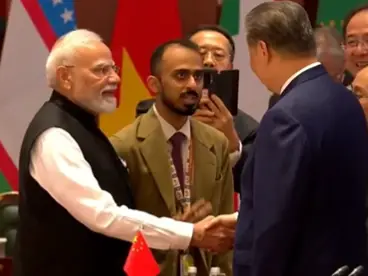
Prime Minister Narendra Modi and Chinese President Xi Jinping at the BRICS Summit Photograph: (X/ANI)
Prime Minister Narendra Modi and Chinese President Xi Jinping shared a warm handshake at the New Delhi BRICS Summit, signaling a gradual stabilization of India-China ties following years of border tensions.
A long handshake, smiles and a brief conversation between the Indian Prime Minister Narendra Modi and Chinese President Xi Jinping at the BRICS Summit in New Delhi offered a striking glimpse of the changing tone in India-China ties.
The two leaders were seen shaking hands and speaking to each other after the closed-door session for BRICS member countries. The interaction came as New Delhi and Beijing continue efforts to stabilise relations following years of tensions triggered by the 2020 eastern Ladakh border standoff.
Xi’s presence in New Delhi is significant as it marks his first visit to India in nearly seven years. His engagement with Modi could provide fresh momentum to bilateral ties and cooperation within the BRICS grouping.
From border tensions to renewed engagement
India-China relations have been dominated in recent years by military tensions along the Line of Actual Control (LAC).
However, both sides have taken steps to restore engagement. India and China have moved towards restoring direct flights, easing visa arrangements and increasing high-level diplomatic contacts.
Chinese Ambassador to India Xu Feihong has also publicly called for greater cooperation between the two countries.
Beijing would work with New Delhi to “enhance cooperation, properly handle differences” and remain “friends enjoying good-neighborliness and partners helping each other succeed”, Xu said.
A different global backdrop
Trending Stories
&imwidth=280&imheight=210&format=webp&quality=medium)
&imwidth=280&imheight=210&format=webp&quality=medium)
&imwidth=280&imheight=210&format=webp&quality=medium)
&imwidth=280&imheight=210&format=webp&quality=medium)
&imwidth=280&imheight=210&format=webp&quality=medium)
&imwidth=280&imheight=210&format=webp&quality=medium)
&imwidth=280&imheight=210&format=webp&quality=medium)
&imwidth=280&imheight=210&format=webp&quality=medium)
&imwidth=280&imheight=210&format=webp&quality=medium)
&imwidth=280&imheight=210&format=webp&quality=medium)
&im=FitAndFill=(700,400)&imwidth=280&imheight=210&format=webp&quality=medium)
&imwidth=280&imheight=210&format=webp&quality=medium)
&imwidth=280&imheight=210&format=webp&quality=medium)
&imwidth=280&imheight=210&format=webp&quality=medium)
&imwidth=280&imheight=210&format=webp&quality=medium)
&imwidth=280&imheight=210&format=webp&quality=medium)
&imwidth=280&imheight=210&format=webp&quality=medium)
&imwidth=280&imheight=210&format=webp&quality=medium)
&imwidth=280&imheight=210&format=webp&quality=medium)
&imwidth=280&imheight=210&format=webp&quality=medium)
&imwidth=280&imheight=210&format=webp&quality=medium)
&imwidth=280&imheight=210&format=webp&quality=medium)
&imwidth=280&imheight=210&format=webp&quality=medium)
&imwidth=280&imheight=210&format=webp&quality=medium)
&imwidth=280&imheight=210&format=webp&quality=medium)
&imwidth=280&imheight=210&format=webp&quality=medium)
&imwidth=280&imheight=210&format=webp&quality=medium)
&imwidth=280&imheight=210&format=webp&quality=medium)
&imwidth=280&imheight=210&format=webp&quality=medium)
&imwidth=280&imheight=210&format=webp&quality=medium)
&imwidth=280&imheight=210&format=webp&quality=medium)
&imwidth=280&imheight=210&format=webp&quality=medium)
&imwidth=280&imheight=210&format=webp&quality=medium)
&imwidth=280&imheight=210&format=webp&quality=medium)
&imwidth=280&imheight=210&format=webp&quality=medium)
The Modi-Xi interaction comes against a rapidly changing international backdrop, with conflicts and geopolitical tensions putting pressure on global trade, energy supplies and economic stability.
The Russia-Ukraine war continues, while the conflict in West Asia, including the Iran-US confrontation, has added to concerns over energy and global economic stability.
For India and China, the BRICS platform offers an avenue to focus on cooperation among emerging economies as the wider international system faces multiple disruptions.
‘Partners helping each other succeed’
The warm body language between Modi and Xi also follows several recent high-level interactions between the two leaders. They have met in consecutive years, including at Kazan and Tianjin.
Beijing has described their engagement as part of a longer-term effort to manage differences while expanding areas of cooperation.
India’s Ambassador to China Vikram Doraiswami has also highlighted the possibility of the two countries viewing each other as “cooperation partners, not rivals” and as “each other’s development opportunities rather than threats”.
The latest Modi-Xi interaction at the BRICS Summit could therefore signal another step in the gradual effort by New Delhi and Beijing to put years of tensions behind them and rebuild engagement.

