Not about China? Why India joining Pax Silica alliance on rare earths supply chain, chip making and AI is a big deal

&imwidth=600&imheight=450&format=webp&quality=medium "Not about China? Why India joining Pax Silica alliance on rare earths supply chain, chip making and AI is a big deal")
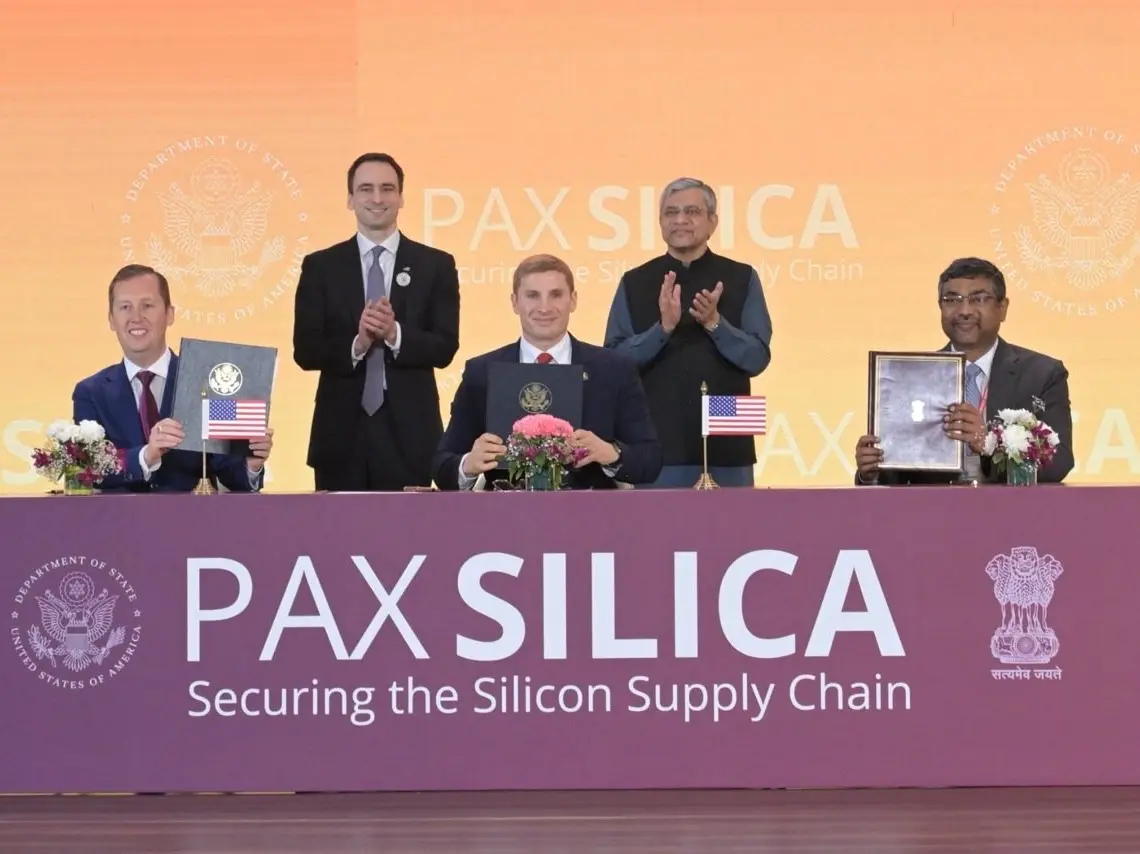
At the signing ceremony of India joining Pax Silica Photograph: (X)
India finally joins US-led Pax Silica alliance on rare earths and AI supply chains. This will boost semiconductor supply chains. It's a strategic move to counter China’s dominance in high-tech sectors.
India on Friday (Feb 20) joined the Pax Silica alliance on rare earth elements, ending speculation about whether New Delhi had been snubbed from the pact led by the US. Oddly, the US tried to downplay analysts’ assessments that this alliance is aimed at countering China’s continuing dominance in the rare earth supply chain that affects chip manufacturing and AI computing. Here is what you should know about Pax Silica and why India joining it is significant.
What is Pax Silica?
Pax Silica is a US-led strategic coalition to build resilient supply chains for both critical minerals and artificial intelligence computing. The framework envisions a coalition-led economic order for the AI age, with deep economic and technological cooperation among members.
Signatories will cooperate on the making and flow of raw earth materials, semiconductors, and AI infrastructure. Experts say this is part of the broader US strategy to counter China’s dominance in high-tech sectors, particularly AI computing.
India signs on Pax Silica
Trending Stories
&imwidth=280&imheight=210&format=webp&quality=medium)
&imwidth=280&imheight=210&format=webp&quality=medium)
&imwidth=280&imheight=210&format=webp&quality=medium)
&imwidth=280&imheight=210&format=webp&quality=medium)
&imwidth=280&imheight=210&format=webp&quality=medium)
&imwidth=280&imheight=210&format=webp&quality=medium)
&imwidth=280&imheight=210&format=webp&quality=medium)
&imwidth=280&imheight=210&format=webp&quality=medium)
&imwidth=280&imheight=210&format=webp&quality=medium)
&imwidth=280&imheight=210&format=webp&quality=medium)
&imwidth=280&imheight=210&format=webp&quality=medium)
&imwidth=280&imheight=210&format=webp&quality=medium)
&imwidth=280&imheight=210&format=webp&quality=medium)
&imwidth=280&imheight=210&format=webp&quality=medium)
&imwidth=280&imheight=210&format=webp&quality=medium)
&imwidth=280&imheight=210&format=webp&quality=medium)
&imwidth=280&imheight=210&format=webp&quality=medium)
&imwidth=280&imheight=210&format=webp&quality=medium)
&imwidth=280&imheight=210&format=webp&quality=medium)
&imwidth=280&imheight=210&format=webp&quality=medium)
&imwidth=280&imheight=210&format=webp&quality=medium)
&imwidth=280&imheight=210&format=webp&quality=medium)
&imwidth=280&imheight=210&format=webp&quality=medium)
&im=FitAndFill=(700,400)&imwidth=280&imheight=210&format=webp&quality=medium)
&imwidth=280&imheight=210&format=webp&quality=medium)
&imwidth=280&imheight=210&format=webp&quality=medium)
&imwidth=280&imheight=210&format=webp&quality=medium)
&imwidth=280&imheight=210&format=webp&quality=medium)
&imwidth=280&imheight=210&format=webp&quality=medium)
&imwidth=280&imheight=210&format=webp&quality=medium)
&imwidth=280&imheight=210&format=webp&quality=medium)
&imwidth=280&imheight=210&format=webp&quality=medium)
&imwidth=280&imheight=210&format=webp&quality=medium)
India joined the Pax Silica alliance at the India AI Impact Summit in New Delhi's Bharat Mandapam. Indian Minister for Electronics and IT, Ashwini Vaishnaw, US Ambassador to India Sergio Gor, and US Under Secretary of State for Economic Affairs Jacob Helberg attended the signing ceremony.
Vaishnaw said that becoming part of Pax Silica will greatly benefit India’s electronics and semiconductor industry. Gor said the coalition “will define the 21st-century economic and technological order”.
“Pax Silica is a declaration that the future belongs to those who build, and when free people join forces,” said Helberg.
Key pillars of the Pax Silica declaration
The Pax Silica declaration vows to build secure, resilient, and innovation-driven supply chains for critical minerals and AI. It aims to establish a durable economic order to drive AI-powered prosperity across partner nations. It recognises that reliable supply chains are indispensable to mutual economic security and that AI is a transformative force for long-term prosperity. It stresses that trustworthy systems are essential to mutual security.
The declaration seeks to promote co-investment, safeguard sensitive technologies from foreign control, and build trusted digital infrastructure.
Why India joining Pax Silica is significant
India’s participation is being seen as a major win for the US in the race to shape access to advanced semiconductors and AI infrastructure supply chains.
India is a BRICS member, of which China is also part. New Delhi’s alignment with a US-led technology bloc is therefore geopolitically notable.
India is pushing to become a chip-making hub. India’s first semiconductor plant is set to begin commercial production soon. Currently, 2nm chips are being designed in India.
The US State Department recently announced a new concierge service to help Pax Silica signatories acquire US-made AI semiconductors more efficiently. This aligns with India’s push to become a global semiconductor and electronics manufacturing hub.
The original idea of Pax Silica had excluded India
The first Pax Silica summit was held on 12 December 2024 at the Donald J Trump Institute of Peace in Washington, DC.
Besides the US, the original founding members of the alliance are Australia, Greece, Israel, Japan, Qatar, South Korea, Singapore, the United Arab Emirates, and the United Kingdom. India is the 10th member.
India was left out of the initial Pax Silica alliance, raising questions in diplomatic circles. The opposition Congress party at the time had criticised New Delhi’s exclusion as a setback for India’s strategic and technological ambitions.
Not about China?
Despite the optics, Helberg insisted that Pax Silica is “really not about China; it is about America”.
“We want to secure our supply chains,” he said.
However, the context is clear. China currently controls approximately 90 per cent of global rare earth refining — a key vulnerability the coalition seeks to address.
Beijing also controls critical segments of the semiconductor and AI supply chains. Pax Silica aims to reduce reliance on Chinese sources for these strategic materials and technologies.
The stress is on secure, resilient supply chains, co-investment in semiconductor manufacturing, and protection of sensitive technologies. This is clearly a signal that the intent is to counter China’s influence in high-tech sectors. India’s entry, in particular, strengthens the coalition’s geopolitical leverage given its strategic location and growing domestic semiconductor industry.
This further underscores the implicit aim to limit China’s technological and economic reach.