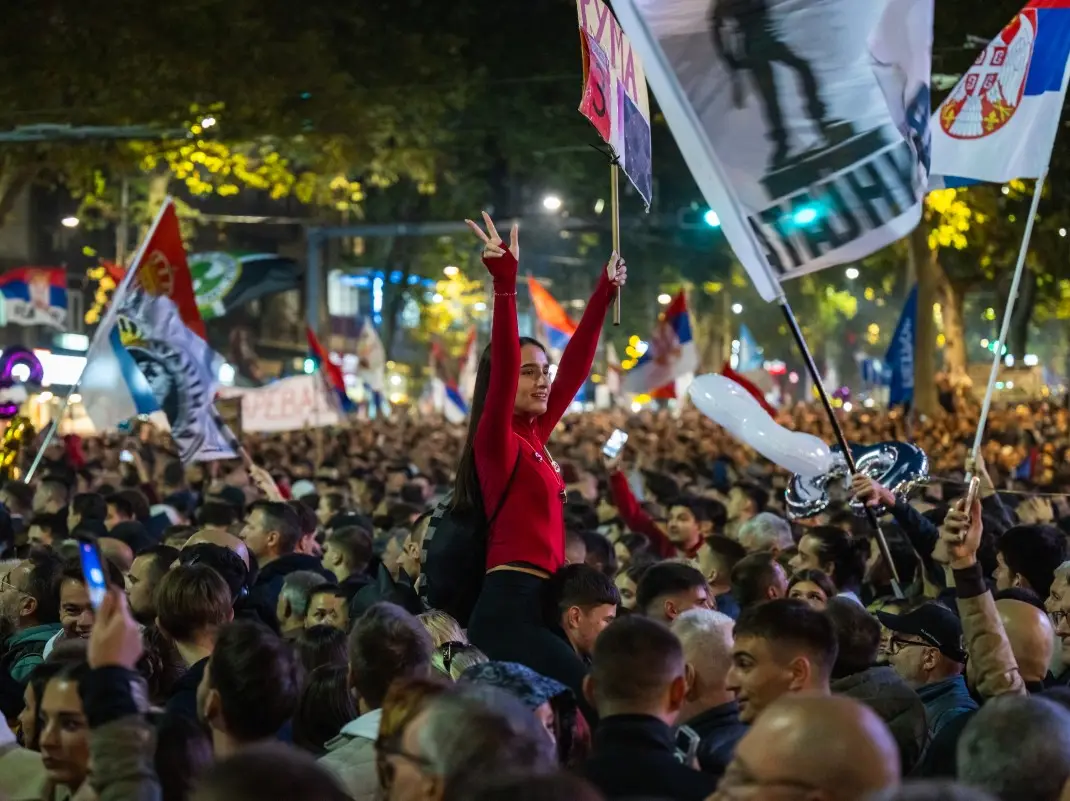
Serbia elections: Nearly 150,000 people take to streets in massive rally against Aleksandar Vucic | In pics

Around 150,000 people rallied in Belgrade behind Serbia’s student-led opposition movement ahead of a crucial parliamentary election challenging Aleksandar Vucic
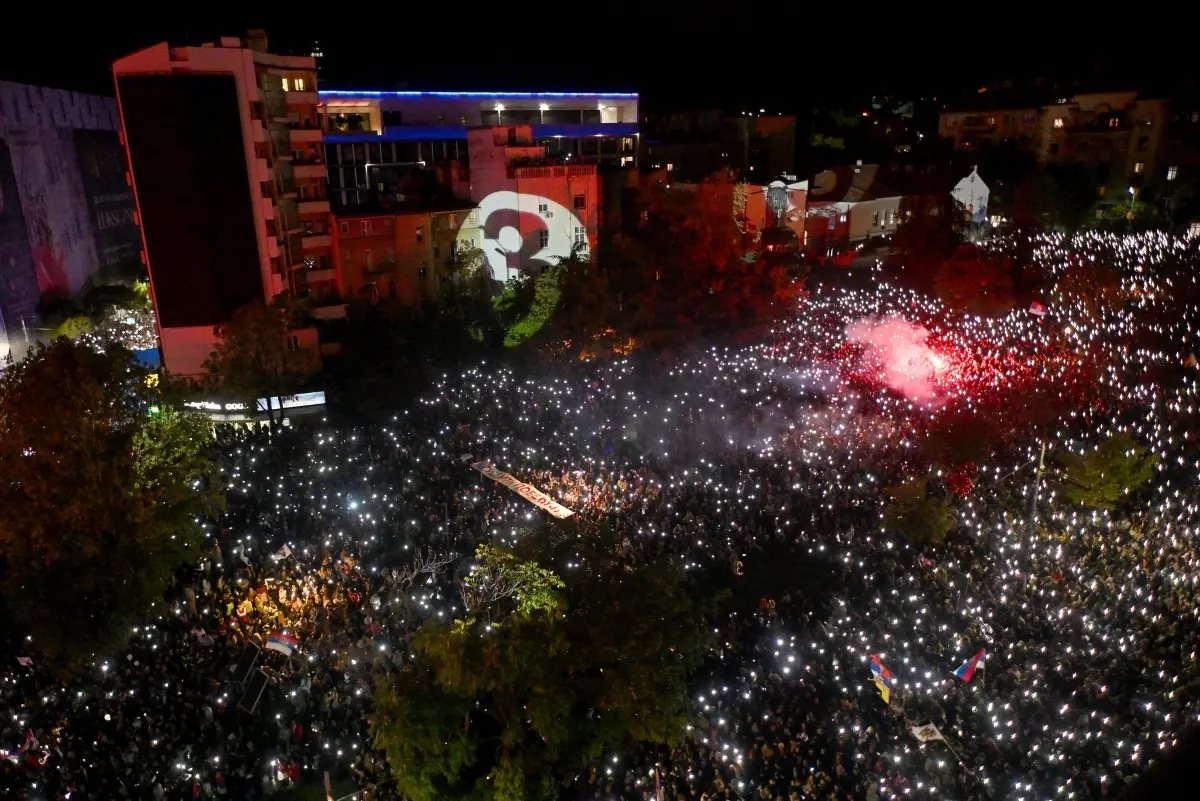
150,000 rally in Belgrade as Serbia’s students challenge Vucic
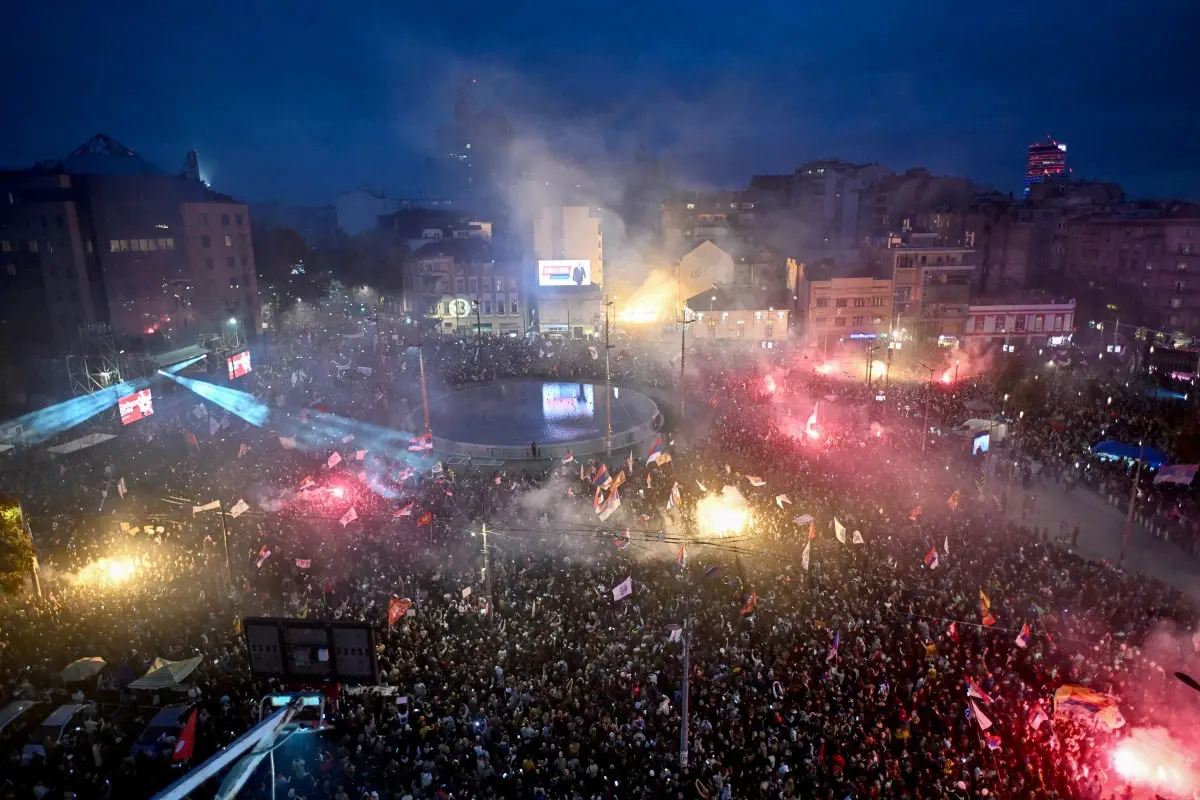
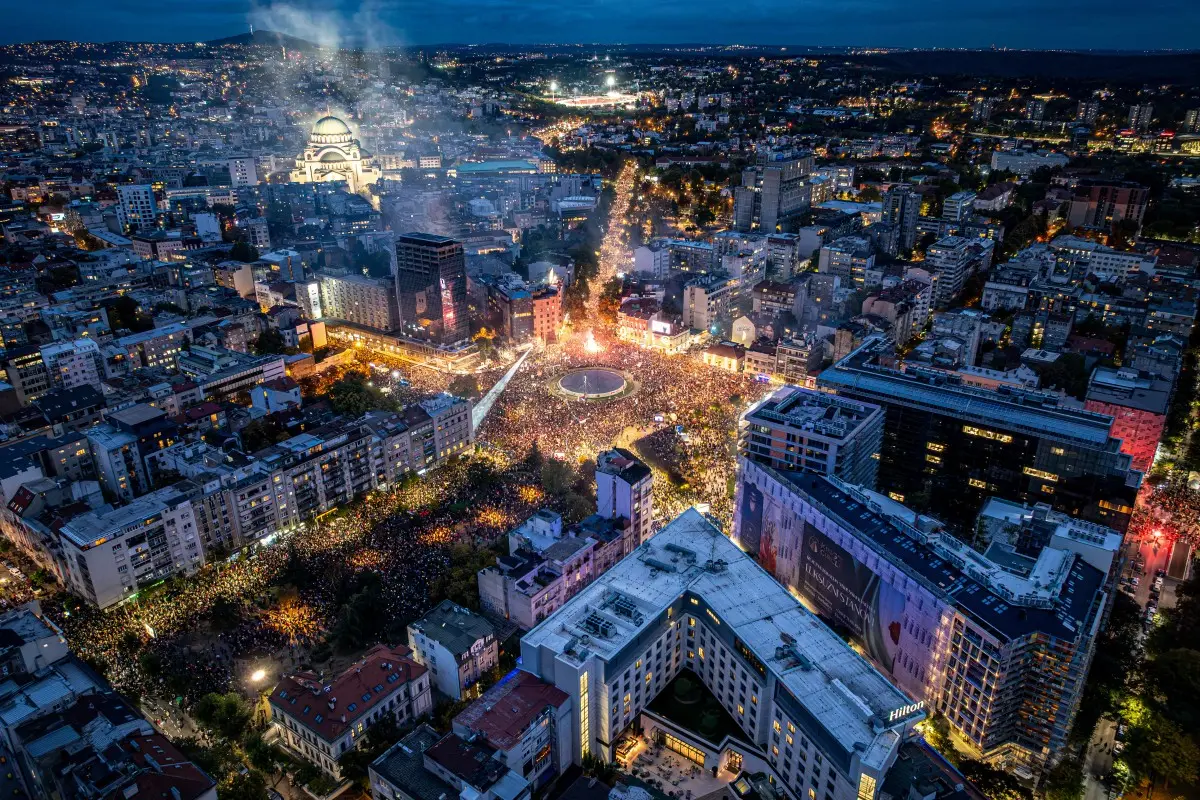
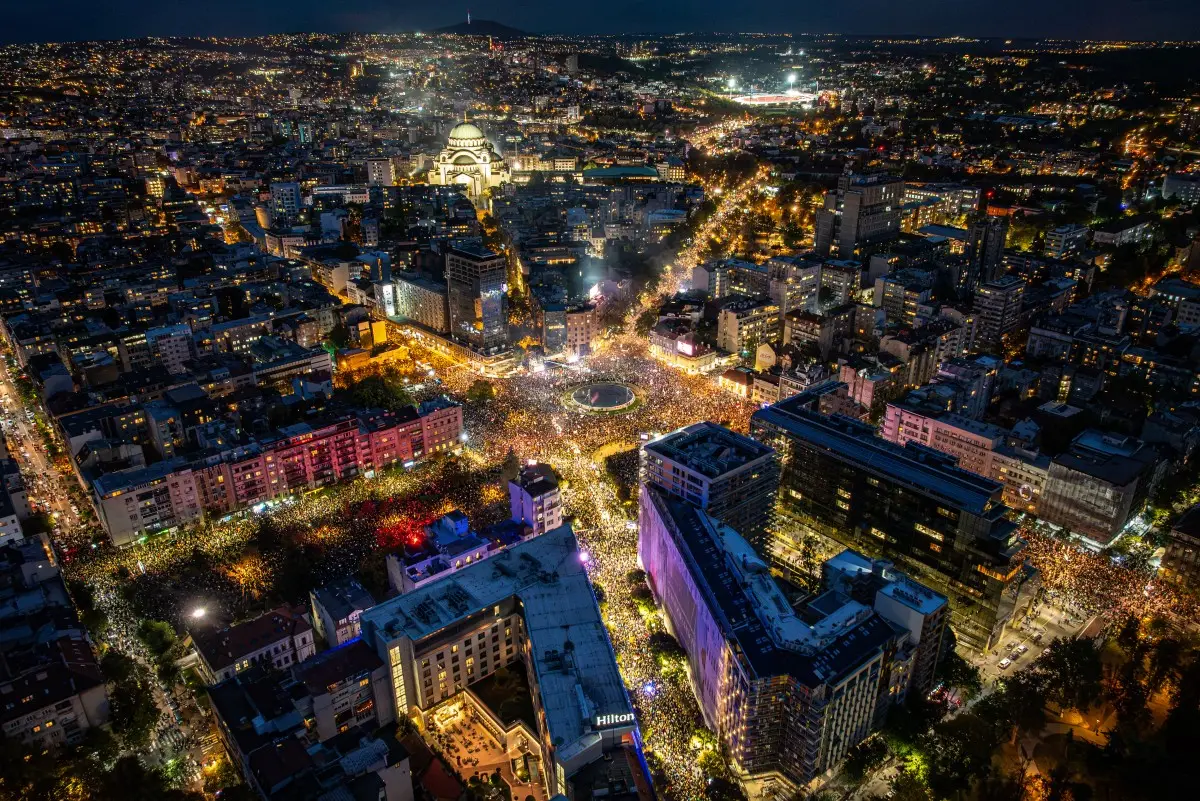
Around 150,000 supporters of Serbia’s opposition student movement gathered in central Belgrade on Thursday, according to the independent crowd-monitoring group the Archive of Public Gatherings. The rally came ahead of crucial parliamentary elections scheduled for Sunday, as the movement seeks to end more than 14 years of rule by President-turned-prime-minister candidate Aleksandar Vucic’s Serbian Progressive Party (SNS). The demonstration represented the biggest electoral challenge Vucic has faced since his party took power in 2012. Supporters gathered at Slavija Square and surrounding streets, expressing hope that the student-backed candidates could bring political change to Serbia.
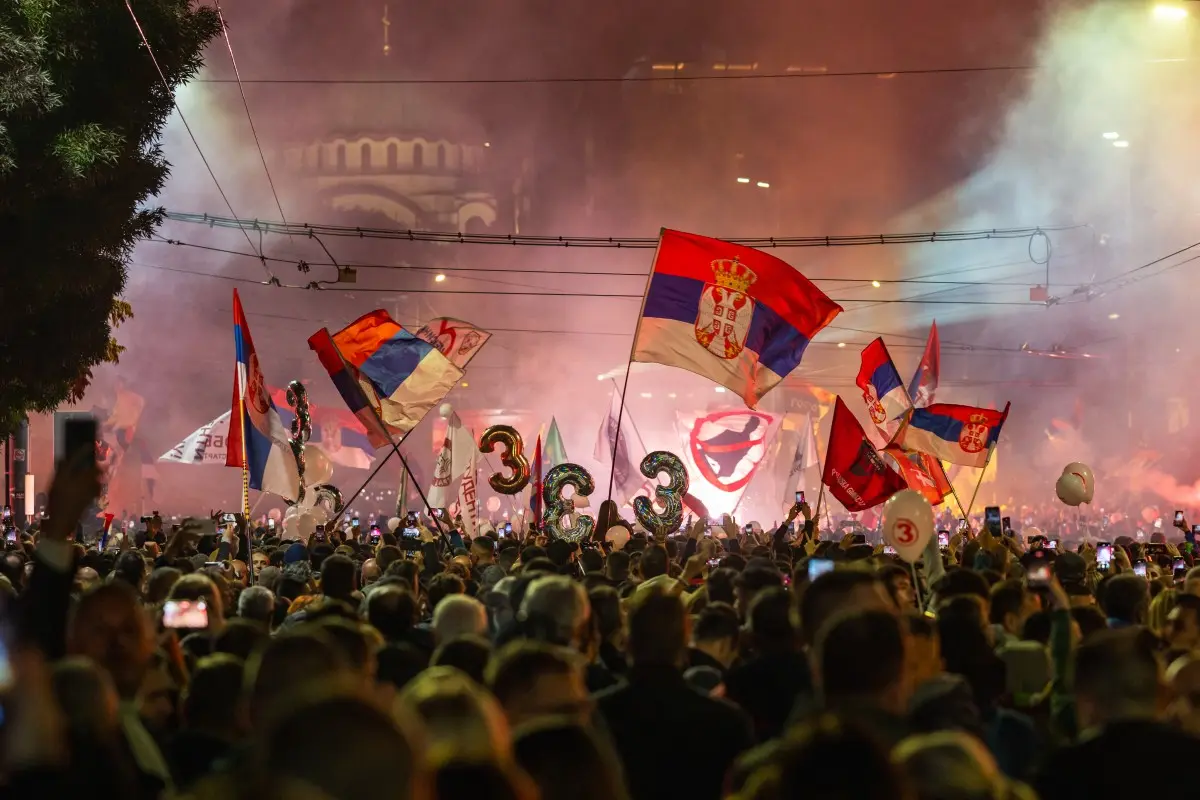
‘Students are winning’: Protesters fill Slavija Square
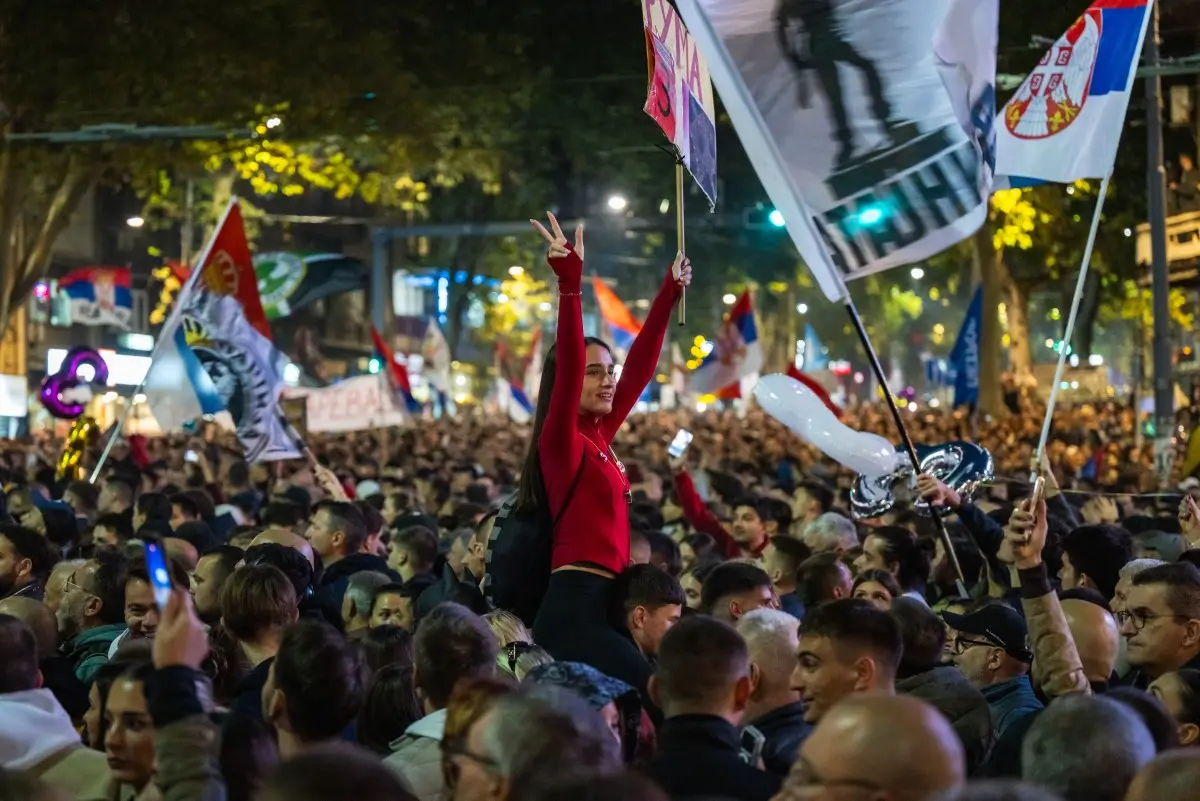
Students and their supporters marched through Belgrade, waving flags bearing the slogan “Students are winning”, chanting and blowing whistles before converging on Slavija Square. AFP reporters reported that demonstrators filled the square and nearby streets during the Thursday evening rally. The location has been the site of some of the movement’s largest protests. The demonstration reflected the growing mobilisation behind the Student List, a leaderless movement fielding student-backed candidates. The rally concluded with candidates stepping down from the stage into the crowd, holding copies of the Serbian constitution before joining supporters in a traditional folk dance.
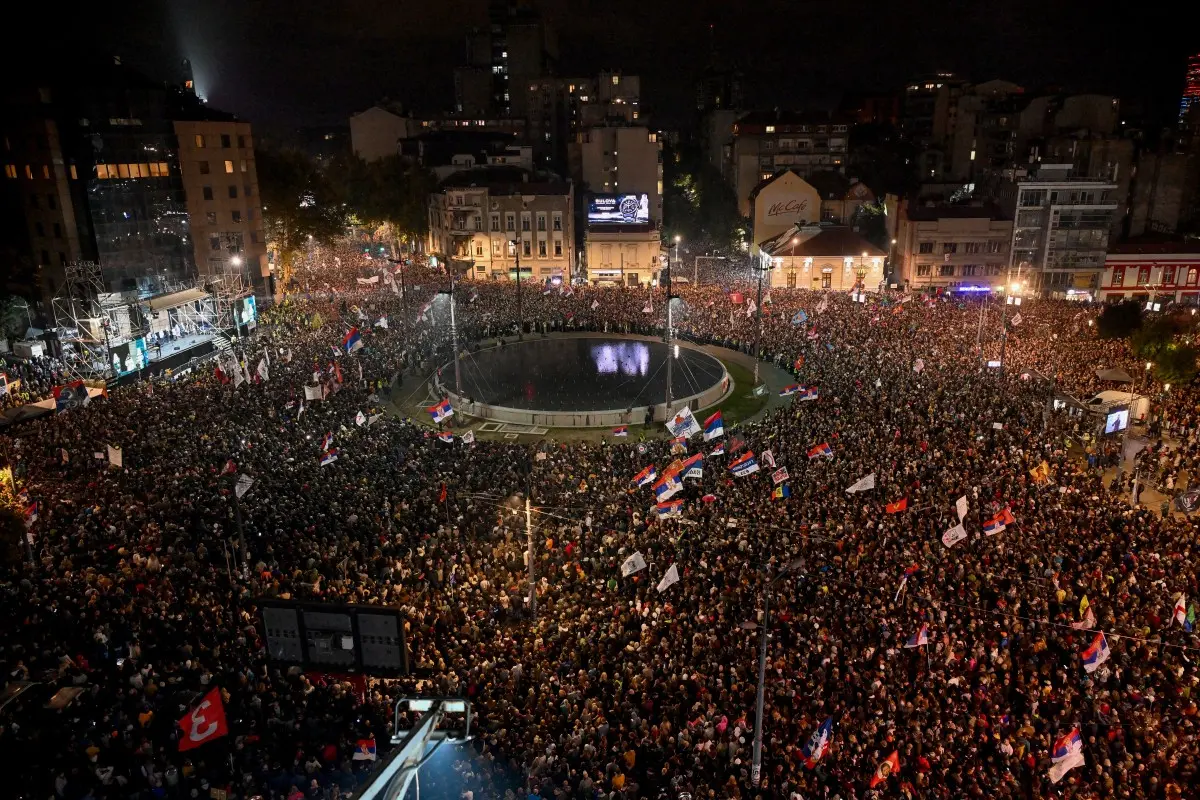
Novi Sad railway station tragedy sparked mass protests
Serbia’s student-led protest movement grew out of the 2024 collapse of a canopy at the newly renovated Novi Sad railway station, which killed 16 people. The tragedy, widely blamed on corruption, triggered some of the country’s largest demonstrations since the fall of Slobodan Milosevic in 2000. Initially, protesters demanded a transparent investigation into the disaster. Over nearly two years, the movement expanded into a broader anti-corruption campaign and calls for an early election. The demonstrations ultimately developed into a nationwide political challenge, with university students backing candidates seeking to replace the governing Serbian Progressive Party.
Who are the student list candidates challenging Vucic?
The Student List is a leaderless movement of student-backed candidates seeking to unseat Serbia’s long-dominant governing party. Its 250 candidates are contesting all 250 seats in parliament, with many drawn from academia or deliberately positioned as political outsiders. The movement’s broad platform centres on a pledge to fight corruption, an issue that gained prominence following the Novi Sad railway station disaster. At the Belgrade rally, university professor Jugoslav Gasic, one of the candidates, told supporters they deserved better leadership and pledged to put an end to what he described as years of humiliation, chaos and betrayal.
Vucic urges supporters to defeat Opposition movement
Aleksandar Vucic has dominated Serbian politics for more than a decade, serving as either prime minister or president. Under mounting pressure, he announced a snap parliamentary election last month, setting up his biggest electoral challenge since the Serbian Progressive Party came to power in 2012. Vucic addressed his supporters at a sports hall in Belgrade on Thursday, accusing the student movement of being a foreign-funded coup attempt. He urged his supporters to defeat the opposition decisively. The 56-year-old resigned to run for prime minister, making the weekend vote a crucial test of his party’s continued political dominance.
Election outcome uncertain as polls offer conflicting signals
Serbia lacks reliable independent polling, and surveys have produced widely differing predictions for Sunday’s parliamentary election. Political scientist Dusan Vucicevic of Belgrade University told AFP that predicting the outcome was difficult. However, he expected the Student List to win more than 40 per cent of the vote, which would represent a significantly stronger result than any opposition list had achieved since the Serbian Progressive Party took power. The movement’s candidates are campaigning on an anti-corruption platform, while Vucic’s party is seeking to maintain its hold on government. The election will test the extent of the student movement’s electoral support.
Threats and intimidation raise concerns ahead Of Serbia vote
Serbian civil society groups have warned that conditions for free and fair elections are lacking, citing documented findings from independent organisations. A joint statement by 24 groups said concerns went beyond isolated incidents or political disagreements, pointing to allegations of intimidation, arrests, attacks, misuse of public resources and a distorted media environment. On Wednesday, Belgrade prosecutors questioned six people arrested on suspicion of plotting violence, riots and attacks on election day. Reports of threats against student demonstrators have increased in recent months, although their rallies have remained largely peaceful. Protesters urged supporters to turn out at polling stations on Sunday.