French President Emmanuel Macron names Elisabeth Borne as France's new prime minister

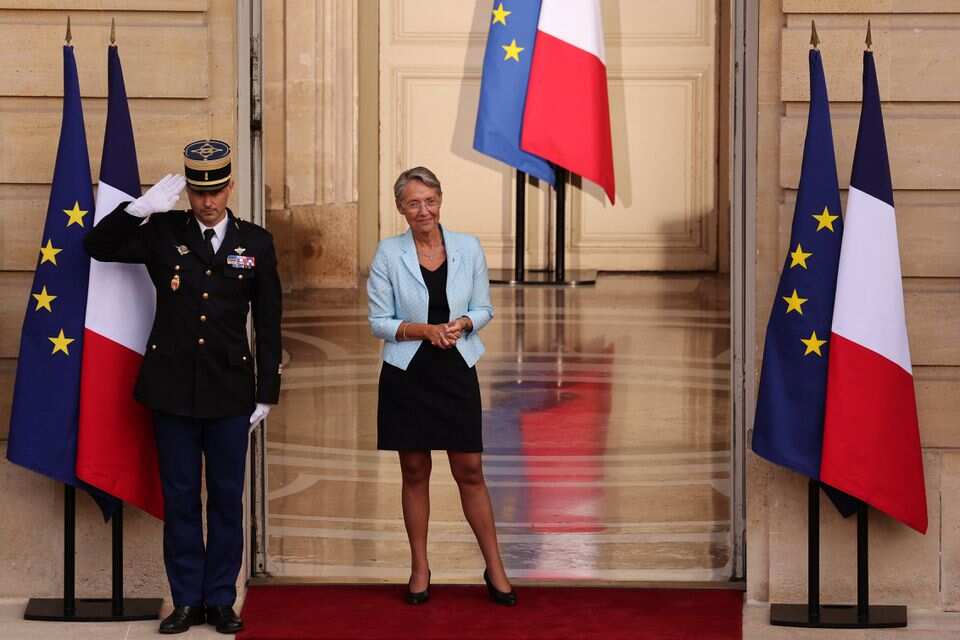
Elisabeth Borne
On Monday(May 16), French President Emmanuel Macron named Elisabeth Borne as the country's new prime minister.She is the first woman to lead the French government since 1992 and only the second woman to hold the office.
Following Macron's re-election last month, Borne succeeds Jean Castex, whose resignation paved the path for a cabinet reshuffle.
She will want to have a bigger impression than France's first female prime minister, Edith Cresson, who served under President Francois Mitterrand for less than a year before resigning amid a corruption scandal.

At the transition of power ceremony, Castex called Borne "Madame la Premiere Ministre" with a broad smile, before warning:
"The role [of prime minister] is not exempted from public exposure and criticism, dear Elisabeth, people even say that's what it had been created for," Castex said of what the French often refer to as the "job from hell," working to implement plans on behalf of an ever-present president.
Borne's profile is likely to help Macron appeal to radical-left voters who supported Jean-Luc Melenchon in the first round of the presidential election in April, while avoiding upsetting followers of Marine Le Pen on the right.
&imwidth=180&imheight=135&format=webp&quality=medium)
Viral video shows cross falling on Colombia priest, no official confirmation | WATCH
&imwidth=180&imheight=135&format=webp&quality=medium)
Rafale Marine fighter begins flight trials in Goa ahead of Indian Navy induction
&imwidth=180&imheight=135&format=webp&quality=medium)
Ranbir Kapoor apologises for Dussehra speech slip, clarifies remark at Ramayana event
&imwidth=180&imheight=135&format=webp&quality=medium)
Meta slapped with $25 billion fine in New Mexico over Facebook data practices, company plans appeal
&imwidth=180&imheight=135&format=webp&quality=medium)
WATCH: Woman IPS officer fires several rounds of AK-47, ignites debate online
&imwidth=180&imheight=135&format=webp&quality=medium)
WATCH | Mysterious haze grips Ohio city as toxic chemical leak forces mass evacuation – What is happening?
&imwidth=180&imheight=135&format=webp&quality=medium)
EU probes Booking.com under Digital Services Act
&imwidth=180&imheight=135&format=webp&quality=medium)
Pakistan signs another defence pact even as Makkah Alliance shows no teeth. This time, it's with Qatar, Indonesia, Turkey
&imwidth=180&imheight=135&format=webp&quality=medium)
Ilhan Omar breaks silence over alleged marriage to her brother; Trump thinks it's 'really good answer'
&imwidth=180&imheight=135&format=webp&quality=medium)
US-Iran war: Bibi, Trump gamble on new Iran war to save themselves in polls
&imwidth=180&imheight=135&format=webp&quality=medium)
From Agni-V to Project Kusha: How are India’s indigenous missile systems and defence shield reshaping modern warfare
&imwidth=180&imheight=135&format=webp&quality=medium)
Will Rohit and Kohli play ODI World Cup 2027? BCCI president Manhas says board 'not in a position to comment'
&imwidth=180&imheight=135&format=webp&quality=medium)
Why websites around the world are suddenly going offline? What you need to know about PHP
&imwidth=180&imheight=135&format=webp&quality=medium)
US midterms 2026: What polls and prediction markets indicate about Congress
&imwidth=180&imheight=135&format=webp&quality=medium)
'You are a dummy, you are a stupid person': Trump loses temper with CNN, ABC reporters after questions about Russia sanctions
&imwidth=180&imheight=135&format=webp&quality=medium)
China's dancing robot turns violent bodyguard, lifts cars and fights intruders - Watch
&imwidth=180&imheight=135&format=webp&quality=medium)
16-foot doomsday fish in Chile triggers fears that the next earthquake is coming
&imwidth=180&imheight=135&format=webp&quality=medium)
Are the US and Israel preparing for another major attack on Iran? Here's what report claims
&imwidth=180&imheight=135&format=webp&quality=medium)
Priyanka Chopra celebrates Dussehra 2026 with Nick Jonas and daughter Malti Marie | See pics
&im=FitAndFill=(700,400)&imwidth=180&imheight=135&format=webp&quality=medium)
New OTT releases this week (October 19-25, 2026): Gajab Raat to Chaar Yaar-8 titles to watch during Dussehra week on Netflix, Prime Video and more
&imwidth=180&imheight=135&format=webp&quality=medium)
‘I caution the president...’: Trump’s ex-press secretary warns after Zacharia’s exit
&imwidth=180&imheight=135&format=webp&quality=medium)
'Father of all bombs' vs 'mother of all bombs': Iran threatens US with new weapon as Trump hints at MOAB strike
&imwidth=180&imheight=135&format=webp&quality=medium)
Diljit Dosanjh's Oct 30 Delhi show hits roadblock, Delhi Police denies permission
&imwidth=180&imheight=135&format=webp&quality=medium)
Australia police arrest former national 100m champ Jake Doran for alleged child abuse
&imwidth=180&imheight=135&format=webp&quality=medium)
'Gyanu must go': CJP's Saurav Das, Ashutosh Ranka after release, despite Jantar Mantar protest undertaking
&imwidth=180&imheight=135&format=webp&quality=medium)
Kolkata airport: CISF detects ₹1.13 crore in US dollars hidden in bags of 2 Bangkok-bound passengers
&imwidth=180&imheight=135&format=webp&quality=medium)
Feds obtain DNA evidence that could prove Ilhan Omar married her brother: Report
&imwidth=180&imheight=135&format=webp&quality=medium)
US midterms 2026: Trump's approval rating hits record low as Democrats gain ground
Her first responsibility would be to guide Macron's centrist coalition through the 2018 parliamentary election.
Despite her previous ties to the Socialist Party, Borne demonstrated her commitment to the president by serving as transport, environment, and eventually labour minister during his first term.
Unemployment dropped to its lowest level in 15 years under her control, and young unemployment dropped to its lowest level in 40 years.
Watch | Macron at the receiving end again: Last year egg, now tomatoes
Macron's choice of Borne was criticized by some left-wing politicians and their supporters. Firebrand far-left leader Jean-Luc Melenchon said her appointment marks "a new season of social and ecological mistreatment," claiming on Twitter that her legacy amounted to "a reduction in the allowances of 1 million unemployed people."
Borne's first mission will be to make sure that Macron's centrist party and its allies do well in France's parliamentary election in June. The vote, scheduled for two rounds, will determine which group holds the majority of seats at the National Assembly, which has the final say over the Senate in France's law-making process.
WATCH WION LIVE HERE