Headless comet? 'Other Atlas' could soon be all tail, no head as it zooms towards Earth

&imwidth=600&imheight=450&format=webp&quality=medium "Headless comet? 'Other Atlas' could soon be all tail, no head as it zooms towards Earth")
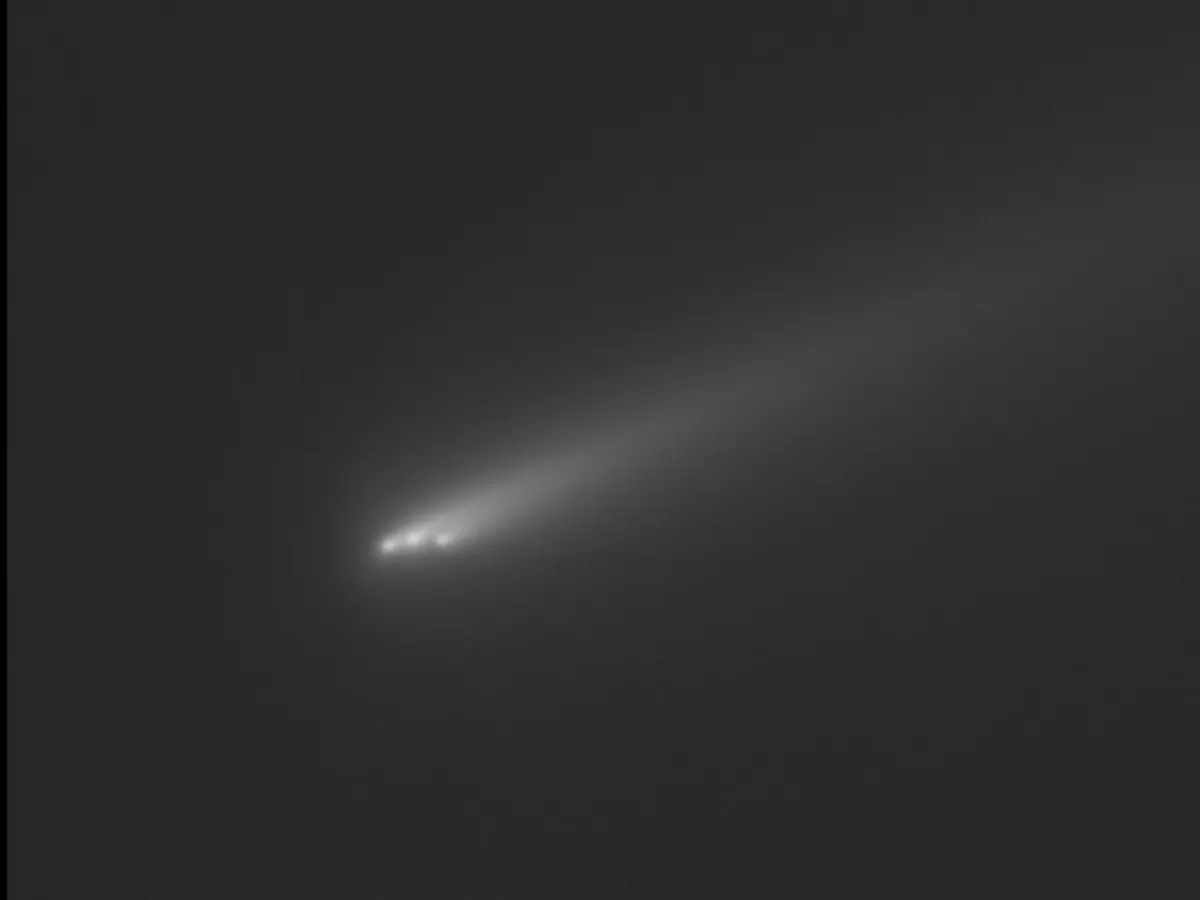
'Other Atlas' comet, C/2025 K1 ATLAS, has broken up further and might soon lose its head. Photograph: (Virtual Telescope Project)
The 'Other Atlas' comet, C/2025 K1 ATLAS, has broken further and now possibly has four fragments, according to the latest observations. Experts say that if it continues to disintegrate, it might turn into a “doomed comet”, one that has a tail but no head.
Comet C/2025 K1 ATLAS, dubbed the "other Atlas", is still breaking apart, with the latest images showing that it has possibly split into four pieces. Observations from the Virtual Telescope Project show that the golden comet is bearing the wrath of the radiation from the Sun, and pretty soon, a tail might be all that's left of it. The project shared the latest "sigma-clipping combination of 7, 60-second unfiltered exposures" on November 18. It tracked the main fragments of the nucleus that were observed and tracked a few days ago, "with hints of a possible fourth piece." Several other observations also captured the comet with a broken nucleus. The Astronomers Telegram reported on November 10 that K1/ATLAS had two bright outbursts between October 31 and November 4. The Hubble Space Telescope later captured four glowing fragments within the coma. These pieces were likely formed when the comet exploded, which is when it also became extremely bright.
If it continues to undergo such disintegration, K1/ATLAS might lose its nucleus completely, turning into a headless comet with only a tail. We have had such doomed comets before as well, with C/2024 G3 (ATLAS) being the most recent one.
How to see ‘Other Atlas’ comet K1/ATLAS
The comet is quite bright and is a 10th-magnitude object in the morning sky. To locate it, look towards Ursa Major at around 2 am. By November 20, it is expected to remain visible throughout the night.
Trending Stories
&imwidth=280&imheight=210&format=webp&quality=medium)
&imwidth=280&imheight=210&format=webp&quality=medium)
&imwidth=280&imheight=210&format=webp&quality=medium)
&imwidth=280&imheight=210&format=webp&quality=medium)
&imwidth=280&imheight=210&format=webp&quality=medium)
&imwidth=280&imheight=210&format=webp&quality=medium)
&imwidth=280&imheight=210&format=webp&quality=medium)
&imwidth=280&imheight=210&format=webp&quality=medium)
&imwidth=280&imheight=210&format=webp&quality=medium)
&imwidth=280&imheight=210&format=webp&quality=medium)
&imwidth=280&imheight=210&format=webp&quality=medium)
&imwidth=280&imheight=210&format=webp&quality=medium)
&imwidth=280&imheight=210&format=webp&quality=medium)
&imwidth=280&imheight=210&format=webp&quality=medium)
&imwidth=280&imheight=210&format=webp&quality=medium)
&im=FitAndFill=(700,400)&imwidth=280&imheight=210&format=webp&quality=medium)
&imwidth=280&imheight=210&format=webp&quality=medium)
&imwidth=280&imheight=210&format=webp&quality=medium)
&imwidth=280&imheight=210&format=webp&quality=medium)
&imwidth=280&imheight=210&format=webp&quality=medium)
&imwidth=280&imheight=210&format=webp&quality=medium)
&imwidth=280&imheight=210&format=webp&quality=medium)
&imwidth=280&imheight=210&format=webp&quality=medium)
&imwidth=280&imheight=210&format=webp&quality=medium)
&imwidth=280&imheight=210&format=webp&quality=medium)
&imwidth=280&imheight=210&format=webp&quality=medium)
&imwidth=280&imheight=210&format=webp&quality=medium)
&im=FitAndFill=(700,400)&imwidth=280&imheight=210&format=webp&quality=medium)
&imwidth=280&imheight=210&format=webp&quality=medium)
&imwidth=280&imheight=210&format=webp&quality=medium)
&imwidth=280&imheight=210&format=webp&quality=medium)
&imwidth=280&imheight=210&format=webp&quality=medium)
&imwidth=280&imheight=210&format=webp&quality=medium)
&imwidth=280&imheight=210&format=webp&quality=medium)
&imwidth=280&imheight=210&format=webp&quality=medium)
When will the ‘Other Atlas’ come near Earth?
Comet K1/ATLAS originated in the Oort Cloud, the most distant region of the solar system. It reached its closest point to the Sun on October 8, brushing past our star at a distance of 49 million kilometres. It wasn't expected to survive this encounter as the gravitational pull of the Sun was expected to tear it to shreds. But it made it out safely and is now zooming towards Earth. Recent observations showed it had broken into at least three pieces. Following its meeting with the Sun, it turned golden, a rare occurrence for comets. But now it is at risk of becoming all tail, no head. Astronomers will continue to monitor C/2025 K1 as it travels towards Earth. On November 25, it will be 60 million km away from Earth. The Virtual Telescope Project has planned a live stream on this day.

