Aliens cannot live on a planet where this one element is present, scientists say

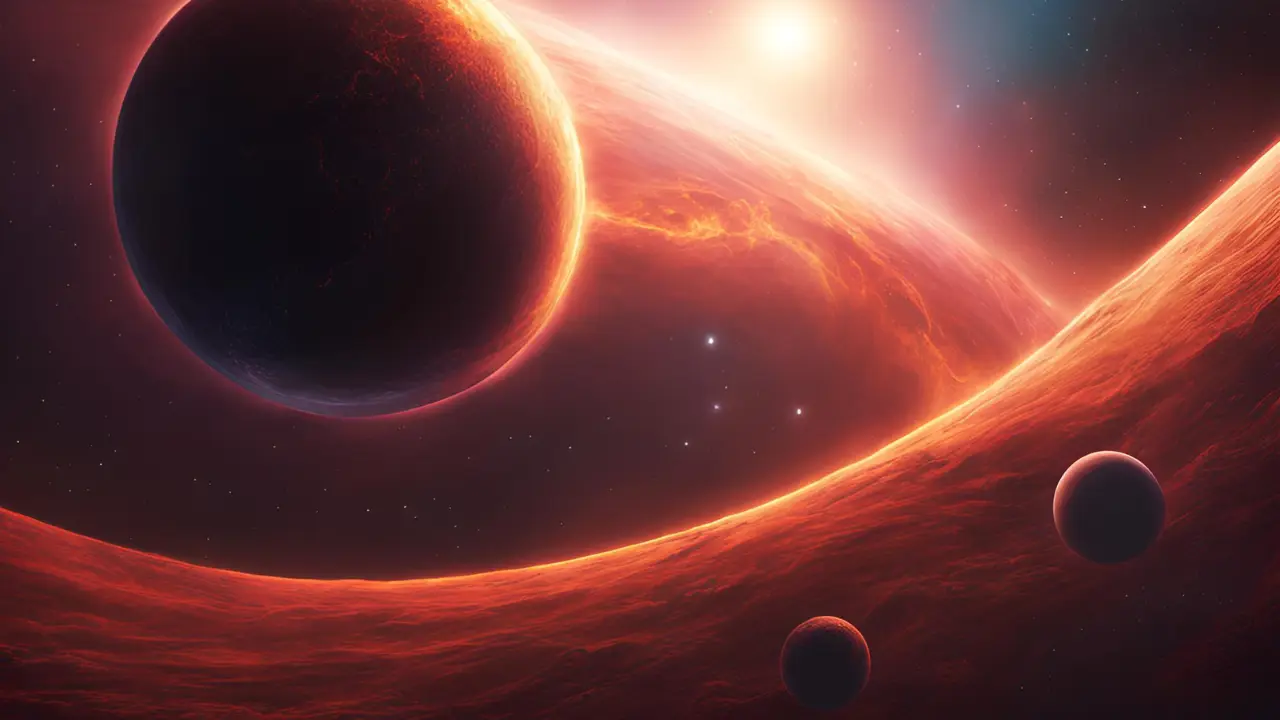
Science & Tech News - Space News - Alien life might exist somewhere in the universe, but we still don't know for sure. However, there is one way to know where it might not exist.
Scientists have been for years trying to find alien life in the vast expanse of the universe. Several probes have been launched that are still drifting in space and dozens of high-end telescopes aim to learn the possibility of life on another planet. While we are still waiting to learn if someone else is out there or not, astronomers have now cancelled out certain bodies where life can never exist so no time needs to be wasted in exploring such exoplanets.
Sulfur has emerged as the key in this case, with scientists saying that its existence on a planet is a clear indication that it is uninhabited. So, such a body can instantly be struck off the list of potential candidates where life might exist.
Searching for life through biosignatures
Right now, the way to know about the existence of life on another planet is through the presence of biosignatures, the atmospheric gases produced by life, on a planet. The problem is that it is not possible for high-end equipment, such as the James Webb Space Telescope, to identify biosignatures on nearby planets. The Habitable Worlds Observatory, which will soon be up and running, would be able to scan only a few potentially habitable exoplanets.
Looking for water vapour
Trending Stories
)
)
)
)
)
)
)
)
)
)
&im=FitAndFill=(700,400))
&im=FitAndFill=(700,400))
)
)
)
)
)
)
)
)
)
)
)
)
&im=FitAndFill=(700,400))
)
)
&im=FitAndFill=(700,400))
)
Instead of searching for biosignatures, scientists are focussing on a planet's ability to host life. Looking for the presence of water vapour in its atmosphere is one such way. If a planet has a lot of water vapour, the chances of it being able to host life are high.
Also Read: 'Cloudgazing on Mars': NASA's Curiosity rover captures colourful clouds on Mars
But this method also has a hindrance. Some planets, like Earth and Venus, appear to be similar when looked at from great distances. However, we know that they are not the same. Venus has a thick atmosphere, with temperatures reaching over 800 degrees Fahrenheit (427 degrees Celsius) and a hostile environment.
Clue for alien life lies in one gas
In this quest, a new preprint paper suggests looking for sulfur dioxide. Earth is warm and wet where rains wash away sulfur dioxide from the atmosphere. So the presence of this gas becomes a good indication of life when looking outwards. However, a small twist in the tale here is that even Venus has very little sulfur in its upper atmosphere. This is because ultraviolet radiation from the sun leads to reactions that convert sulfur dioxide to hydrogen sulfide. It moves downwards into the lower atmosphere, where it can't be detected.
When looking for life elsewhere, red dwarfs offer a solution to the above glitch. They emit very little ultraviolet radiation and a dry, uninhabitable planet around a red dwarf would hence have a lot of sulfur dioxide in its upper atmosphere. Red dwarfs are present in abundance not only in our galaxy but also in our nearest neighbours, Proxima Centauri and TRAPPIST-1. Many of them host planets as well. This makes the sulfur equation a practical way to strike out candidates when looking for otherworldly life.
It cannot tell where life exists, but it can tell where life doesn't exist. A planet revolving around a red dwarf and containing lots of sulfur can immediately be ignored as a potential candidate for hosting life.