When Mysore's young maharaja made India fly: The forgotten hero of our aviation story

&imwidth=600&imheight=450&format=webp&quality=medium "When Mysore's young maharaja made India fly: The forgotten hero of our aviation story")
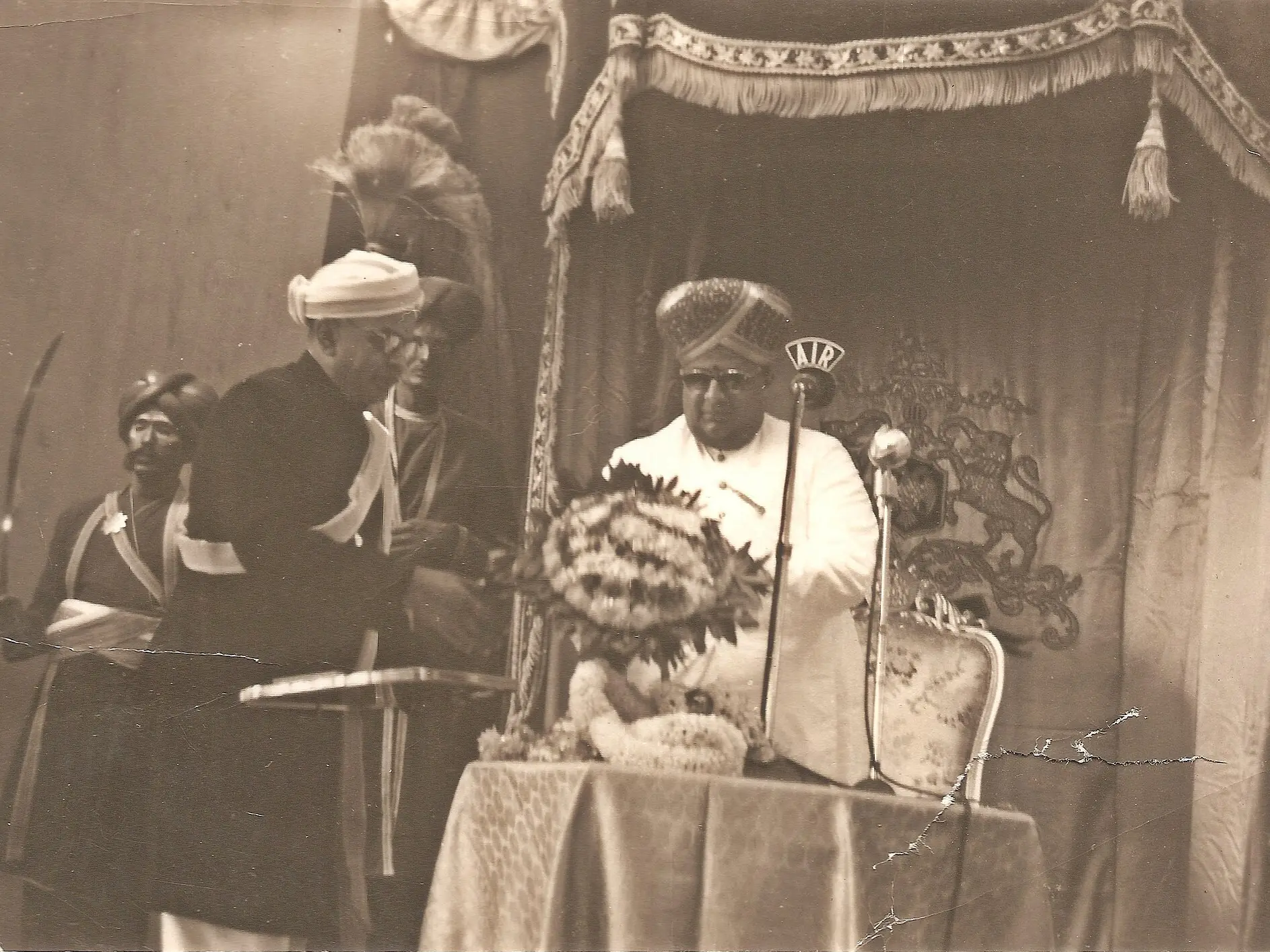
Indian politician T Madiah Gowda giving book to Maharaja of Mysore Jayachamarajendra Wadiyar during inauguration of Mysore state adult education council. Photograph: (Wikimedia Commons)
Maharaja Jayachamarajendra Wadiyar didn't just make India fly – he made India believe it could fly. In a world where profit often trumps patriotism, his story reminds us that true leadership sometimes means choosing national interest over personal gain.
As the roar of aircraft engines fills the skies over Mysore during Dasara 2025's spectacular aeroshow, few spectators will know they are witnessing a tribute to one of India's most overlooked heroes. The thunderous display above is not just entertainment – it's a long-overdue salute to Maharaja Jayachamarajendra Wadiyar, the visionary young royal who literally made India's aviation dreams take flight.
The Man Who Said Yes When Everyone Else Said No
Picture this: It's 1940, and India has no aircraft manufacturing capability. American businessman William Pawley and Indian industrialist Walchand Hirachand have a revolutionary idea – build planes in India. They approach multiple maharajas across the country, seeking support for this ambitious venture.
The rulers of Baroda, Gwalior, and Bhavanagar all decline. Even shareholders of established companies reject the proposal as too risky. But when they reach Mysore in October 1940, something extraordinary happens. The 27-year-old Maharaja Jayachamarajendra Wadiyar, who had just ascended the throne barely a month earlier after his uncle Krishna Raja Wadiyar's death, sees what others cannot – the future of Indian aviation.
From Tragedy to Vision in Record Time
The young Maharaja had inherited his throne on September 8, 1940, following his uncle's death on August 3. Within weeks of becoming ruler, he faced a decision that would shape India's industrial future. When Walchand and Pawley landed in Bangalore that October, they found not just a willing partner, but a visionary leader ready to bet his kingdom's resources on an impossible dream.
Trending Stories
)
)
)
)
)
)
)
)
)
)
)
)
)
)
&im=FitAndFill=(700,400))
)
)
)
)
)
)
)
)
&im=FitAndFill=(700,400))
)
)
)
)
)
)
)
)
)
)
)
)
)
)
)
)
What happened next reads like a business miracle. The project had already received British approval in July 1940 within 72 hours of Pawley's presentation at Simla. But it was the young Maharaja's decisive support that transformed possibility into reality.
The Speed of Royal Vision
The Maharaja didn't just offer symbolic support. He gave 700 acres of prime land absolutely free, invested a massive Rs. 25 lakhs (equivalent to hundreds of crores today), and provided complete governmental backing. The Mysore Government Order No: D 3663-372/10C 216-40-16 dated February 11, 1941, made it official.
On December 23, 1940, Hindustan Aircraft Company was incorporated under the Mysore Companies Act. Work began the very next day on December 24. The foundation was laid on January 12, 1941. Within just three weeks, the first building and runway were ready. By August 29, 1941, the company handed over its first Harlow trainer aircraft to the Government of India.
This wasn't just fast – it was lightning speed in an era without modern construction equipment or communication technology. The young Maharaja's administration moved with urgency that would make today's startup founders envious.
A Patriot's Sacrifice Over Profit
When Pearl Harbour changed the war's trajectory in December 1941, and attacks on India became a real threat, the Government of India decided to take complete control of the facility. While private investor Walchand made a handsome profit of Rs. 57 lakhs on his Rs. 25 lakh investment, the Maharaja's approach was strikingly different.
In April 1942, when GOI bought out Walchand's shares for Rs. 82.11 lakhs, the Maharaja refused to sell his stake. Instead, he handed over complete control to the Government of India until "2 years after end of war," asking only for a modest solatium of Rs. 12.11 lakhs to cover sterilised interest during wartime. His priority wasn't profit – it was national service.
The factory became the 84th Air Depot under the United States Army Air Forces, rapidly expanding to become one of the largest aircraft overhaul and repair organisations in the East. From April 1946, Mysore State again became an active partner until the final transition.
The Birth of HAL and a Forgotten Legacy
On October 1, 1964, Hindustan Aircraft Limited merged with Aeronautics India Limited to form Hindustan Aeronautics Limited (HAL). This merger created one of Asia's largest aerospace companies, but it also buried the memory of its royal founder.
Today, HAL operates 11 research centers, 21 manufacturing divisions, and has an annual turnover exceeding $3 billion. Yet when we celebrate HAL as a symbol of Indian aerospace prowess, we rarely remember its origins. HAL's official records acknowledge the company was established "in association with the Kingdom of Mysore," but they fail to properly honour Maharaja Jayachamarajendra Wadiyar – the visionary who provided the land, investment, and unwavering support that made Indian aviation possible.
This historical amnesia is not just unfair – it's a disservice to understanding how modern India was built. The young Maharaja didn't just invest money; he invested faith in India's industrial future when few others dared to dream so big.
The Ultimate Homecoming
The Mysore Dasara 2025 aeroshow is more than a spectacular display of aerobatic skills and modern aircraft. It's the ultimate homecoming celebration – aircraft returning to the skies above the land where Indian aviation was born 84 years ago, and where HAL took its final form 61 years ago in 1964.
As we watch pilots perform death-defying stunts and marvel at cutting-edge fighter jets, let's remember the 27-year-old Maharaja who, barely a month into his reign, bet his kingdom's resources on a crazy idea called "manufacturing aircraft in India." His vision soared higher than any plane that flies today.
Maharaja Jayachamarajendra Wadiyar didn't just make India fly – he made India believe it could fly. In a world where profit often trumps patriotism, his story reminds us that true leadership sometimes means choosing national interest over personal gain.
That legacy deserves to be remembered, celebrated, and honoured every time an Indian aircraft takes to the skies. The aeroshow over Mysore isn't just about the present – it's a tribute to the past that made our aviation future possible.
