Russia completes delivery of 'TVS-2M' Nuclear fuel to India

&imwidth=600&imheight=450&format=webp&quality=medium "Russia completes delivery of 'TVS-2M' Nuclear fuel to India")
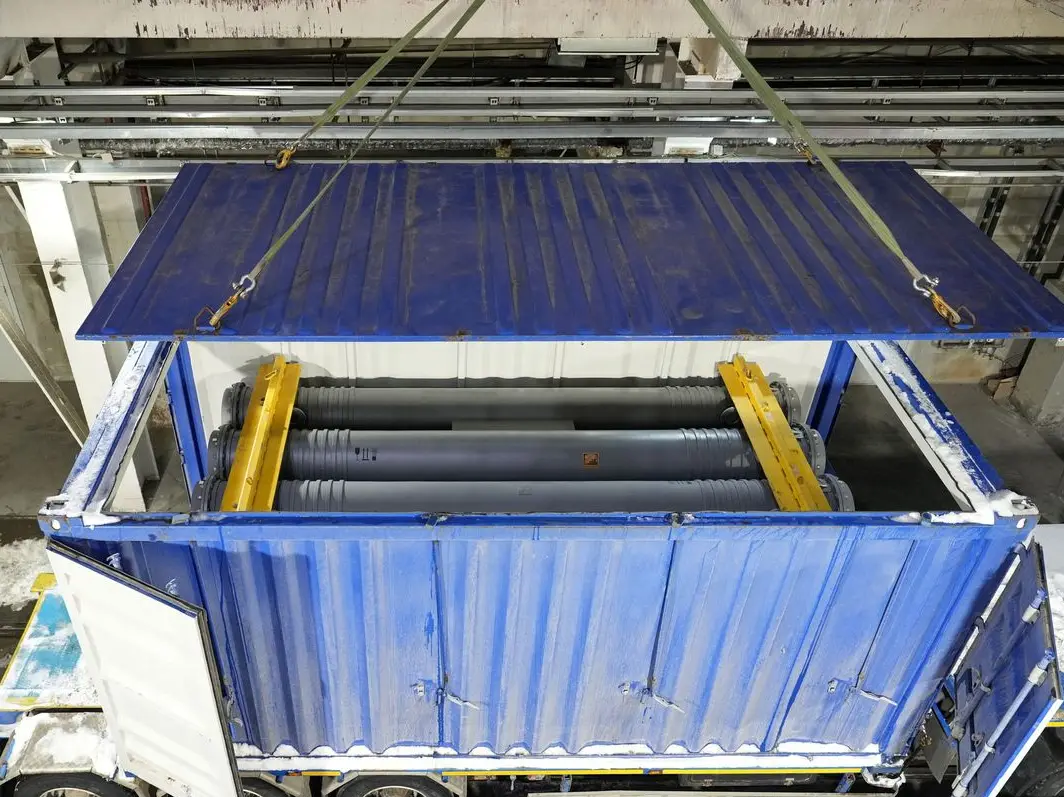
Russian Nuclear power agency Rosatom has delivered the entire quantity of 'TVS-2M'type Nuclear fuel required for the initial loading of Unit-3 at India's Kudankulam Nuclear Power plant.
The Indo-Russian KKNPP at Kudankulam in the Southern Indian state of Tamil Nadu is India's largest Nuclear power generation facility.
RussianNuclear Power agency Rosatom announced that it has supplied the entire quantity of 'TVS-2M' type of nuclear fuel for the initial loading of the VVER-1000 reactor core at Unit 3 of the Kudankulam Nuclear Power Plant(KKNPP) in India. The fuel, including the initial reactor loading and some reserve assemblies, was manufactured by the Novosibirsk Chemical Concentrates Plant (a facility of Rosatom’s Nuclear Fuel Division). The shipment is provided under the contract covering full lifetime fuel supply for Units 3 and 4. The Indo-Russian KKNPP at Kudankulam in the Southern Indian state of Tamil Nadu is India's largest Nuclear power generation facility.
Of the KKNPP's six VVER-1000 reactors, units 1 and 2 were connected to India’s national power grid in 2013 and 2016 respectively, and currently supply electricity to the southern regions of the country.
Unit 3 is in the pre-commissioning phase, and Units 4,5,6 are in various stages of construction. Each of these reactors can generate 1000Megawatts of power. When fully operational, KKNPP would generate about 6,000Megawatts of power. At present, KKNPP generates 2,000Megawatts, which is about one-fourth of India's total Nuclear power generating capacity. In November 2025, Rosatom had announced that preparations are underway for one of the key milestones- testing of safety systems on an open reactor at Unit 3 of KKNPP.
Kudankulam Unit 3 to use longer-lasting Nuclear fuel
According to Rosatom, during the operation of Units 1 & 2 of the KKNPP, Russian and Indian engineers have worked towards increasing the reactors' efficiency through the introduction of advanced nuclear fuel and extended fuel cycles.
Starting from 2022, the KKNPP is supplied with nuclear fuel of the 'TVS-2M' model. It provides more reliable and cost-effective reactor operation due to its rigid design, a new generation anti-debris filter and an increased mass of uranium. Its introduction has also enabled elongation of the fuel cycle of the reactors from 12 to 18 months, so the power units are being stopped less frequently for fuel re-load. Earlier, the reactors had to be refuelled every year, but now they need to be refuelled only once in 18 months, offering increased runtime after every refuelling.
Trending Stories
&imwidth=280&imheight=210&format=webp&quality=medium)
&imwidth=280&imheight=210&format=webp&quality=medium)
&imwidth=280&imheight=210&format=webp&quality=medium)
&imwidth=280&imheight=210&format=webp&quality=medium)
&imwidth=280&imheight=210&format=webp&quality=medium)
&imwidth=280&imheight=210&format=webp&quality=medium)
&im=FitAndFill=(700,400)&imwidth=280&imheight=210&format=webp&quality=medium)
&imwidth=280&imheight=210&format=webp&quality=medium)
&imwidth=280&imheight=210&format=webp&quality=medium)
&imwidth=280&imheight=210&format=webp&quality=medium)
&imwidth=280&imheight=210&format=webp&quality=medium)
&imwidth=280&imheight=210&format=webp&quality=medium)
&imwidth=280&imheight=210&format=webp&quality=medium)
&imwidth=280&imheight=210&format=webp&quality=medium)
&imwidth=280&imheight=210&format=webp&quality=medium)
&imwidth=280&imheight=210&format=webp&quality=medium)
&imwidth=280&imheight=210&format=webp&quality=medium)
&imwidth=280&imheight=210&format=webp&quality=medium)
&imwidth=280&imheight=210&format=webp&quality=medium)
&imwidth=280&imheight=210&format=webp&quality=medium)
&imwidth=280&imheight=210&format=webp&quality=medium)
&imwidth=280&imheight=210&format=webp&quality=medium)
&imwidth=280&imheight=210&format=webp&quality=medium)
&imwidth=280&imheight=210&format=webp&quality=medium)
&im=FitAndFill=(700,400)&imwidth=280&imheight=210&format=webp&quality=medium)
&imwidth=280&imheight=210&format=webp&quality=medium)
&imwidth=280&imheight=210&format=webp&quality=medium)
&imwidth=280&imheight=210&format=webp&quality=medium)
&imwidth=280&imheight=210&format=webp&quality=medium)
&imwidth=280&imheight=210&format=webp&quality=medium)
&imwidth=280&imheight=210&format=webp&quality=medium)
&imwidth=280&imheight=210&format=webp&quality=medium)
&imwidth=280&imheight=210&format=webp&quality=medium)
&imwidth=280&imheight=210&format=webp&quality=medium)
The upcoming Units 3 & 4 of the KKNPP will become the first-ever VVER-1000 type reactors to commence operations in an 18-month fuel cycle. This is the result of successful cooperation in recent years between Rosatom's Nuclear Fuel Division and Indian partners, as the efficient solutions that had been previously implemented at similar power plants in Russia and China, were introduced at the two operational Kudankulam power units.
Throughout the entire operational life of nuclear power plants, Rosatom not only supplies nuclear fuel, but also provides engineering services, increasing the efficiency of power units introducing new fuel and fuel cycle solutions.
