Can RAF use pellet guns to control crowd during protests? What Indian law states | WION Decodes

&imwidth=600&imheight=450&format=webp&quality=medium "Can RAF use pellet guns to control crowd during protests? What Indian law states | WION Decodes")
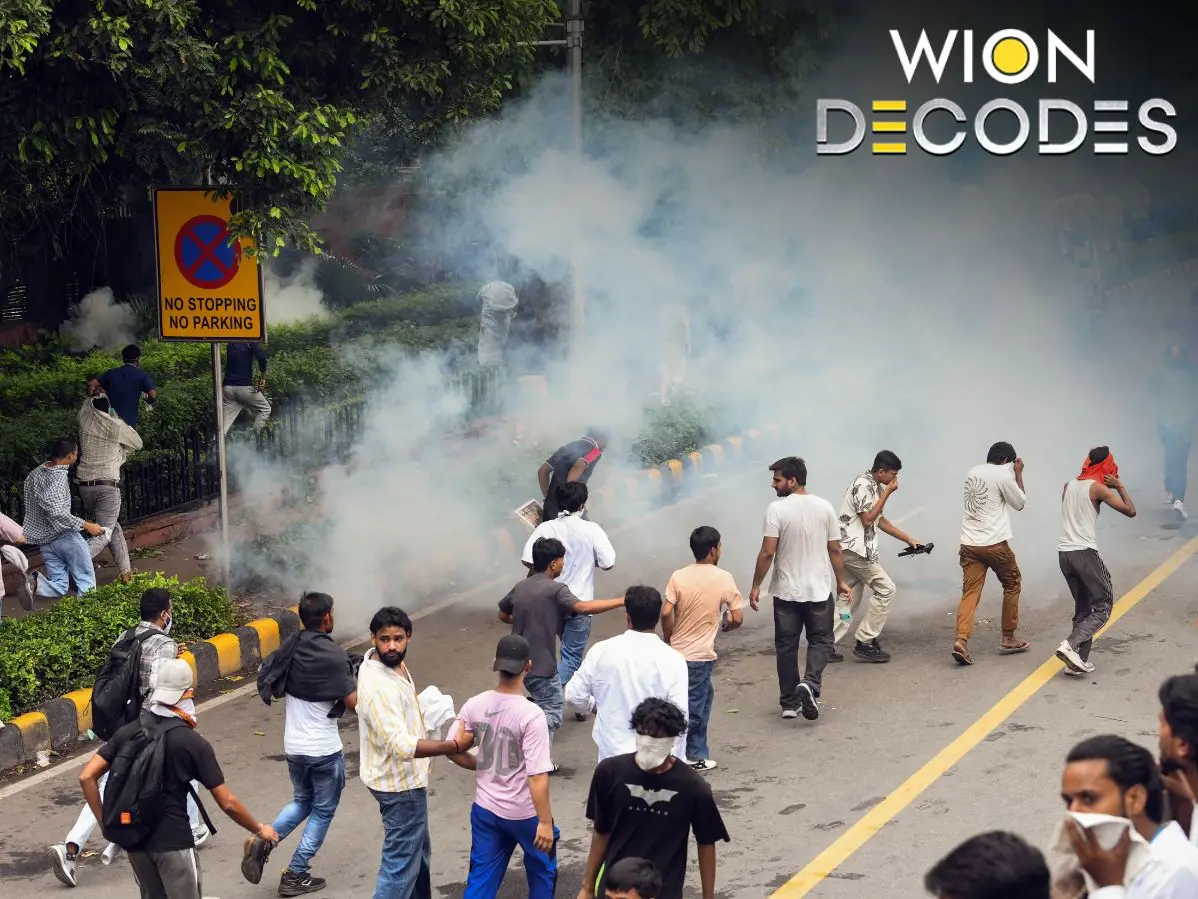
Protesters run after security personnel fire tear gas shells during the protest by Cockroach Janta Party near Jantar Mantar, in New Delhi on July 20. Photograph: (ANI)
Supreme Court’s scrutiny of RAF’s pellet gun use during Jantar Mantar protests has sparked debate over accountability, risks and crowd control methods. Here’s what you need to know.
The debate over pellet guns and crowd control has returned to the spotlight after the Supreme Court sought details of the ammunition used by the Rapid Action Force (RAF) during the Jantar Mantar protests. The move came amid allegations that security personnel may have used metallic pellets against protesters, raising questions over whether the force used was within legal and operational limits.
What guidelines say
Under the Bureau of Police Research and Development (BPR&D) guidelines, pellet guns are not meant to be the first response during crowd management. They fall under the category of less-lethal weapons and can only be used in exceptional situations where a crowd becomes violent, uncontrollable or poses a serious threat to lives and public property.
The guidelines follow a graded response system, requiring security forces to first rely on dialogue, warnings and attempts at peaceful dispersal. If those efforts fail, authorities can move to measures such as water cannons, tear gas and lathi charges. Projectile weapons, including pellet guns, are meant to be used only when other methods are unable to control the situation.
Also read | ‘Uniform stained with blood’: Delhi Police families recount NEET protest violence ‘trauma’
The principle behind these rules is simple – the force used by authorities must be necessary and proportionate to the threat.
Trending Stories
)
)
)
)
)
)
)
)
)
)
&im=FitAndFill=(700,400))
)
)
)
&im=FitAndFill=(700,400))
)
&im=FitAndFill=(700,400))
)
)
)
)
)
)
&im=FitAndFill=(700,400))
)
)
)
)
)
)
)
)
)
)
)
)
)
)
)
)
From water cannons to pellets: The escalation of crowd control
The RAF’s standard operating procedure lays down a sequence that officers are expected to follow before turning to pellet guns. Personnel must issue warnings, make public announcements and give protesters an opportunity to disperse.
If a situation escalates into violence, forces may use non-lethal options before considering kinetic weapons. Pellet guns are treated as a last-resort measure because of the risk they pose, particularly when fired at close range or towards vulnerable parts of the body.
The guidelines require precautions, including maintaining a safe distance and aiming below the waist to minimise serious injuries. Once a violent situation comes under control, the use of force must stop, and those injured must be provided medical assistance.
The Supreme Court’s order to preserve the RAF’s ammunition logs is significant because such records can establish what weapons were actually used during an operation. The logs can reveal the type of pellets fired, the quantity of ammunition deployed and whether the force followed prescribed procedures.
Rights of protesters vs duty to maintain order
Police powers during protests are balanced against fundamental rights guaranteed by the Constitution. Article 19 protects the right to free speech and peaceful assembly, while Article 21 requires state action affecting life and liberty to be fair and non-arbitrary.
Over the years, courts have repeatedly warned against excessive use of force. In the 2012 Ramlila Maidan case, the Supreme Court held that police action against protesters must be restrained and used only when necessary. In Anita Thakur’s case in 2016, the court ruled that excessive force can amount to a violation of fundamental rights.
Among crowd control measures, pellet guns remain one of the most controversial. Water cannons and tear gas are generally used for mass dispersal, while rubber bullets are designed for targeted impact. Pellet guns, however, release multiple projectiles simultaneously, increasing the possibility of unpredictable injuries, including permanent eye damage.
The controversy has renewed calls for clearer rules on the use of less-lethal weapons, with experts arguing that maintaining public order cannot come at the cost of accountability and proportionality.

