Bengal's Durga Puja plate turns political: BJP tries to duck the non-veg row

&imwidth=600&imheight=450&format=webp&quality=medium "Bengal's Durga Puja plate turns political: BJP tries to duck the non-veg row")
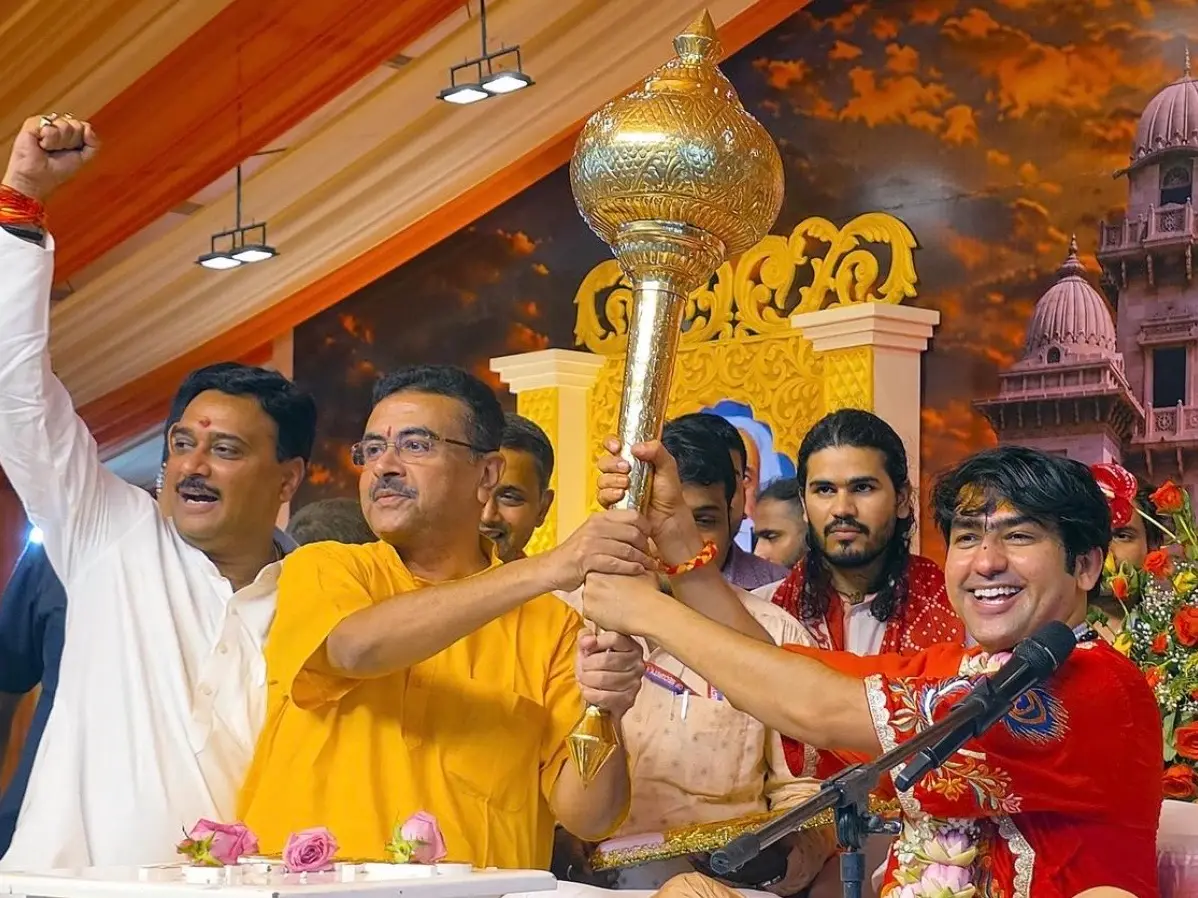
Bengal's Durga Puja plate turns political: BJP tries to duck the non-veg row Photograph: (WION)
The controversy started on August 26, when the Vishwa Hindu Parishad issued an advisory asking that non-vegetarian food be kept away from Durga Puja pandals to preserve the festival's ‘sanctity’
A row over what people eat near Durga Puja pandals has snowballed into a full-blown political headache for the BJP in West Bengal, and on Monday, the party's state chief moved fast to distance himself from it. West Bengal BJP president and Rajya Sabha MP Shamik Bhattacharya, addressing reporters in Salt Lake, flatly ruled out any party position on Bengali food habits.
"The BJP has no statement on what people in West Bengal will eat or wear," he said, adding that dietary choices, fish, meat, or vegetarian, is a matter of individual preference. It is not the BJP's position to decide what anyone should eat." The controversy began on August 26, when the Vishwa Hindu Parishad issued an advisory asking that non-vegetarian food be kept away from Durga Puja pandals to preserve the festival's ‘sanctity’. Sanatan Sanskriti Sansad secretary Swami Nirgunananda told puja organisers, "It is the duty of Sanatanis to protect the sanctity of the idol and maintain cleanliness in and around the pandal," adding that non-veg stalls should be restricted to areas away from the venue. The VHP said it wasn't seeking to enforce vegetarianism outright.
The row gained real momentum on Sunday, when Bageshwar Dham chief Dhirendra Krishna Shastri, head priest of Bageshwar Dham and a spiritual leader known for his weekly ‘divya darbar’ sessions in Madhya Pradesh, made a near-identical appeal in Kolkata, “I am appealing to the Hindus of Bengal, that during Navratri, even if you don't keep the idols of the Goddess, do not sell non-veg near the idols.” He also said, “Bangal ke pagalon sab rahenge par kayede mein rahenge toh fayede mein rahenge”. His remarks carried extra political weight because West Bengal Chief Minister Suvendu Adhikari had shared the stage with him and publicly invited him to set up spiritual centre in the state: "Baba Maharaj Ji, please open a center here. There should also be a Bageshwar Dham centre… This is the land of the saints."
Many in Bengal have read the appeals as a thinly-veiled attempt to impose vegetarianism on a state where fish and meat are woven into festival culture, a charge the BJP has been fighting since the 2026 Assembly polls, when its leaders posed with fish to reassure voters. Content creator Priyam Ghose captured the mood online, "Bageshwar Baba is just 30 years old. First recorded Durga Pujo in Kolkata was in 1610... Don't think Bengalis need a certificate on how to celebrate their age old festival from someone who is about my age."
Durga Puja isn't just a festival in Bengal, it's UNESCO-recognised intangible cultural heritage, inscribed in December 2021 for its unique community character, where, as UNESCO put it, the divides of class, religion and ethnicities collapse. Over 40,000 community pujas are held across the state, roughly 3,000 in Kolkata alone. Bhattacharya's clarification came, notably, while he was unveiling the BJP's month-long ‘Seva Sankalp Abhiyan’, a campaign marking 25 years of Narendra Modi in top office. The timing underlines the balancing act: distancing the party from a row that risks alienating Bengali voters, without publicly rebuking Hindu religious figures aligned with the wider Hindutva movement.
The seva sankalp abhiyan campaign will begin on the Prime Minister’s birthday on September 17 and continue till October 17. On September 17, at least 25 lamps will be lit at every booth in the state to pray for the Prime Minister’s good health, long life and success. Party workers have already begun preparations for this, Bhattacharya informed. He further added that a key component of the campaign will be the ‘Seva Setu Abhiyan’. Through three-day special camps, eligible people who have been deprived of the benefits of various central and state government welfare schemes will be assisted. A documentary and theme song titled ‘Namo Seva Gatha’ will be released to take the Prime Minister’s 25-year administrative journey to the common people.
Trending Stories
&imwidth=280&imheight=210&format=webp&quality=medium)
&imwidth=280&imheight=210&format=webp&quality=medium)
&imwidth=280&imheight=210&format=webp&quality=medium)
&imwidth=280&imheight=210&format=webp&quality=medium)
&imwidth=280&imheight=210&format=webp&quality=medium)
&imwidth=280&imheight=210&format=webp&quality=medium)
&imwidth=280&imheight=210&format=webp&quality=medium)
&imwidth=280&imheight=210&format=webp&quality=medium)
&imwidth=280&imheight=210&format=webp&quality=medium)
&imwidth=280&imheight=210&format=webp&quality=medium)
&im=FitAndFill=(700,400)&imwidth=280&imheight=210&format=webp&quality=medium)
&imwidth=280&imheight=210&format=webp&quality=medium)
&imwidth=280&imheight=210&format=webp&quality=medium)
&imwidth=280&imheight=210&format=webp&quality=medium)
&imwidth=280&imheight=210&format=webp&quality=medium)
&imwidth=280&imheight=210&format=webp&quality=medium)
&imwidth=280&imheight=210&format=webp&quality=medium)
&imwidth=280&imheight=210&format=webp&quality=medium)
&imwidth=280&imheight=210&format=webp&quality=medium)
&imwidth=280&imheight=210&format=webp&quality=medium)
&imwidth=280&imheight=210&format=webp&quality=medium)
&imwidth=280&imheight=210&format=webp&quality=medium)
&imwidth=280&imheight=210&format=webp&quality=medium)
&imwidth=280&imheight=210&format=webp&quality=medium)
&imwidth=280&imheight=210&format=webp&quality=medium)
&imwidth=280&imheight=210&format=webp&quality=medium)
&imwidth=280&imheight=210&format=webp&quality=medium)
&imwidth=280&imheight=210&format=webp&quality=medium)
&imwidth=280&imheight=210&format=webp&quality=medium)
&imwidth=280&imheight=210&format=webp&quality=medium)
&imwidth=280&imheight=210&format=webp&quality=medium)
&imwidth=280&imheight=210&format=webp&quality=medium)
&imwidth=280&imheight=210&format=webp&quality=medium)
