2008 Mumbai attacks: India's then envoy to Islamabad reveals details involving Pakistan Army

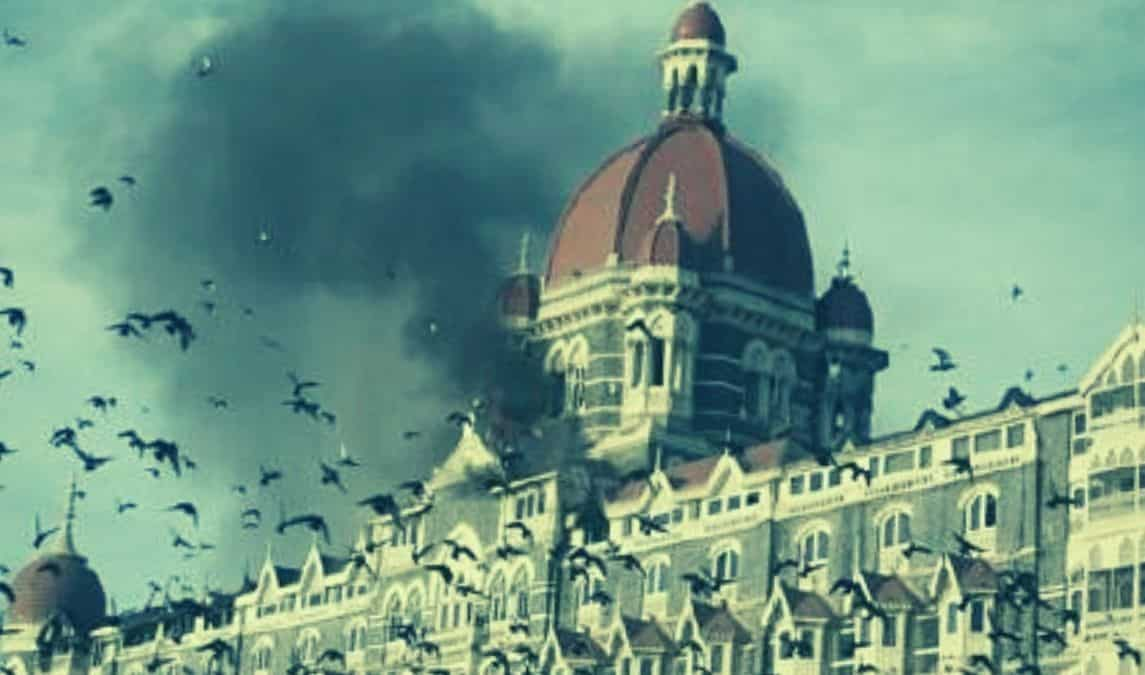
26/11 Mumbai Attacks
Sharat Sabharwal, who is India's former envoy to Islamabad, revealed chilling details of the 2008 Mumbai attacks. As quoted by an Indian news website Hindustan Times, Sabharwal claimed in his book that less than two years after the attacks, Pakistan Army told him that no action would be taken against Lashkar-e-Taiba (LeT) founder Hafiz Saeed. As per the report, they said there was "no evidence" against Saeed.
26 November 2008 is one of the darkest days in the history of India. A normal day in Mumbai descended into chaos when a series of terrorist attacks rocked the city. The attacks drew widespread global condemnation.
On that day, 10 members of Lashkar-e-Taiba (LeT), a terrorist outfit from Pakistan, carried out 12 coordinated shooting and bombing attacks across India's financial capital. The attacks lasted four days.

ALSO READ |Meet Manisha Ropeta, the first Hindu woman top cop in Pakistan
A total of 166 people were killed and hundreds were injured. Nine attackers were also shot down and one was caught alive, who was hanged in Yerwada jail in 2012. The day haunts the Indian citizens as they still seek justice, demanding the strictest against the members of the LeT terrorist organisation.
Sabharwal, in his new book "India's Pakistan Conundrum", writes that he told a Pakistan Army interlocutor about the pieces of evidence provided by India on Saeed's role in the attack. But the interlocutor remained non-committal.
As quoted by the news website, Sabharwal in his book mentioned a meeting in August 2010 with a senior Pakistan Army interlocutor, who gave him the below-mentioned four-point message:
"(i) The Mumbai terror attack was not authorised either by the army or the ISI leadership.
(ii) India was progressing fast and they realised that such acts of terror would neither halt India’s progress nor aid the cause of providing better economic opportunities, health and education facilities to the Pakistani people.
(iii) The army had helped with the investigation that resulted in nabbing the Mumbai culprits. However, if India was waiting for action against Hafiz Saeed before resuming dialogue that would not happen because there was no evidence of his involvement in the attack.
(iv) Pakistan had its own concerns regarding Indian interference in its internal affairs and would like them to be addressed."
ALSO READ |Heatwaves in Pakistan and India '30 times more likely' due to climate change: Study
Sabharwal adds, "I referred to the evidence provided by India regarding Hafiz Saeed's role but my interlocutor remained non-committal. The above was clearly a mixed message, with some reasonable sounding words, but also the usual harping on the so-called Indian interference and no intent to act against Hafiz Saeed."
He further added that there was "much scepticism" in New Delhi even about the "reasonable words" of the Pakistani interlocutor.
He writes: "It did not escape my attention that while ruling out authorisation of the Mumbai operation by the army or the ISI leadership, my interlocutor had not ruled out the involvement of army officers at other levels and yet no such officer was brought to book."
Sabharwal also writes: "The evidence given by India regarding his [Saeed’s] lead role in the Mumbai attack, including the reference to him in the confessional statement of Ajmal Kasab, has never been presented in any court of law in Pakistan."
Coincidence or conspiracy?
Did Pakistan attempt to paralyse India's internal security during the 26/11 attacks?
A nine-member high-level team, required for taking key decisions during the attacks, was in Pakistan. The team comprised of officials from India's Home Ministry and other security agencies, led by no less than then Union Home Secretary Madhukar Gupta.
RSN Singh, who is a former military intelligence officer and later served in the Research and Analysis Wing or R&AW, wrote in the Indian Defence Review that it was a "classic case of strategic deception by Pakistan".
The team had arrived in Islamabad on November 24, 2008 and was supposed to return two days later, i.e. November 26. However, the visit was extended by an extra dayin Murree, which is a hill station, 60km northeast of Islamabad.
In 2016, he had also said that they found the gesture of the Pakistan government odd, adding that their "duplicitous role was absolutely clear, it's not the first time". He had also told The Times of India that Pakistan had insisted they meet their Interior Minister and that's the reason for their extended stay.
WATCH WION LIVE HERE
You can now write for wionews.com and be a part of the community. Share your stories and opinions with us here.