What really triggered Nepal’s deadly floods? Scientists blame 5,200m avalanche. This is how disaster unfolded

&imwidth=600&imheight=450&format=webp&quality=medium "What really triggered Nepal’s deadly floods? Scientists blame 5,200m avalanche. This is how disaster unfolded")
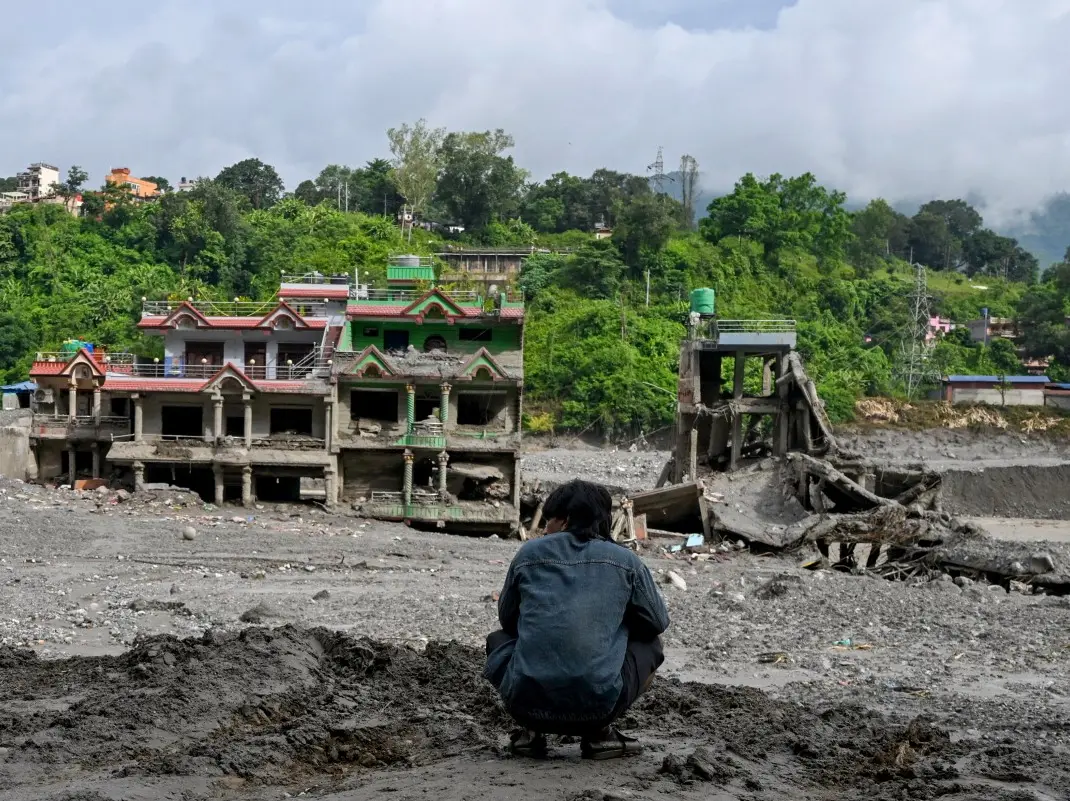
A man looks at damaged houses after flash floods at Trishuli Center in Nepal's Nuwakot district on August 31, 2026. Photograph: (AFP)
Nepalese scientists determined that an ice-rock avalanche from 5,200 meters in the Langtang-Lirung region, not a glacial lake outburst or heavy rain, triggered the devastating August 26 Bhotekoshi-Trishuli flash floods.
The devastating floods that swept through Nepal’s Bhotekoshi-Trishuli corridor on August 26 were triggered by a massive ice-rock avalanche in the high Himalayas, and not by conventional rainfall, as per a preliminary report by Nepalese scientists.
The report, commissioned by the Nepal Environment Society, was released on Sunday (Aug 30) as the death toll from the flash floods rose to 903. Authorities said bodies were still being recovered on Monday (Aug 31). The study found that a huge mass of ice, rock and debris fell from an altitude of around 5,200 metres in the Langtang-Lirung area of Rasuwa and entered the Lhende River. The surge then travelled downstream through the Bhotekoshi and into the Trishuli, generating a powerful debris-laden flood, My Republica reported.
Also read: Man uses AI to fake Rs 1.2 lakh Nepal flood donation, diverts relief funds via own QR code
The resulting floods devastated towns and villages across northern and central Nepal.
What does the research say?
Researchers concluded that a glacial lake outburst flood, or GLOF, did not cause the disaster. They analysed satellite imagery, hydrological and meteorological data, terrain characteristics and changes in elevation and slope along the river system, but found no evidence of a GLOF.
Trending Stories
&imwidth=280&imheight=210&format=webp&quality=medium)
&imwidth=280&imheight=210&format=webp&quality=medium)
&imwidth=280&imheight=210&format=webp&quality=medium)
&imwidth=280&imheight=210&format=webp&quality=medium)
&imwidth=280&imheight=210&format=webp&quality=medium)
&imwidth=280&imheight=210&format=webp&quality=medium)
&imwidth=280&imheight=210&format=webp&quality=medium)
&imwidth=280&imheight=210&format=webp&quality=medium)
&imwidth=280&imheight=210&format=webp&quality=medium)
&imwidth=280&imheight=210&format=webp&quality=medium)
&imwidth=280&imheight=210&format=webp&quality=medium)
&imwidth=280&imheight=210&format=webp&quality=medium)
&imwidth=280&imheight=210&format=webp&quality=medium)
&imwidth=280&imheight=210&format=webp&quality=medium)
&imwidth=280&imheight=210&format=webp&quality=medium)
&imwidth=280&imheight=210&format=webp&quality=medium)
&imwidth=280&imheight=210&format=webp&quality=medium)
&imwidth=280&imheight=210&format=webp&quality=medium)
&imwidth=280&imheight=210&format=webp&quality=medium)
&imwidth=280&imheight=210&format=webp&quality=medium)
&im=FitAndFill=(700,400)&imwidth=280&imheight=210&format=webp&quality=medium)
&imwidth=280&imheight=210&format=webp&quality=medium)
&imwidth=280&imheight=210&format=webp&quality=medium)
&imwidth=280&imheight=210&format=webp&quality=medium)
&imwidth=280&imheight=210&format=webp&quality=medium)
&imwidth=280&imheight=210&format=webp&quality=medium)
&imwidth=280&imheight=210&format=webp&quality=medium)
&imwidth=280&imheight=210&format=webp&quality=medium)
&imwidth=280&imheight=210&format=webp&quality=medium)
&imwidth=280&imheight=210&format=webp&quality=medium)
&imwidth=280&imheight=210&format=webp&quality=medium)
&imwidth=280&imheight=210&format=webp&quality=medium)
&imwidth=280&imheight=210&format=webp&quality=medium)
&im=FitAndFill=(700,400)&imwidth=280&imheight=210&format=webp&quality=medium)
&imwidth=280&imheight=210&format=webp&quality=medium)
According to the report, the ice-rock mass began falling from the northern part of Langtang-Lirung at around 8:37 am on Wednesday (Aug 26). It descended steep terrain from about 5,200 metres before reaching the Lhende River at an altitude of around 2,930 metres.
Satellite imagery showed major geographical changes across an area of about 10 square kilometres, while a section of glacier covering approximately 0.56 square kilometres had broken away.
The findings are preliminary and further analysis will be needed to establish the full chain of events behind the disaster.

